Search results for: photography features understanding lens distortion
About 11 filtered results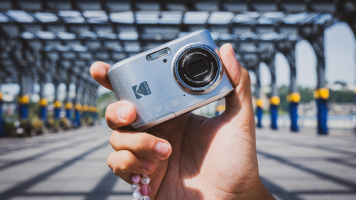
by Luke Rollins · Posted
What is it about the 2000s look that is so compelling right now? One could chalk it up to the eternal recurrence of 20-year nostalgia cycles, of which the retro digicam revival would be yet another instance. But this kind of historicism elides the character of what is missed, and why its retrieval is attempted in the first place.
Smartphone bad; we know this. Rejecting the smartphone, however, does not immediately lead one to retro digicams. One could just as easily move toward the nostalgia of film as toward the competent excellence of today

by John Harris · Posted
It would be foolish to claim that there is only one way to take a portrait, but there are some accepted norms and basic camera settings that you should understand if portraiture is to become your area of photographic interest. Remember though, as you walk down your creative path, that a portrait is more than a headshot, more than a beautiful photo of your subject; it is an opportunity to get to know someone, to have a visual conversation with a person, and to use your photographic skills to pass that understanding of the person on to the

by Todd Vorenkamp · Posted
Many interchangeable-lens cameras, be it DSLR or mirrorless, are sold today with what we call "kit" lenses. Current kit lenses, in general, thanks to computer technology and advanced manufacturing techniques, are more capable and of higher quality than those of yesteryear. However, many of us who use interchangeable-lens cameras feel the gravitational pull of other lenses that are not yet in our bags.
Adding lenses to your quiver is all about choices and selection and, in photography, we often find ourselves at a sort of "gear crossroads." The
by Luke Rollins · Posted
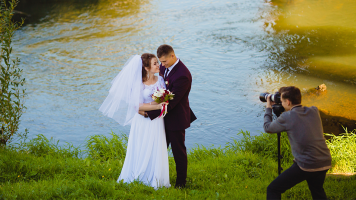
Many hobbyists reach a turning point in their craft when they decide to pursue wedding photography seriously. With the transition to pro comes the task of updating your lens kit accordingly, and most photographers would agree that investing in quality glass is essential. Unlike the rapid turnover of camera bodies, lenses will last for years and can make all the difference in creating quality images. Understanding what some of the best available options are will help you invest appropriately.
What to Consider
Weddings are long affairs, often

by Todd Vorenkamp · Posted
There are many ingredients in the recipe that make a good photographic portrait—foreground, background, setting, pose, expression, color, lighting, and so on—but one element that can be as important to the result as the portrait sitter is the lens used to capture the portrait and help create the art.
Technically, any lens can be used to take a portrait with your camera, and there are traditional focal lengths for “portrait lenses” like 85mm and 105mm, but I asked my fellow B&H photographers, as well as our B&H Creative partners and

by Mathew Malwitz · Posted
Portraiture: It’s one of the most popular and prevalent forms of photography. Although it may seem simple on paper, it comes with its own unique obstacles. Of course, you’ll want to be familiar with your gear. This is essential to all working photographers, but it allows you to focus your efforts on the genre-specific challenges you’ll face.
When photographing people, you’ll find that some folks are photogenic, while others are not. Your job as a photographer is to break down the barriers set by your clients and to put them in the most

by Christopher Witt · Posted
Humans’ fascination with the stars is as old as our ability to think and ask questions. For millennia we, as a species, were limited to observing the heavens with just our eyes. Of course, back then we were able to see more because light pollution didn’t exist, but making detailed observations was impossible. The invention of the microscope led to the development of the telescope, which allowed people to finally start exploring the larger universe. As technological advances were made and telescopes got bigger and better, their reach and the

by Bjorn Petersen · Posted
Third-party lenses—those made by a brand other than the camera manufacturer—present a wide variety of creative opportunities and fiscal benefits. Though there are certain sacrifices with some third-party options, such as mount availability and autofocus/electronic compatibility, more often than not, you’re rewarded with benefits you can’t achieve with in-system, first-party lenses—for example, a different take on the size and speed of a particular

by Rachel Leathe · Posted
There's nothing quite like the thrilling spontaneity of grabbing your camera and stepping out the door with no plan other than to point and shoot at whatever captivating scenes you encounter. In the realm of professional photography, where meticulous control over light, talent, and location is the norm, street photography throws all of that out the window, transforming the world into your unscripted canvas. The absence of predetermined variables and the sheer randomness of it all can be an incredibly liberating and enlightening experience for

by Rachel Leathe · Posted
Nothing kills creativity faster than an aching back. For all the benefits of full-frame cameras, telephoto lenses, and dedicated flashes, there’s something to be said for the freedom that comes with a lightweight setup. If you’ve been hunting for a simple camera to stick in your bag on your way out the door, a traveling companion, or something discreet when photographing on the streets, then you’ve come to the right place.
Test Photographs © Rachael Leathe
The heavy-hitting cameras on this list tend to box above their weight class. They

by Allan Weitz · Posted
Sometimes, the phrases, acronyms and strings of numbers or number-letter combinations used to identify photographic hardware or techniques can be daunting to the uninitiated neophyte photographer.
We've prepared a list of the basic terms. Have we left any out that you think should be added? Please let us know!
0-9 | A | B | C | D | E | F | G | H | I |