Search results for: photography tips solutions 10 lighting tips photographers
About 98 filtered results
by Mathew Malwitz · Posted
You’re probably aware that film has been making a comeback in recent years, but let’s be honest with ourselves. Did it ever really go away? Sure, it may have seen a dip in popularity at the dawn of the digital age, but many serious enthusiasts never stopped using it. Just ask the experts here at B&H! In fact, we asked some long-time film shooting experts here, “What’s your favorite film/camera combination and why?” Below, you’ll find their answers

Posted
A photo of the Milky Way can be breathtaking on its own, but you can make it more stunning by adding a foreground element to your photo. Sam travels to the American Southwest to share how you can include the landscape in your astrophotography. Explore the Four Corners as she teaches you how to location scout, compose your photos, and more.
It's World Space Week. World Space Week (WSW) is the largest annual space event on Earth, celebrated globally from October 4 to October 10 every year to honor the contributions of space science and
by Luke Rollins · Posted
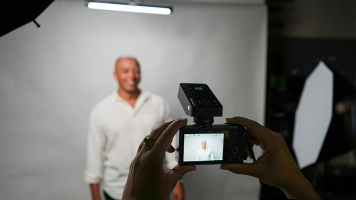
At first glance, studio photography and the compact camera may seem strange bedfellows. The type of work associated with the studio—still life, product photography, portraiture, macro photography—usually wants cameras with larger sensors and interchangeable lenses, especially in professional applications. Compact, point-and-shoot cameras, for their part, have their natural home in everyday, travel, nightlife, and street applications, where their discretion and size become virtues.
It might seem almost cruel to introduce the compact to the

Posted
Portrait photographer Susan Magnano explores how to take control of light in any environment using portable LED lights. Using Nanlite LEDs, you can transform ordinary scenes into compelling images in real time.
0:00 - Intro
1:15 - Benefits of continuous light
4:23 - Studio constraints
5:14 - Workflow
7:15 - Exposure
8:35 - Science of additive color
11:02 - Lighting gobos & split lighting
12:14 - Shutter drag
12:44 - Lights & tools being used
13:35 - Lighting setup & settings / Using gobos
32:49 - Creative traditional headshots
50

by Mathew Malwitz · Posted
Have you ever taken a photo that looked so good on the back of your camera, only to get home and see that it’s just not sharp? We’ve all been there, and even the experts miss more shots than they keep. That said, there are many tricks and techniques we can learn to improve the odds. In today’s guide, we’re looking at five techniques to aid us in confidently capturing tack-sharp photographs.
Sharpness is critical in most genres of photography, especially nature and wildlife. Sure, we can intentionally blur elements to showcase motion. We

by Mathew Malwitz · Posted
You don’t have to go far to capture fun and engaging images of wildlife. In fact, you may not have to go anywhere at all. A carefully landscaped yard and the right tools can attract an impressive variety of animal life to observe and photograph. Pair that with a little patience and soon you’ll be capturing stunning images from the comfort of your own home.
Attracting Birds
Birds are part of nearly every environment, from the densest cities to rural areas. While they are common, we’ll need to offer three essentials—water, shelter, and food—to

Posted
Portrait photographer Mike Foley covers the theory behind portraiture, focusing on how to use shapes and posing to create stronger compositions. Mike also discusses the power of simple lighting and how to achieve professional results with a minimal setup.
0:00 - Intro
2:27 - Classic approach
10:03 - Finding / making a triangle in frame
22:51 - Rembrandt lighting
39:54 - Bringing both methods together
43:26 - Closing
Sponsored by
by Mathew Malwitz · Posted
If there’s one question fledgling photographers often ask, it’s “How did you get such a nice background?” Backgrounds are an essential element of a photograph that are often neglected. In fact, it’s safe to say that a background is as important to a composition as the subject itself. After all, a distracting one will detract from an image.
In this guide, we’re going to cover the many methods used to capture clean, smooth backgrounds in our images. This will encompass the settings and gear involved as well as the in-the-field techniques you can
Posted
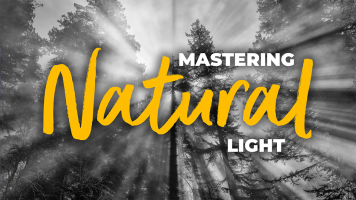
Sony Artisans of Imagery's Andy Katz explores light and how it turns a good photograph into a great photograph. Learn how to see, shape, and control light to enhance mood, depth, and storytelling.
0:00 - Intro
2:05 - Early career
11:10 - Look for interesting light & angles
21:03 - Putting the puzzle together
23:11 - Color to Black & White
25:04 - One camera, one lens
27:00 - Color creates contrast
29:36 - Photographing people & traveling
34:32 - Black & White vs. Color
37:02 - Depth of field
39:22 - Hands & eyes in
Posted
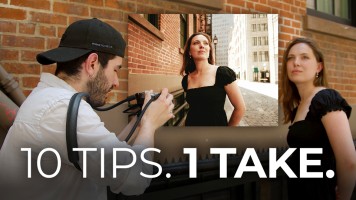
Natural light is a more affordable and accessible way to light your portraits, but it can be tough to master. Join Juan in this one-take video, as he shares his top 10 tips for mastering natural light and creating more compelling portrait photographs.
0:00 - Directional Lighting
1:13 - Hand Method
1:50 - Building Bounce
2:55 - Background Ideas
3:55 - Harsh Light
4:44 - Stop Posing Your Models
5:34 - Shoot in the Shade
6:20 - Catch Light
6:59 - The Last Tip

by John Harris · Posted
It would be foolish to claim that there is only one way to take a portrait, but there are some accepted norms and basic camera settings that you should understand if portraiture is to become your area of photographic interest. Remember though, as you walk down your creative path, that a portrait is more than a headshot, more than a beautiful photo of your subject; it is an opportunity to get to know someone, to have a visual conversation with a person, and to use your photographic skills to pass that understanding of the person on to the

Posted
Photographer Ira Block walks through his best travel imagery. Along with sharing the best practices for respectfully approaching strangers, and how to build a lasting connection with people you meet on your travels.
0:00 - Intro
2:20 - Connecting with people of different cultures
6:26 - People in their environment
17:27 - Portraits
26:26 - Showing the culture
33:26 - Capturing moments
38:55 - Light
41:29 - Ethics
52:10 - Visually exciting images
59:27 - Finding different angles and perspectives
1:02:57 - Q&A break
1:10:45 - Ireland trip
1

by Mathew Malwitz · Posted
There’s an old adage that claims in order to be a wildlife photographer, you need a lot of time and a lot of money. This is only partly true. Many great wildlife photo opportunities can occur in urban parks and even in your own backyard, as long as we know what we’re doing. In this article, we’re going to cover a number of essential tips that will help you become a better wildlife photographer.
If you’ve read our introduction

by Todd Vorenkamp · Posted
Every facet of photography is about controlling light, from the amount of light we allow to enter our camera via the aperture of a lens to the duration of our exposure set by the shutter speed. But how does the camera measure the brightness of the scene to set these settings automatically? How do you, the photographer, know how much to adjust your exposure settings to achieve a specific result for the final image? This is achieved with an in-camera light meter.
What Is Metering?
Metering is how a camera evaluates the available light to

Posted
Internationally acclaimed wedding photographer Corbin Gurkin talks about the importance of lighting. Learn how to transform everyday details—like invitation suites, heirloom jewelry, and floral accents—into iconic visual narratives.
0:00 - Intro / About Corbin
6:31 - Why lighting matters
9:45 - Gear kit
12:10 - Using constant light at events
20:28 - Emulating natural light
26:29 - Must have kits
38:00 - Corbin's courses
37:45 - Q&A break
49:55 - Lighting demo: Tabletop
1:03:22 - Lighting demo: Jewelry
1:16:41 - Lighting demo: Invitation