Search results for: photography tips solutions 8 options to consider when build
About 22 filtered results
by Mathew Malwitz · Posted
Binoculars are a birdwatcher's best friend. They allow you to get close-up views of distant objects without having to actually get close. Some birders use spotting scopes and others use cameras with telephoto lenses, but you may be hard-pressed to find a serious birder without a pair of binoculars at the

by Steven Gladstone · Posted
Whether you’re a student or a seasoned veteran, selecting the right camera can make your head spin with questions. Does sensor size matter? What’s the difference between 4:2:0 and 4:2:2? Do I really need a camera that can record 8K? What about raw? We’ll explain the key components that help a camera produce cinematic images, and in doing so, hopefully help you make that all-important decision.
Evaluate Your Needs and Your Budget
Before considering certain cameras, you must know your needs and your budget. And be realistic. If you are a student

by Mathew Malwitz · Posted
Lighting is the key to all photography. While elaborate, multi-light setups may appear to be the standard, the creative photographer can produce a seemingly endless range of images using just one light source. This guide is designed to help those beginners out there build the perfect one-light kit for portrait photography.
Why One Light?
I completely understand why multi-light “studio in a box” kits are tempting to beginner and budget-conscience photographers. Why spend hundreds of dollars on one light when you can get three lights complete

by Cory Rice · Posted
The trick with any home studio is in creating a space that can be used to create images that do not betray the fact that you shot them in your living room, in your pajamas, using your pet dog as an assistant. Luckily, creating a home studio can be done fairly easily without breaking the bank. This article will help get you up and running.
Planning Your Studio
Before making any purchases, it is important to sit down first and answer some basic questions about what you want your studio to accomplish. First, what type of photographs do you plan

by Darrell Holdaway · Posted
There is a first time for everything, and if you have your mind set on producing a wedding video, you will encounter plenty of “firsts” during that initial wedding weekend. There is a first kiss, a first dance, and a first slice of cake. Where will you have your cameras set up for each of these memorable moments? Will you need lights for every shot? How will you manage the audio? When the bride says “I do,” you will want everything in place to ensure that you capture every word and angle. This guide will address equipment needs, event

by Cory Rice · Posted
In the world of portraiture, a light is only as good as the tools used to shape it. The three most common types of modifiers used for portraits are umbrellas, softboxes, and beauty dishes. Each of these

by Jill Waterman · Posted
Making pictures by night is a curious practice. While specialists of this subject embrace it as a deep-seated passion and have a never-ending quest for technical and creative advancement, those more familiar with daytime photography are often unaware that tried and true photography rules often need to be adapted or even overlooked at night. With this in mind, consider the following tips the next time you venture out in the darkness, to help you to adapt.
1. Take a Chance and Explore the Unknown
What’s my exposure time? This is the number one
by Todd Vorenkamp · Posted
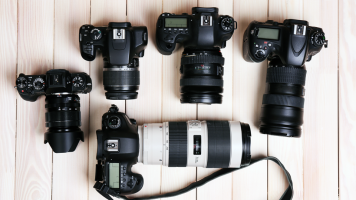
In the ever-changing digital world, it is often financially difficult to keep pace with the technology and constantly acquire the latest and greatest gear. Many of us save up our hard-earned cash to get the latest camera, only to see it be replaced weeks or months after we acquired our new toy. That can be disheartening, of course, but here are a few tips on how you can breathe new life into your aging digital camera.
I was going to conclude with a few thoughts, but let’s begin with them instead…
Remember/learn/know that an older digital

by Cory Rice · Posted
Like many photographers, I prefer being behind my camera to sitting in front of my computer. Any steps that I can take to minimize the amount of work needed in post, I make sure to incorporate into my shoots. One way that I do so is by choosing and lighting my backgrounds carefully. Evenly lit backgrounds have endless applications and are not hard to accomplish with the right tools and techniques. Here are some tips for getting consistent black, white, and color backgrounds straight out of camera.
For inky-black backdrops, choose a material

by Cory Rice · Posted
Photo studios come in all shapes and sizes. If you are working with small subjects, there is no reason to rent a massive loft or build an addition onto your house to get the shots you need. In many of these cases, a functioning setup can take up as little space as a table. Like all things related to photography, tabletop studios can be as simple or complex as their creators require. For basic applications, plenty of all-in-one kits exist for “non

by Cory Rice · Posted
When many people think of special effects, they think of dimly lit rooms, expensive computers, and complicated software. While this may be an accurate picture if you are editing a blockbuster action movie, digital still photographers can do a lot to their images even before transferring files off their camera. The following guide covers some of the more popular in-camera effects on the market to consider when purchasing a new camera or for better understanding the camera you already own.
Film Simulation and Color Profiles
In recent years,

by Paige Denkin · Posted
For the past six months, Paige and Corey have traveled across the country. Here are some of their key tips, takeaways, and travel lessons.
What is boon-docking?
Boon-docking typically refers to off-grid camping, most commonly done in a vehicle or trailer. When boon-docking, you have few common luxuries, live respectfully off the land and pack out anything you brought with you. You have no electric hookups, no plumbing, and usually no Wi-Fi or cellular service. Boon-docking locations vary, some being easier to access than others, so

by Jill Waterman · Posted
The photo community has a unique advantage over other art forms. As the most democratic of the arts, photographs, by their very nature, are among the most easily shared and viewed. This has given rise to an abundance of photographic portfolio reviews. In recent years, the portfolio review has become ubiquitous in the field of photography, providing a venue for photographers of all levels, from students to enthusiasts to accomplished professionals. Opportunities for critique, feedback, and professional connection are also available within a

by Jill Waterman · Posted
Travel photography has a certain lure that brings out the uninhibited snapshooter in all of us. But how do you deal with the volume of images you download to the computer after your trip? At that point, it’s high time to sharpen your eye as a photo editor.
According to award-winning travel photographer Krista Rossow, photo editing is a practice that really should begin before you leave on a trip. Rossow is well versed in the process behind editing photos to tell a dynamic story, given her seven years as

by tom kirkman · Posted
After posing for a few gigabytes of formals in a hall, you can sense the wedding party’s palpable relief when, weather permitting, it’s time to take it outside. If you’re lucky enough to have nicely landscaped grounds, it’s a great opportunity to stop fighting with the tungsten light sources inside and take advantage of that flash-friendly sunlight.
Whether you’re just starting out as a wedding photographer or a friend asked you to shoot his or her wedding or you’re a seasoned professional, you’ll need some kind of help to maximize your