Search results for: photography tips solutions ai in photography
About 19 filtered results
by Mathew Malwitz · Posted
Back in the good old days, during the infancy of autofocus, you had two options when it came to autofocus: On or Off. Now, with advancements in technology, many cameras, even simple point-and-shoot cameras, have a dizzying array of high-tech autofocus modes to choose from. Honestly, they can be intimidating to even to the most experienced shooters.
Before we dive in, be forewarned: almost every manufacturer has proprietary autofocus technology, nomenclature, and features. Even more confusing, the interface to access these modes can often

by Mathew Malwitz · Posted
The most engaging portraits seem to have direct eye contact between subject and viewer, as if the camera were simply a window through which we’re looking. But is it that simple? So much goes into making a good portrait, can success simply come down to eye contact between subject and camera and is it even necessary to concentrate on the eyes for a portrait? There are certainly wonderful portraits that do not focus exclusively on the eyes that illustrate character with other aspects of the body, from posture to hands, but as an introduction to

by Mathew Malwitz · Posted
As you begin to research cameras, you’ll likely hear some technical jargon about sensors. While it’s easy to ignore some elements of any devices, there’s no way to work around sensors. But what is a sensor and what does it do? In this guide, we’re diving into the often confusing world of imaging sensors. By time we’re done, you’ll have a better understanding of the most significant component in our digital camera.
About Sensors
What Is an Imaging Sensor?
At the heart of our digital cameras sits an imaging sensor, which serves as the digital

by Allan Weitz · Posted
When it comes to travel, landscape, and seascape photography, I always try to keep at least one long focal length lens in my bag for photographing subjects to which I either cannot get closer or—in the case of a Siberian tiger guarding her cubs—to which I have no business getting closer.
Photographs Ó Allan Weitz 2020
The definition of a long telephoto lens depends on whom you ask, not to mention what format camera they are using. For some, a 105mm lens is long. For others, it’s anything beyond 200mm or 300mm. For me, 300mm has always been the

by Todd Vorenkamp · Posted
One of the first words I learned how to say was, “Moon.” All of my life, I have been fascinated by our natural satellite and I have been photographing it for as long as I have had a camera. My photos have gotten better over the years, but I still search for the perfect photo of the moon. Here are some tips and thoughts for your own lunar photography.
Above photograph: A waxing gibbous moon the day before the full moon. FUJIFILM X-T1; Leica APO-Televid 77 spotting scope @ 1000mm (1500mm, 35mm equivalent); f/13, 1/500-second, ISO 200

by Todd Vorenkamp · Posted

by John Harris · Posted
Great photos, in any discipline, can result from infinite techniques, but in sports photography—at least in sports photojournalism—there is little room for the aesthete who chooses a slow approach or the kind that eschews the available camera functions that will increase the proverbial “hit rate.” In other words, sports photographers need to use all measures to get that decisive, well-composed, and most important, in-focus photograph. Thank goodness, therefore, for continuous focus tracking, a blessing for sports photographers everywhere.

by Allan Weitz · Posted
The term “macro photography” is most often defined as close-up photographs taken with macro lenses, but isn’t always the case. True, macro lenses are designed to deliver life-size photographs of small objects with sharp edge-to-edge detail, but macro lenses are not the only tools of the trade when it comes to going face-to-face with bumblebees.
If macro photography is something you’d like to delve into without first having to invest in a macro lens, you have several
by Allan Weitz · Posted
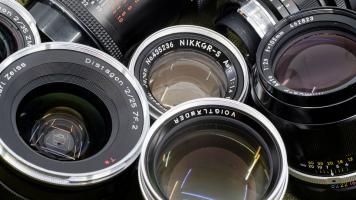
How “good” are vintage lenses when used on modern digital cameras? In a word, vintage lenses are “fine,” though I would have to immediately follow that statement by adding, “It depends,” because there are always exceptions to the rules, though even in these cases, the lens in question often works fine albeit with a technical or optical shortcoming of sorts.
Original photographs © Allan Weitz 2020
When adapting older-generation film camera lenses to DSLRs and mirrorless cameras, most perform well in terms of sharpness, color fidelity, color

by Allan Weitz · Posted
Image sharpness is an important part of the equation when purchasing a new lens. Who among us has purchased a lens without first inquiring about, among other things, how sharp the lens is? Anybody?
Don't get me wrong. Lens sharpness is an important piece of criteria when it comes to purchasing a new lens and that's because, just like you, I only want sharp lenses regardless of whether the lens is a pricier OEM lens or a lower-priced, third-party lens. If the lens isn't sharp, "Feh—I don't want it."
Photographs ã Allan Weitz 2020
by Allan Weitz · Posted
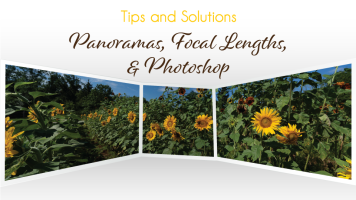
Panoramas are visually interesting, and that’s why Panorama modes can be found on many consumer cameras. Simply set the camera to Panorama mode, frame your shot, and follow the panning instructions in your viewfinder. Move slowly, evenly, and keep your camera level with the horizon. If your camera is on a tripod, so much the better. Do it right and you get a terrific panoramic image of up to 360 degrees, depending on how you set your camera.
I have long been a fan of panorama imaging, you can imagine my surprise when I realized my

by Allan Weitz · Posted
If you ask the average photographer what the difference between a macro lens and a “regular” lens is, they will tell you macro lenses enable you to get closer to your subject than regular, or conventional, lenses. While this is true, the ability to focus close is only part of the story. The other part of the story has to do with an optical characteristic called “curvature of field,” of which there are two types—flat-field and curved-field.
All Photographs © Allan Weitz 2020
Most consumer lenses are curved-field lenses, and as you might have

Posted
In early July 2020, Canon announced a pair of EOS R-series cameras that should prove to be true game changers in the world of mirrorless cameras. The new cameras are the Canon EOS R5 and R6. Both are full-frame cameras—the R5 features a 45MP sensor, the R6 features a 20MP sensor—and have amazing stills and video. The following is everything else you need to know about these exciting new cameras.
Also, at the top of this page is a replay of our Live Q&A with Canon Technical Expert Rudy Winston. You'll find some questions have an
by Allan Weitz · Posted
In recognition of B&H Photo Macro Week, this week's FAQ topic is—you guessed it—macro lenses.
What is a macro lens?
Macro lenses are generally defined as lenses that can photograph an object at life-size (1:1) or half life-size (1:2) magnification.
Tamron SP 90mm f/2.8 Di Macro 1:1 VC USD Lens
Are macro lenses available in different focal lengths?
Yes. For full-frame 35mm cameras, macro lenses that focus down

by Todd Vorenkamp · Posted
Many of us have been there. We get into photography and then we start getting more serious about the art, craft, hobby, or profession. Eventually, the “kit lenses” don’t seem to cut it any longer. Regardless of your path through the world of photography, it is likely that you set your gaze on the camera bag of a professional photographer and saved your hard-earned nickels to buy a set of “pro” lenses. Those lenses usually include the triad of f/2.8 aperture zooms covering wide (14-24mm), mid-range (24-70mm), and telephoto (70-200mm) needs.