
Many of us have been there. We get into photography and then we start getting more serious about the art, craft, hobby, or profession. Eventually, the “kit lenses” don’t seem to cut it any longer. Regardless of your path through the world of photography, it is likely that you set your gaze on the camera bag of a professional photographer and saved your hard-earned nickels to buy a set of “pro” lenses. Those lenses usually include the triad of f/2.8 aperture zooms covering wide (14-24mm), mid-range (24-70mm), and telephoto (70-200mm) needs. Sometimes, especially if you heed my advice, you see a large (f/1.4 or f/1.8) aperture 50mm or equivalent or macro lens in the pro’s quiver. As good as those pro lenses are, there are some old (and new) lenses out there that can deliver incredible, and sometimes unique, results. So, let’s talk about the lenses you don’t see in the print advertisements or ever pro’s bag.
Before we dive in, you might be a die-hard SLR or DSLR user—in which case, some of these not-your-brand lenses will not apply to you—but mirrorless shooters know they can adapt almost any kind and brand of lens to their digital camera. The world of exotic optics is the adventurous shooter’s oyster!
Modern Legends and Still-in-Production Classics
At press time, this first section of lenses is still available new from B&H Photo, even though some have been on the assembly lines for decades.
Nikon AF Zoom-NIKKOR 80-200 f/2.8D ED
The Nikon AF Zoom-NIKKOR 80-200 f/2.8D ED lens was the professional’s 70-200mm lens from before the 70-200mm even existed. The lens has been in production since 1990 and used to be found in the camera bags of working pros around the world. Most shooters migrated to the flashy 70-200mm f/2.8 lenses and their electronic bells and whistles over the years—I was one of them as I sold my older push-pull zoom 80-200. But I was never completely happy with my 70-200mm and, when it broke, I had the perfect excuse to pick up one of these 80-200s. I have never looked back. It is sharper than my 70-200 ever was. And, it is lighter and way less expensive. If you don’t believe me, check out the more than 300 five-star reviews on B&H Photo, including the one that reads, “The Best Kept Secret in Photography.” Oops, the cat is out of the bag now. One more thing: it makes sunstars like you dream about—check out the top shot of this article.

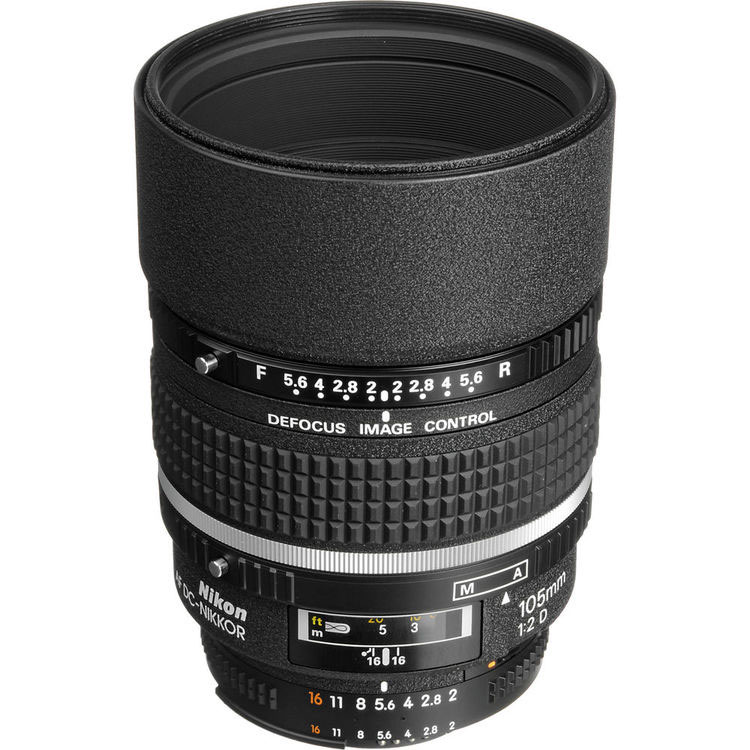
Nikon AF DC-NIKKOR 105mm f/2D
Nikon has made many legendary 105mm lenses and, depending on who you speak to, many claim that the best of the bunch is the AF DC-NIKKOR 105mm f/2D. I am sure there are those passionate about the sparkling new(ish) AF-S NIKKOR 105mm f/1.4E ED lens, but the 105mm DC lens, introduced way back in 1993, has a well-deserved cult following and is the rarest of lenses in pro bags. The “DC” designation is for “defocus control”—basically a way to further control the bokeh for which this lens is well known. If you are looking for a supreme portrait lens and the prices of the latest 85mm and 105mm lenses aren’t sitting well with you, I would highly recommend this lens for the job. Aside from portraiture, this is one of my go-to astrophotography lenses for its sharpness, great focus feel, and wide f/2 maximum aperture.
Voigtländer Super Wide-Heliar 15mm f/4.5 Aspherical III
Two fellow B&H photographers mentioned the Voigtländer Super Wide-Heliar 15mm f/4.5 Aspherical III lens. This optic is available in Leica M and Sony E mounts. The two versions of the lenses have differences that go slightly deeper than the mounts, but they are of the same optical design. If you are searching for an ultra-wide-angle prime with no distortion and impeccable mechanicals and optics, the Super Wide-Heliar and its built-in industrially scalloped lens hood will find a favorite spot in your bag. Also, there are some older versions of this lens that are renowned and have their own dedicated following.

Nikon 50mm f/1.2
Years ago, I asked long-time pro photographer and B&H Photo SuperStore salesperson Steve Moore a simple question: “What is the best Nikon 50mm lens?” Without hesitation he reached for the venerable, vintage-but-still-in-production Nikon NIKKOR 50mm f/1.2 lens. As the world waits for the rumored f/0.95 Noct-NIKKOR for the Z system, this manual-focus-only lens is, at f/1.2, the fastest glass Nikon has available today. Ut oh, I just bought one. Seriously. And, I can tell you that it is a wonderful lens. Thanks, Steve.

Sigma 20mm f/1.4 DG HSM Art
One of the newer kids on this Gem Lens block, photographer Andrea Ortado uses the Sigma 20mm f/1.4 DG HSM Art lens as a weapon of choice for her wedding-photography needs. While many wedding photographers gravitate to the convenience of zooms, Ortado breaks out her Sigma prime lens saying that the lens “has never failed for dramatic bride and groom portraits in almost any light. Sharp as a tack with very little distortion, this lens quickly became a staple in my bag.” The lens is available in Canon EF, Nikon F, and Sigma SA mounts.

Nikon AF-S Zoom-NIKKOR 17-35mm f/2.8D IF-ED
Like the Nikon 80-200mm lens mentioned above, the Nikon AF-S Zoom-NIKKOR 17-35mm f/2.8D IF-ED lens used to be in many pro bags, but today, it flies under the radar. This NIKKOR 17-35mm lens launched way back in 2001, replacing the awesome NIKKOR 20-35mm f/2.8, and it was intended to ride into the field on the front of the Nikon D1 cameras where it was more of a mid-range zoom with an equivalent DX focal length of 25-50mm. The lens got a refresh in 2008 and, fast forward to the present, the 17-35mm lens is a great wide-angle companion for today’s pro full-frame digital cameras.

Sony FE 100mm f/2.8 STF GM OSS
Explora’s Shawn Steiner is a Sony user, and his go-to lens isn’t a pro zoom, it is the Sony FE 100mm f/2.8 STF GM OSS lens. From Shawn: “The telephoto focal length, combined with a 1:2 macro mode, makes it an extremely versatile lens. The f/2.8 aperture gives it a great look and the apodization filter improves bokeh. On top of that, when I shoot video, the loss of light from the apodization filter means I don't always have to use an ND filter, while still getting the benefits of a large aperture.” Another relatively new lens, the five-star reviews are growing.

Out of Production Classics
Leica Summicron-M 35mm f/2
The new Leica Summicron-M 35mm f/2 ASPH lens is known by many as the gold standard in 35mm focal length 35mm lenses. But, talk to Brent Eysler and other employees around B&H and, if given the choice between the new aspherical lens and the classic Leica 35mm Summicron, they will reach for the older lens. Why? The vintage 35mm Summicron imparts some mythical, Leica-like, intangible character to your images—something the more sterile, newer lens seems to lack. There is more to lenses than super sharpness.

I recently shot my older version of the 35mm Summicron exclusively on the brand-new Leica M10-P, and really enjoyed the lens on the rangefinder. See the images here.
Nikon 85mm f/1.4 Ai-S
Here is another lens that has a beautiful new version, as well as some newer classics, but when I queried photographers at B&H Photo, one that came up more than once was the older manual focus Nikon 85mm f/1.4 lens. Let the debate over which Nikon 85mm f/1.4 is the best; the new G-version? Is it the metal crinkle-finished D-version? Or, is it the classic Ai-S manual focus lens? Regardless of the one you choose, you cannot go wrong, but, if shooting on a mirrorless camera with an adapter, the manual focus Ai-S version will be a pleasure to use and is a fan-favorite here at B&H.

Pentax Super-Takumar 50mm f/1.4 (8-element version)
There are rare lenses with cult followings, and then there is the 8-element version of the Pentax Super-Takumar 50mm f/1.4. The lens was manufactured for only a year (1964-1965). Why was it made for only one year? Because its manufacturing process (cemented triplet design) was so difficult and expensive that Pentax lost money on every lens it produced. Why is it legendary? The folklore starts with its radioactive thoriated glass (not a health issue for photographers) and extends to the lens’s exemplary optical performance, mechanicals, and overall feel. The lens has an M42 screw mount.
How can you tell you have one of these rare lenses and not a different version of the Super-Takumar 50mm f/1.4? Easy. On the 8-element version, the infrared focus mark is to the right of the number 4 on the lens’s depth-of-field scale. Happy hunting!
Canon Fisheye EF 15mm f/2.8
B&H Photo iron horse shooter Dennis Livesey calls the now-discontinued Canon Fisheye EF 15mm f/2.8 lens his “secret weapon.” He got the lens as a hand-me-down from his daughter, who needed it for a college photography course, and it took him a while to get used to the expansive field of view. Getting a feel for it, he realized that post-processing software can make the image rectilinear with the click of a mouse, and now he uses it to save weight (and cost) over much larger and budget-busting lenses like the Canon EF 11-24mm f/4L USM lens.

Zeiss Hologon 16mm f/8
Possibly the coolest-looking lens on this list, the Zeiss Hologon 16mm f/8, regardless of what camera it is mounted on, will stop the knowledgeable passer-by in their tracks. As far as physical lens designs go, this lens is one you will mount on your camera and possibly spend more time admiring than taking photos with it. B&H Photo Podcast host Allan Weitz uses his Hologon regularly and, even though he discusses it in the same breath as the aforementioned Voigtländer 15mm, he says that 1mm focal-length-different Hologon gives a completely different shooting experience.

Voigtländer Color Heliar 75mm f/2.5
Bjorn Petersen has a crush on this lens. Click here to read his love note.
Honorable Mentions
Nikon 50mm f/1.8
(Ai-S, E-Series, Autofocus, and D version) Zero distortion, super sharp, and all of them cost around $100 (or less!) when they were new.
Nikon Reflex-NIKKOR 500mm f/8
A fantastic example of a reflex, or mirror, lens. Small and light with a long reach.
Mining for Other Gems
Do you have a brand-new favorite lens or a trusted piece of glass that rides in your camera bag? Join the discussion below and we may expand the article!
