Search results for: photography tips solutions guide light modifiers
About 27 filtered results
by Luke Rollins · Posted
IN THIS ARTICLE
1. (Don’t Fear) the Gear2. Good Dental Photography Is Good Photography3. Macro Discipline, Portrait Mindset4. Embrace the Flash5. Clinical, but with an Eye for Marketing
For dentists, the evidentiary benefits of a photographic practice go beyond meeting industry standards. They can be the foundation for professional development and the growth of your business. That said,
by Luke Rollins · Posted
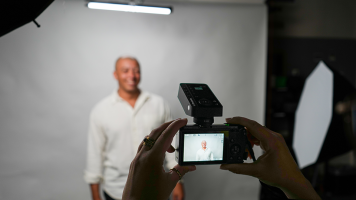
At first glance, studio photography and the compact camera may seem strange bedfellows. The type of work associated with the studio—still life, product photography, portraiture, macro photography—usually wants cameras with larger sensors and interchangeable lenses, especially in professional applications. Compact, point-and-shoot cameras, for their part, have their natural home in everyday, travel, nightlife, and street applications, where their discretion and size become virtues.
It might seem almost cruel to introduce the compact to the

by Mathew Malwitz · Posted
At one point or another, you’re bound to hear someone say that you need to shoot in a RAW file format. There are advantages to this decision, from additional detail to better control over the look of our final image. But what exactly is a RAW file and what does it do for our photographs? In this guide, we aim to give you a better understanding of the RAW file and how to use it to our advantage.
What Is a RAW File?
RAW files, sometimes referred to as digital negatives, are the raw data recorded by your camera’s imaging sensor. This data is

Posted
Sony Artisan of Imagery Tony Gale shows how to use and improve your flash photography. Using both pop-up flash and speedlites, he goes over how to control and modify the flash for the best results.
0:00 - Intro
2:22 - Speedlite technology now
8:15 - The pros of speedlites
11:42 - Guide number
14:12 - Built in pop-up flash
34:50 - Flash hot shoe connection - TTL vs manual
40:14 - Reflectors
43:13 - Speedlites flash on the camera setup
1:00:17 - Other light modification
1:17:48 - Shutter speed in relation to flash
Sponsored by

by Mathew Malwitz · Posted
Who doesn’t want to capture fun and creative portraits of our four-legged friends? We know we love it. In fact, pet photography may just be the most popular form of photography there is. Think of all the smartphone snaps of yawns, big stretches, and funny moments we all take of our cats, dogs, chinchillas, and beyond.
Quick snaps aside, you know what really ups the quality of our pet portraits? Lighting. Just as with any form of portrait, lighting unlocks possibilities that can be impossible without it. But what lighting system should we use?

by Luke Rollins · Posted
Subject and style may vary, but consistency is a quality shared by all successful photo studios. When working indoors, that begins with lighting. Strobes remain the bread and butter of many still photography studios. Unlike natural light, which can be finicky and unpredictable; on-camera flashes, which are not typically designed for studio use; or continuous lights, which can become costly as output increases; strobes are built to withstand the rigors of studio life while providing flexible and powerful light. But with so many options on the

by Mathew Malwitz · Posted
Good lighting is essential to creating a strong, visually pleasing image. This is as true for naturally lit outdoor shots as it is for studio portraits. For individual or even couples portraits, many photographers make use of on-camera flash or compact, battery-powered strobes to supplement natural light and fill shadows, but how do we situate these in the scene? What light shaping tools should we use? Groups alone can be tricky for a plethora of reasons. Whether it be getting everyone to smile, getting kids to look at the camera, or the

by Mathew Malwitz · Posted
Photographing pets is something you likely do daily, whether it be with a phone or a dedicated camera. I don’t know about you, but I have thousands of pics of my pup filling up my photos app. After all, pets are part of the family, and we want to capture them in the best possible light. In this quick guide, we’re going to look at 10 ways you can improve your pet photography with practical creative tips and techniques as well as gear.
1. Get to your pet’s level. If there’s one trick to make your images more engaging, it’s to physically shoot

by Mathew Malwitz · Posted
Lighting is the key to all photography. While elaborate, multi-light setups may appear to be the standard, the creative photographer can produce a seemingly endless range of images using just one light source. This guide is designed to help those beginners out there build the perfect one-light kit for portrait photography.
Why One Light?
I completely understand why multi-light “studio in a box” kits are tempting to beginner and budget-conscience photographers. Why spend hundreds of dollars on one light when you can get three lights complete

by Cory Rice · Posted
The trick with any home studio is in creating a space that can be used to create images that do not betray the fact that you shot them in your living room, in your pajamas, using your pet dog as an assistant. Luckily, creating a home studio can be done fairly easily without breaking the bank. This article will help get you up and running.
Planning Your Studio
Before making any purchases, it is important to sit down first and answer some basic questions about what you want your studio to accomplish. First, what type of photographs do you plan

by Mathew Malwitz · Posted
One of the most effective ways to improve your portraiture is by controlling the light, and one of the most effective ways to control your light is to move it. Seems like a simple enough concept, but it can be daunting at first, especially if you're using a speedlight or an on-camera flash. Despite its misleading name, an on-camera flash can, very easily, be used off the camera. The "on-camera" part simply refers to its form factor

by Mathew Malwitz · Posted
Finding the right lighting solution on a budget can be overwhelming, even for the most seasoned shooters. To make things a little easier, we’ve put together a list of some our favorite lights and lighting accessories for under $100.
Speedlights
The Godox TT350 Flash is a small TTL speedlight available for most major brands. TTL stands for “through-the-lens” metering, which is as close to auto as flash photography can

by Mathew Malwitz · Posted
For macro photographers, having the right gear is essential. Magnification and lighting are key, but you don’t necessarily need the biggest, priciest macro lenses out there to get close-up shots. If you’re a macro photographer yourself or buying a gift for one, we have some excellent recommendations for every budget.
Gifts Under $50
1. Close-up macro filters (like this Macro Lens

by Mathew Malwitz · Posted
Portraiture: It’s one of the most popular and prevalent forms of photography. Although it may seem simple on paper, it comes with its own unique obstacles. Of course, you’ll want to be familiar with your gear. This is essential to all working photographers, but it allows you to focus your efforts on the genre-specific challenges you’ll face.
When photographing people, you’ll find that some folks are photogenic, while others are not. Your job as a photographer is to break down the barriers set by your clients and to put them in the most

by Mathew Malwitz · Posted
Weddings are one of the most significant days in a couple’s life, and they often have high expectations of the way it’s recorded. Some couples desire to have their day photographed in a manner in which they barely know it’s even happening. Others might prefer the superstar treatment and choose to have their special day shot in a more manicured, glamourous way. The approach—or “style”—we take to photographing a wedding is highly personal, while also being dependent on client’s needs. Wedding photography styles sit on a spectrum. There’s