Search results for: photography tips solutions how to choose right tripod
About 29 filtered results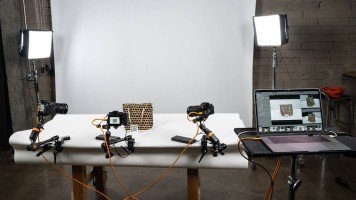
by Luke Rollins · Posted
At its most basic, tethered shooting involves connecting your camera, wired or wirelessly, to your computer as you shoot. You’ve likely seen it in some behind-the-scenes video for a professional studio shoot, or you just have a friend who swears it’s the best thing since sliced bread. Tethering is a shooting technique that can benefit many a photographer’s workflow significantly, though upon first hearing of it, the idea of tethering can be something that first requires a bit of education. Hopefully, this introduction will help get you started

by Mathew Malwitz · Posted
Despite what you might have seen on the internet, you don’t need all the money and time in the world to photograph wildlife. Sure, an African safari would be nice, but it is by no means the only way to capture stunning images of wild animals. In fact, regardless of where you live, odds are there’s a vast ecosystem that likely goes unnoticed. If you have trees in your neighborhood, you’re off to a great start.
What You Need to Photograph Wildlife
While gear plays a crucial role in our ability to photograph wildlife, it isn’t everything. In this

by Mathew Malwitz · Posted
One of the most effective ways to improve your portraiture is by controlling the light, and one of the most effective ways to control your light is to move it. Seems like a simple enough concept, but it can be daunting at first, especially if you're using a speedlight or an on-camera flash. Despite its misleading name, an on-camera flash can, very easily, be used off the camera. The "on-camera" part simply refers to its form factor

by Mathew Malwitz · Posted
Are you interested in the wide and wonderful world of photography? Well, you’ve certainly come to the right place! Check out this short checklist of a dozen items, designed to get you started in digital or film photography and headed in the right direction.
1. Inspiration
The first thing you need is a bit of inspiration. This may seem obvious, and odds are, if you’re reading this, you’ve already checked that box. Consider what exactly you’re interested in photographing, as this will help you make more informed decisions when purchasing gear

by Luke Rollins · Posted
Thanks to the ongoing film revival, B&H currently sells more than 200 unique 35mm film stocks. That's an astonishing number of choices, from major manufacturers like Kodak, Ilford, and Fujifilm, to smaller suppliers like Foma, Rollei, Agfa, Lomography, Kentmere, and Arista.
Obviously, we can't include comprehensive info and hands-on impressions for the scores of films currently available, but we will recommend some black-and white, color negative, and color

by Todd Vorenkamp · Posted
Before you venture out to photograph your first lunar eclipse, you should get some practice taking photos of the moon. If lunar photography is varsity-level stuff, lunar eclipse photography is all-pro. There are some unique challenges to the art, and great ways to get creative results, but the basics of lunar photography apply. Unlike

by Todd Vorenkamp · Posted
When the moon passes directly between Earth and the sun, those on Earth are treated to one of nature’s greatest spectacles—a total solar eclipse. It is a phenomenon that almost every observer would like to capture in a photograph.
Due to the rarity of the event, the short duration in which to capture it, and the dynamic nature of the subject, it is one of those photographic opportunities that requires the proper gear, setup, planning, and practice.
Eclipse and solar

by Jess Santos · Posted
Thinking back to my first time photographing the stars, let’s be real: I had no idea what I was doing. I spent the afternoon watching video after video, and after several hours felt confident enough to attempt it. Now keep in mind I had done the research on settings, but completely skipped over the planning phase. I didn’t run into one video that talked about things like the moon phase or dark skies, some pretty important information to know when getting into astrophotography. Nonetheless, a couple friends and I headed out at eleven o’

by Todd Vorenkamp · Posted
When most of us think of “sports photography,” we immediately think of iconic images from the world of land-based sports—American football, track and field, boxing, baseball, and others. One could argue, however, that yacht racing and sailing regattas provide the canvas for some of the most spectacular images in all of sports. And, if you have spent time around the water, seen the framed print on the wall of my physical therapist’s office, or flipped through the pages of any sailing magazine, you might have noticed that professional sailboat

by Allan Weitz · Posted
For many people, the word “landscape” typically conjures up images of snow-capped mountains, mighty rivers, and flower-covered meadows awash in the light of golden sunsets. But what if these photo utopias are beyond the bounds of a reasonable driving distance? What if your choices of places to photograph is limited to your immediate neighborhood or town? Are you skunked when it comes to landscape photography? The answer is, “No, not at all.”
Photographs © Allan Weitz 2021
Let’s start by defining our goal. A random Google check for a definition

by Todd Vorenkamp · Posted
Congratulations on getting a new camera, and welcome to the world of photography! You are going to love it. Before you go out shooting, take a look at these 10 things you should do first with your brand-new camera.
1. Charge the Battery
Being fresh out of the box, your camera’s battery is unlikely to be fully charged. Plus, manufacturers usually recommend a full charge cycle before you go out shooting for the first time. So, throw it on the charger and fill 'er up!
Also, we highly recommend having a

by Allan Weitz · Posted
The leaves may be down and your frost-laden lawn might be making crunchy sounds when you cross it in the morning, but that doesn’t mean you have to pack your cameras away until Spring; if you do, you’re going to miss some fine picture-taking opportunities.
Appropriate layers of warm clothing and insulated boots aside, capturing strong stills and video during the cold months of the year requires a bit of foresight, a few recommended weather-related accessories, a measure of common sense, and the desire to take great pictures despite the cold.

by Cory Rice · Posted
Photo studios come in all shapes and sizes. If you are working with small subjects, there is no reason to rent a massive loft or build an addition onto your house to get the shots you need. In many of these cases, a functioning setup can take up as little space as a table. Like all things related to photography, tabletop studios can be as simple or complex as their creators require. For basic applications, plenty of all-in-one kits exist for “non

by Bjorn Petersen · Posted
One of the genres of photography in which nearly everyone participates to some degree, landscape photography is one of the most classic and traditional categories of our medium. It is representative for so many reasons, whether being used for conservation purposes, documentary, backgrounds, events, or as a symbol—landscapes, as mundane or as grand as they might be, are the settings in which we exist. So how do we photograph these spaces? Or, more pointedly, how do we successfully photograph the land? It’s a rich topic, but on a practical level

by Jill Waterman · Posted
The prospect of an Antarctic journey is sure to conjure an inescapable sense of adventure in even the most seasoned traveler. Award-winning photographer and journalist Caryn B. Davis knows this feeling well, because her travel bug runs deep. A former producer, writer, and cameraperson for television documentaries, Davis shifted cameras and careers, in 2000, to specialize in architectural and travel photography.
“My dream has always been to travel the world and take pictures and write about it,” she says. “And that seems to be happening with