Search results for: photography tips solutions product photography tips
About 166 filtered results
by Luke Rollins · Posted
By now, the film resurgence has eclipsed its charming underdog status to become a full-blown front in what has become an all-out, open revolt against the smartphone and its visual aesthetics. What distinguishes the “film look” from the digital—texture, material imperfections, color magic, and the analog halo of yesteryear—comes at a price tag as resurgent as the medium itself.
Despite the contradiction (or perhaps because of it), the pursuit of the film look in a digital format has become something of a cottage industry, with manufacturers,

by Mathew Malwitz · Posted
The days of the large, dedicated photography studio being the norm are numbered, with many professionals preferring alternatives or using smaller spaces within their homes. This opens a Pandora’s box of tripping hazards and cramped conditions as light and background stands sit sprawled across the floor. These stands aren’t designed for these spaces, nor are they advantageous for more permanent fixtures.
At B&H, we understand the struggles of making do with small spaces, and while we’ve expanded over the years, we know that’s not
by Luke Rollins · Posted
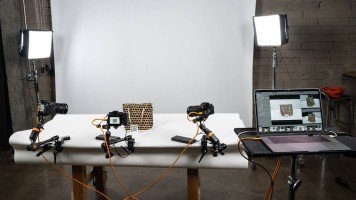
At its most basic, tethered shooting involves connecting your camera, wired or wirelessly, to your computer as you shoot. You’ve likely seen it in some behind-the-scenes video for a professional studio shoot, or you just have a friend who swears it’s the best thing since sliced bread. Tethering is a shooting technique that can benefit many a photographer’s workflow significantly, though upon first hearing of it, the idea of tethering can be something that first requires a bit of education. Hopefully, this introduction will help get you started

by Luke Rollins · Posted
Canon has announced the second generation of its entry-level full frame mirrorless camera, the R8 Mark II. Having spent some time with the camera, we can speak to some of its most apt use cases: portraits, landscapes, street photography, and video.
Canon R8 Mark II

by Luke Rollins · Posted
IN THIS ARTICLE
1. (Don’t Fear) the Gear2. Good Dental Photography Is Good Photography3. Macro Discipline, Portrait Mindset4. Embrace the Flash5. Clinical, but with an Eye for Marketing
For dentists, the evidentiary benefits of a photographic practice go beyond meeting industry standards. They can be the foundation for professional development and the growth of your business. That said,
by Luke Rollins · Posted
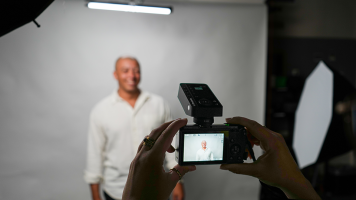
At first glance, studio photography and the compact camera may seem strange bedfellows. The type of work associated with the studio—still life, product photography, portraiture, macro photography—usually wants cameras with larger sensors and interchangeable lenses, especially in professional applications. Compact, point-and-shoot cameras, for their part, have their natural home in everyday, travel, nightlife, and street applications, where their discretion and size become virtues.
It might seem almost cruel to introduce the compact to the

by Luke Rollins · Posted
Achieving a standard of production value is an essential component of establishing a brand and growing a following. For part-time, burgeoning, and mid-level creators, it can feel like bridging that gap is less a matter of learned skill and more about the equipment you can afford.
In most cases, the problem isn’t budget at all. Acquiring the specific know-how can give your content professional sheen with little to no financial outlay.
Lighting design is arguably the most immediately visible production component—and the one most capable of

by Mathew Malwitz · Posted
For a beginner, few things seem more intimidating than photographing a wedding. A sense of anxiety is perfectly normal if you haven't yet spent much time in this field. It's important to remember that we all begin somewhere, and even the most experienced pros were also novices at one point. With practice and education, nerves begin to morph into confidence.
No two weddings are the same, but whether traditional or unconventional, the goal is to be properly equipped to document the key moments of the day. A

by Steven Esposito · Posted
The FIFA World Cup 2026 is currently underway with billions of fans tuning in to see their favorite teams on the pitch. For this year, FIFA named Lenovo as their Official Technology Partner, providing fans with deeper insights into player statistics and match analytics, bringing people even closer to the action no matter where they are. With such an ambitious task at hand, we must ask the question: How does any of this work?

Posted
Filmmaker Cooper O’Hearn and photographer Derek Fahsbender team up to break down filmmaking to its core, from pre-production and camera settings to storytelling, theory, color-grading and more.
0:00 - Intro
7:58 - Photography vs. Videography
10:59 - Frame rates & Shutter speed
17:29 - ND filters
19:18 - Aperture& ISO
24:32 - White balance
26:17 - Peaking & zebras
29:49 - Audio
32:21 - Color Profiles
34:22 - Editing software
36:19 - File storage
42:23 - Types of shots
45:13 - Filming tips
by Mary Latvis · Posted
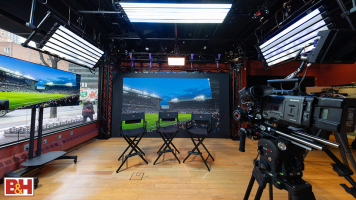
Getting ready to prep or shoot your latest video project? In addition to being the largest photography store in the USA, B&H Photo also incorporates The Studio alongside a state-of-the-art technology space, The Studio Technology Center (STC). The team focuses on providing complete professional video solutions while The Technology Center serves as an access hub to latest cinema and broadcast technology,

by Mathew Malwitz · Posted
Birding is, by definition, the recreational hobby of observing and identifying wild birds in their natural habitat. Finding birds is the easy part. Just go outside and stop, look, and listen, and you’ll notice our feathery friends like you’ve never seen before. But how do we identify them? We need to consider a few physical attributes of the birds, from their overall shape to the length of their tail and more.
Birds come in all sorts of elaborate shapes, sizes, and color patterns that make them stand out, or in some cases, remain hidden from

by Shawn C. Steiner · Posted
Pop on a pair of (decent) sunglasses and not only are your eyes less strained, things just look better. The reason for this is likely the polarization effect. Colors may appear more saturated, bright blue skies can take on a deeper hue, and some pesky reflections just vanish. All of these can benefit certain photographs and make the circular polarizer filter one of the best—and most difficult—filters to use.
Exactly What Does a Polarizer Do?
It’s

by Luke Rollins · Posted
Sports photographers are newcomers to the a7R party. Not because they're late to the series, but because until now the camera line simply wasn't well-suited for action, what with its processor-hungry file sizes slowing things down. Sony aims to change all that with the a7R VI Mirrorless Camera, the company's latest 66.8MP full-frame shooter offering unprecedented speed for the series.

by Mathew Malwitz · Posted
The a7R series has long been popular among wildlife photographers for the big files and associated crop-ability so to speak. That said, one area where the R could use some improvement is in the speed department. After all, it was never designed to be a wildlife camera; Its bread and butter was always resolution with landscape, portrait and studio photographers making the most use of all the extra detail. But, as tends to happen, Sony bends the rules.