Search results for: photography tips solutions smartphone lenses what you need know
About 32 filtered results
by Todd Vorenkamp · Posted
There is nothing that can replace the extreme close-up view of a rare bird in the wild. Binoculars can get you close but, if you want to look the bird in the eye or confirm that identification for your life list, you need a spotting scope. Spotting scopes pack incredible magnification in a generally simple and lightweight package that is

by Mathew Malwitz · Posted
Getting great pictures of your newborn or infant is certainly no easy task. Indeed, the window of opportunity for coaxing a perfect expression and a picturesque pose from your little bundle of joy is fleeting, at best. For parents (and others) who aspire to capture such moments, user-friendly gear, highly functional accessories, and photogenic props can make all the difference. With this in mind, here are our best recommendations to help make photo sessions with your unpredictable little darlings a success.
Pick the Right Camera for the Job

by Todd Vorenkamp · Posted
Before you venture out to photograph your first lunar eclipse, you should get some practice taking photos of the moon. If lunar photography is varsity-level stuff, lunar eclipse photography is all-pro. There are some unique challenges to the art, and great ways to get creative results, but the basics of lunar photography apply. Unlike

by Zack Young · Posted
So, your spouse has elected you official photographer of the family holiday party! Or maybe your boss volunteered you to shoot the office party? Or your kids put your name in the running as school party cameraperson. Regardless of the type of party you’ve been assigned (or volunteered) to photograph, here are some tips and tricks that will help you capture memories that will last a lifetime.
Right Gear for Your Holiday Party
As your party’s official

by M. Brett Smith · Posted
It's holiday season, and if you're reading this on any kind of electronic device (shout out to everyone who still subs my handwritten newsletter, btw), you likely know someone who either is or is interested in becoming a vlogger or mobile content creator. If said creator or aspiring vlogger is on your holiday shopping list and you're not quite sure what to get them, fear not, for we have put together a gift guide of some of our favorite mobile photo and video accessories.
SmallRig 1.55X Anamorphic Lens
Thanks to the continued advancement of

by Todd Vorenkamp · Posted
Knowing your lens’s sharpest aperture—its “sweet spot”—is one surefire way to maximize image sharpness. Image sharpness is the goal of many photographers—regardless of the subject matter. Sharpness is also the catalyst for the dozens of lens-testing and review websites that populate the Internet, as well as the impetus for endless snobbery and debates over which lenses reign supreme in the quest for ultimate clarity. In my article,

by Todd Vorenkamp · Posted
Welcome to Part 2 of our deep dive into the world of Intentional Camera Movement (ICM) photography. In this second part of the three-part series of articles, we look at the kinds of gear that ICM artists recommend, as well as the technical side of the art including camera settings and techniques.
Above image © Ceri Herd
Camera
Gear is not a limiting factor in exploring ICM photography—you can even use a smartphone, provided you have a way of controlling the shutter speed. For repeatable, deliberate results, you will want to have a camera that

by Todd Vorenkamp · Posted
If you are selling a used car online, one great way to make your car stand out from the rest and attract more attention is to up your photo game. You don’t need to be a professional photographer to capture compelling images of the car or truck you are ready to sell—a few simple tips can help your photos grab the attention of possible buyers.
Photographs © Todd Vorenkamp
You’ve seen the standard used-car photo—the boring shot taken outside a dealership, in a driveway or crowded parking lot, midday, from standing eye level, of a sterile-looking

by Todd Vorenkamp · Posted
Specular out-of-focus highlights have appeared in photographs since the first photos were taken through lenses. In 1997, Photo Techniques magazine introduced the word “bokeh” to the photography world’s vernacular and the out-of-focus areas of photographs have been scrutinized ever since. Before the term, there was certainly discussion about the aesthetics of the out-of-focus specular highlights of a photograph, but until 1997, there wasn’t a good word in the English language to describe the phenomenon. Credit goes to Mike Johnston, article

by Cory Rice · Posted
Watch enough online tutorials or read enough marketing copy and you might be convinced that a successful portrait requires cranking the aperture of your lens to its widest setting. While the “wide-open” approach to portraiture is far from new, its usage has surged in recent years, leading to a surplus of photos flaunting extremely shallow depth of field. As polarizing as it is popular, whether this phenomenon is viewed as a scourge or a blessing depends on the audience. Plenty of striking portraits have been made using this technique but, like

by Todd Vorenkamp · Posted
If someone were to ask me what is the fastest, easiest, and most effective way of instantly improving their photography, my answer would be: a tripod. In the quest to make better photographs, we often dream of owning the latest camera body or the most expensive lenses. For many of us, these remain out of reach and impractical. A quality tripod, however, can be had for less than the price of a New York City dinner for two (with drinks) and, because of that, I

by Todd Vorenkamp · Posted
Imagine seeing an incredibly rare bird at a great distance through a spotting scope. Those birding next to you cannot see the same bird. You need to prove to them, and to your own life list, that you have spotted this rare species. It is way too far away for your camera to capture. What can you do? This is a job for… digiscoping!
Digiscoping with a spotting scope, telescope

by Todd Vorenkamp · Posted
So, you just bought a shiny, new, and maybe expensive, lens for your camera, and being the savvy consumer, you did your homework. You pored over customer reviews on the B&H Photo website, read online reviews splattered all over the Internet, grabbed a copy of every photo magazine that reviewed the lens, bookmarked dozens of websites, and now have the lens’s MTF curve charts burned into your retinas.
Now, your lens is here and it is time to go out shooting.

by Todd Vorenkamp · Posted
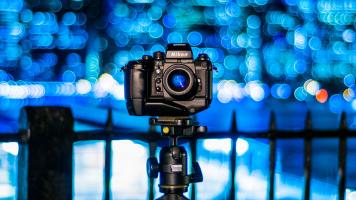
Is it strange to sit back and think that buying a film camera is a new experience to many—even most—photographers? Just 20 years ago, almost everyone was buying and using film cameras. Today, there are legions of photographers who have never shot a single roll of film. Luckily for us, film photography still exists and there are both film and film cameras that you can buy with which
by Todd Vorenkamp · Posted
Welcome to the world of large(r)-aperture prime lenses and congratulations on taking a large step forward in your photographic journey with your purchase of a “nifty fifty” 50mm (or 50mm equivalent) wide-aperture lens for your camera! Whether you know it or not, you have just acquired a tool that can dramatically and immediately improve your photography, and this article is designed to help you start getting the most out of your new lens.
Photographs © Todd Vorenkamp, taken with a 50mm (or 50mm equivalent) lens
Regardless of whether you have a