Search results for: photography tips solutions understanding image stabilization
About 13 filtered results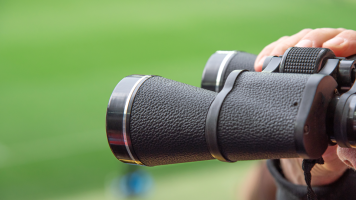
by Mathew Malwitz · Posted
When choosing binoculars or scopes, a term that should be heavily considered is "exit pupil." What is exit pupil, and what does it do? In optics, we're often focused on magnification and light-gathering capabilities, and these are essential for understanding how optics works, but overall viewing experience shouldn't be discounted.
If you look at any optic at arm's length, you'll see the small pinpoint sized window of

by Mathew Malwitz · Posted
As we learn about exposure, we need to talk about shutter speed. Your camera’s shutter controls the duration of an exposure and is one of the three settings that determine the exposure of an image. Together, these settings are known as the exposure triangle.
Where aperture controls the amount of light we allow to reach our imaging area, it is the duration of our exposure that will directly influence whether an image is sharp or blurred. This is what makes it such a significant piece of the exposure puzzle. Now, let’s take a closer look

by Mathew Malwitz · Posted
Photography is by definition, the capture of light on a light sensitive surface. That surface could be glass, tin, film, or a digital imaging sensor like those found in most modern cameras. The amount of light that reaches our light-sensitive surface is what we can define as exposure.
A good exposure will look accurate to life or the photographer's creative vision. It will maximize an images quality and

by Mathew Malwitz · Posted
What better place to spend a Saturday morning than the zoo. You can enjoy some time outside, all while seeing a variety of both local and exotic animals you'd otherwise never dream of encountering. Zoos also are great place to try your hand at photographing wildlife! In this guide, we're talking about taking our camera to the zoo to capture natural looking images of animals in their element! We'll be covering what you need as well as tips and tricks that'll help you capture stunning, natural looking images of animals.
Above photograph © Mathew

by Mathew Malwitz · Posted
For macro photographers, having the right gear is essential. Magnification and lighting are key, but you don’t necessarily need the biggest, priciest macro lenses out there to get close-up shots. If you’re a macro photographer yourself or buying a gift for one, we have some excellent recommendations for every budget.
Gifts Under $50
1. Close-up macro filters (like this Macro Lens

by Tim Ireland · Posted
Macro photography allows photographers to explore the intricate details of subjects at a 1:1 or greater magnification ratio. However, capturing sharp, stable, and well-lit macro shots can be challenging, due to factors like camera shake, focusing difficulties, and lighting issues. This comprehensive guide will delve into the support systems and related tools that can enhance your macro photography experience, addressing specific challenges that may arise.
Stabilization Tools
Studio Stands: Studio stands are large, stable support systems

by John Harris · Posted
Many photographers, attempting to postpone a major decision or save money, will buy a lens they believe will give them the results they desire, only to find that the lens does not perform as expected. When budget is a factor (and when isn’t it?), it’s important to select a telephoto lens that best serves your specific purposes. When it comes to sports and wildlife photography, the purposes are often similar—magnify distant subjects, separate the subject from background—but it’s worth understanding a few basic distinguishing features and how

by John Harris · Posted
What can you do with a high-end telephoto lens? Be a boss, is what you can do. I mean, c’mon! Strutting around the sidelines or cuttin’ through the bush with one of these beasts resting on your shoulder―not only do you look tough, but you’re also carrying a lens that you need to get the best photos in sports and wildlife photography. When I say best, let’s not underestimate the greatness of photographers who can create wonderful images with a wide-angle lens or even a telephoto of lesser quality, but to really excel in the disciplines of

by Jill Waterman · Posted
Making pictures by night is a curious practice. While specialists of this subject embrace it as a deep-seated passion and have a never-ending quest for technical and creative advancement, those more familiar with daytime photography are often unaware that tried and true photography rules often need to be adapted or even overlooked at night. With this in mind, consider the following tips the next time you venture out in the darkness, to help you to adapt.
1. Take a Chance and Explore the Unknown
What’s my exposure time? This is the number one

by John Harris · Posted
Landscape photography is often considered the realm of the wide-angle lens, but as my editor made clear in the pitch for this article—“It isn’t all about wide-angle.” And she is right: As photographers, we tend to grab the 35mm (or wider) lens when we are inspired by our vistas. Could it be the sheer scale—the vastness of the oceans and mountains—that enchants us? And is it human folly to try to encapsulate what cannot be confined? Do we want to replicate what our natural angle of view perceives, or, perhaps, is it the distortion created by

by Jason T · Posted
One of the perks of working at B&H is that sometimes you get to play around with high-end gear that you would never be able to afford yourself. That’s been the case for me during the past six weeks, since Leica let me borrow the incredible Leica 10-P and Leica Summilux-M 35mm f/1.4 ASPH. lens while I worked on a

by Allan Weitz · Posted
Sometimes, the phrases, acronyms and strings of numbers or number-letter combinations used to identify photographic hardware or techniques can be daunting to the uninitiated neophyte photographer.
We've prepared a list of the basic terms. Have we left any out that you think should be added? Please let us know!
0-9 | A | B | C | D | E | F | G | H | I |

by John Harris · Posted
So, you just bought your first DSLR camera and you are interested in joining the ranks of image-makers everywhere who find pleasure and creativity in documenting the world as they see it. What are you gonna do now? Do you know how to set your aperture? Or what ISO is? Did you know that DSLR stands for Digital Single Lens Reflex? It doesn’t matter: what you do know is that you’re ready to step up from your point-and-shoot camera and create images over which you have more control.
A digital SLR camera is a great machine that allows you to