Search results for: photography tips solutions why less is more in photo editing
About 25 filtered results
by Mathew Malwitz · Posted
You’re probably aware that film has been making a comeback in recent years, but let’s be honest with ourselves. Did it ever really go away? Sure, it may have seen a dip in popularity at the dawn of the digital age, but many serious enthusiasts never stopped using it. Just ask the experts here at B&H! In fact, we asked some long-time film shooting experts here, “What’s your favorite film/camera combination and why?” Below, you’ll find their answers
by Luke Rollins · Posted
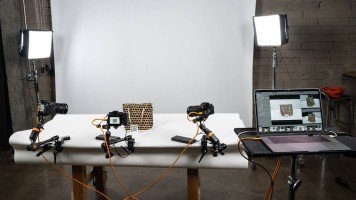
At its most basic, tethered shooting involves connecting your camera, wired or wirelessly, to your computer as you shoot. You’ve likely seen it in some behind-the-scenes video for a professional studio shoot, or you just have a friend who swears it’s the best thing since sliced bread. Tethering is a shooting technique that can benefit many a photographer’s workflow significantly, though upon first hearing of it, the idea of tethering can be something that first requires a bit of education. Hopefully, this introduction will help get you started

by Steven Gladstone · Posted
Whether you’re a student or a seasoned veteran, selecting the right camera can make your head spin with questions. Does sensor size matter? What’s the difference between 4:2:0 and 4:2:2? Do I really need a camera that can record 8K? What about raw? We’ll explain the key components that help a camera produce cinematic images, and in doing so, hopefully help you make that all-important decision.
Evaluate Your Needs and Your Budget
Before considering certain cameras, you must know your needs and your budget. And be realistic. If you are a student

by Mathew Malwitz · Posted
These days, everyone has a camera right in their pocket. Smartphones have long been the go-to camera for quick photos of our friends, family, pets, and of course, ourselves. With features like portrait mode, users can simulate blurry backgrounds and isolate their subject for more eye-catching images. What else could you ever need? What if I told you that with the

by Mathew Malwitz · Posted
Portraiture: It’s one of the most popular and prevalent forms of photography. Although it may seem simple on paper, it comes with its own unique obstacles. Of course, you’ll want to be familiar with your gear. This is essential to all working photographers, but it allows you to focus your efforts on the genre-specific challenges you’ll face.
When photographing people, you’ll find that some folks are photogenic, while others are not. Your job as a photographer is to break down the barriers set by your clients and to put them in the most

by Mathew Malwitz · Posted
As photographers, especially wedding photographers, one of the best parts of a job is delivering the final images to clients. Sure, it comes with the anxious anticipation of waiting for that “we LOVE them” email from the client but, it’s a box to check off in your workflow. Deciding exactly how you deliver those images in the age of instant gratification presents its own set of questions, decisions, and trade-offs. What, then, are the best and worst options for delivering photographs? Well, it’s going to vary from photographer to photographer,

by Rachel Leathe · Posted
I can’t count the number of times a stranger has approached me while I’ve been setting up my drone to ask if they can watch the launch. I imagine this is how the world’s first television owners must have felt as the neighborhood kids crowded around the only television on their block to witness such groundbreaking technology.
by Caleb Quanbeck · Posted
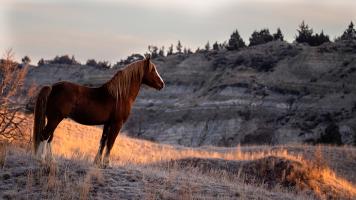
Getting close enough to wild animals is one of the greatest challenges a wildlife photographer faces. So how do you solve this problem? The way most wildlife photographers do is to buy a telephoto lens with as much reach as their wallet allows. Today, a fairly economical way to enter the realm of the super-telephoto lens has been via the family of very nice 150-600mm lenses from brands like Sigma and

by Shawn C. Steiner · Posted
Time lapses feel a lot like photography during capture stages and a lot like video during the editing process. Creating them is a common progression for photographers looking to dip their toes into video and motion because you can start making high-quality time lapses with your current still photo equipment. If you are starting to tackle time-lapse projects, applying some video tricks can help smooth out your final product.
The Absolute Basics
I’m hoping that by the time you make it to this article you already have a basic understanding of how

by Jill Waterman · Posted
Jean Fruth is a diehard baseball fan. “Growing up in New York, with two great hometown teams, how could you not connect with the sport?” she asks. As a teen, she worked in a restaurant owned by serious Mets fans who had season tickets, “And they would take me to games,” she reminisces. “And my grandfather was a Mets fan, listening to games on the radio.”
Such formative influences foreshadow her ultimate path to becoming one of baseball’s preeminent photographers, yet it took many years of exploration for Fruth to put a plan into action. “My

by Allan Weitz · Posted
I’ll never forget the first time I looked through the viewfinder of a camera fitted with a 20mm ultra-wide-angle lens. Everything looked amazing and I blew several rolls of film shooting everything I saw along the way. Prior to using this “exotic” lens, I had never shot with anything wider than the 50mm normal that came with my first 35mm camera.
The sobering part came when I developed the film and started eyeballing the results of my first outing. In a word, they were underwhelming, but I kept at it until I figured out how to use ultra-wide

by Todd Vorenkamp · Posted
FUJIFILM continues to lead the digital photography world with its unique and beautiful film simulations that give FUJIFILM X series APS-C interchangeable lens, X series fixed lens, and
by Cory Rice · Posted
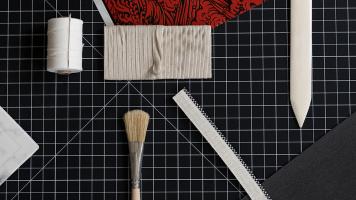
In 1843, Anna Atkins made history when she bound her cyanotype impressions of algae into the first photographically illustrated book, Photographs of British Algae. A few months later, inventor of the salted paper print and acquaintance of Atkins, Henry Fox Talbot, published The Pencil of Nature, the first commercially

by Allan Weitz · Posted
In this week’s edition of FAQ, the topic is a wide-angle lenses. When describing the focal lengths of lenses, there are three main groups: normal, wide-angle, and telephoto.
What is a wide-angle lens?
By way of comparison, normal lenses approximate the perspective and special relationships between elements within the viewing area the way our eyes do. In other words, normal lenses represent the world much like the way we see it.
Wide-angle lenses capture a wider view of the scene before the camera, but because they squeeze more of the scene
by Cory Rice · Posted
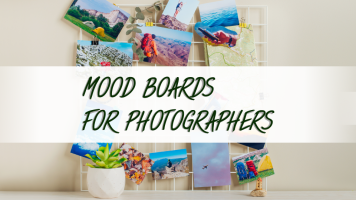
Mood boards have long served as efficient platforms for communicating ideas in the advertising, fashion, and film worlds. Their popularity stems from the simple fact that it is easier to show than to describe the direction of a visual project when working with a large creative team. Freed from its commercial roots, moodboarding can be a powerful exercise for photographers working through new ideas or planning future projects.
Foamcore provides an excellent support for presentations while sketchbooks and notebooks are perfect for personal,