Rangefinder Lenses

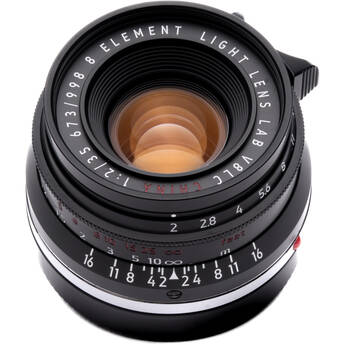
Light Lens Lab 35mm f/2 Lens (Leica M, Black)
- Full-Frame | f/2 to f/16 Aperture
- Fast, Wide-Angle Prime Lens
- Double-Gauss Optical Design
- Manual Focus Design | 2.3' Close Focus
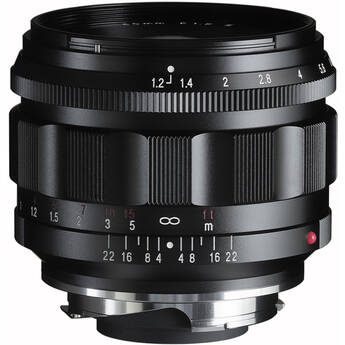
Voigtlander Nokton 50mm f/1.2 Aspherical II Lens (Leica M)
- Full-Frame | f/1.2 to f/22 Aperture
- Extremely Fast, Lightweight Prime
- 12-Blade Iris | Round, Ultrasoft Bokeh
- Eight Optical Elements in Six Groups
Light Lens Lab 50mm f/1.5 Z21 Lens (Leica M, High-Gloss Black)
- Full-Frame | f/1.5 to f/22 Aperture
- Ultrafast, Versatile Prime Lens
- 6-Element, 4-Group Optical Design
- Manual Focus Design | 2.3' Close Focus
Meyer-Optik Gorlitz Biotar 58mm f/1.5 II Lens for Leica M
- M-Mount Lens/Full-Frame Format
- Aperture Range: f/1.5 to f/16
- Manual Focus Design
- 14-Blade Diaphragm
Meyer-Optik Gorlitz Biotar 75mm f/1.5 II Lens (Leica M)
- Full-Frame Format | f/1.5 to f/16
- Fast Prime Lens
- Manual Focus Design
- 14-Blade Diaphragm
ZEISS Biogon T* 35mm f/2 ZM Lens (Silver)
- Leica M-Mount Lens
- Aperture Range: f/2 to f/22
- One Low Dispersion Element
- ZEISS T* Anti-Reflective Coating
ZEISS Biogon T* 28mm f/2.8 ZM Lens (Silver)
- Leica M-Mount Lens
- Aperture Range: f/2.8 to f/22
- One Low Dispersion Element
- ZEISS T* Anti-Reflective Coating
ZEISS Biogon T* 28mm f/2.8 ZM Lens (Black)
- Leica M-Mount Lens
- Aperture Range: f/2.8 to f/22
- One Low Dispersion Element
- ZEISS T* Anti-Reflective Coating
Light Lens Lab 35mm f/1.4 Aspherical Lens (Leica M, Chrome)
- Full-Frame | f/1.4 to f/16 Aperture
- Ultrafast, Compact Prime Lens
- Aspherical, Achromatic & ED Elements
- 9-Element, 5-Group Optical Design
Light Lens Lab 50mm f/2 Lens (Leica M, Titanium)
- Full-Frame | f/2 to f/16 Aperture
- Fast, Compact Prime Lens
- Ultrastigmat Optical Design
- Manual Focus Design | 2.3' Close Focus
ZEISS Biogon T* 21mm f/2.8 ZM Lens (Silver)
- Leica M-Mount Lens
- Aperture Range: f/2.8 to f/22
- ZEISS T* Anti-Reflective Coating
- Manual Focus Design
ZEISS Biogon T* 21mm f/2.8 ZM Lens (Black)
- Leica M-Mount Lens
- Aperture Range: f/2.8 to f/22
- ZEISS T* Anti-Reflective Coating
- Manual Focus Design
Light Lens Lab 35mm f/2 Lens (Leica M, Stainless Steel)
- Full-Frame | f/2 to f/16 Aperture
- Fast, Wide-Angle Prime Lens
- Double-Gauss Optical Design
- Manual Focus Design | 2.3' Close Focus
ZEISS Distagon T* 35mm f/1.4 ZM Lens (Silver)
- Leica M-Mount Lens
- Aperture Range: f/1.4 to f/16
- Two Aspherical Elements
- Three Low Dispersion Elements
Leica Summaron-M 28mm f/5.6 Lens (Leica M, Silver)
- Full-Frame | f/5.6 to f/22
- Manual Focus Design
- Minimum Focusing Distance: 3.3'
- Lightweight and Slim Profile
Leica Macro-Elmar-M 90mm f/4 Lens (Leica M)
- Full-Frame | f/4 to f/22
- Multi-Layer Anti-Reflective Coating
- Retractable Lens Design
- 1:2 Magnification with Macro-Adapter-M
ZEISS Distagon T* 15mm f/2.8 ZM Lens
- Leica M-Mount Lens
- Aperture Range: f/2.8 to f/22
- One Aspherical Element
- Two Low Dispersion Elements
Leica Summilux-M 50mm f/1.4 ASPH. Lens (Leica M, Safari Green)
- Full-Frame | f/1.4 to f/16
- Fast Normal-Length Prime
- Improved Sharpness and Bokeh
- Manual Focus Design, 1.5' Min. Focus
Leica APO-Summicron-M 90mm f/2 ASPH. Lens (Leica M)
- Full-Frame | f/2 to f/16
- Apochromatic Design
- One Aspherical Element
- High Refractive Index Glass
Leica Summicron-M 28mm f/2 ASPH. Lens (Leica M, Safari Green)
- Full-Frame | f/2 to f/16
- Manual Focus Design
- Minimum Focus Distance: 1.3'
- One Aspherical Element
Leica Summilux-M 35mm f/1.4 ASPH. Lens (Leica M, Silver)
- Full-Frame | f/1.4 to f/16
- One Aspherical Element
- Floating Elements System
- Manual Focus Design
Leica Summilux-M 35mm f/1.4 ASPH. Lens (Leica M, Safari Green)
- Full-Frame | f/1.4 to f/16
- One Aspherical Element
- Floating Elements System
- Manual Focus Design
Leica Noctilux-M 50mm f/1.2 ASPH. Lens (Leica M, Black)
- Full-Frame | f/1.2 to f/16
- Manual Focus Design
- Minimum Focus Distance: 3.3'
- 16 Aperture Blades
Leica Noctilux-M 35mm f/1.2 ASPH. Lens (Leica M)
- Full-Frame | f/1.2 to f/16
- Extremely Fast, Compact Wide-Angle Prime
- Three PGM Aspherical Elements
- Floating Elements System
Leica APO-Summicron-M 50mm f/2 ASPH. Lens (Leica M, Black)
- Full-Frame | f/2 to f/16
- Apochromatic Design
- One Aspherical Element
- Floating Elements System
Leica APO-Summicron-M 50mm f/2 ASPH. Lens (Leica M, Silver)
- Full-Frame | f/2 to f/16
- Apochromatic Design
- One Aspherical Element
- Floating Elements System
Leica Noctilux-M 50mm f/0.95 ASPH. Lens (Leica M, Black)
- Full-Frame | f/0.95 to f/16
- Two Aspherical Elements
- Five Partial Dispersion Glass Elements
- Three High Refractive Index Elements
Leica Noctilux-M 75mm f/1.25 ASPH. Lens (Leica M)
- Full-Frame | f/1.25 to f/16
- Two Aspherical Elements
- Anomalous Partial/Low Dispersion Glass
- Floating Elements System
Choosing Rangefinder Lenses for Leica M Cameras
The term rangefinder lenses primarily refers to those lenses designed to fit Leica's range of cameras with the M-type camera mount. Several manufacturers make these lenses, and besides Leica, there are some manufacturers making film and digital cameras using that mount.
What Are Leica M-Mount Lenses?
Leica introduced M-mount 35mm lenses in 1954 when it launched its first M-type camera, the M3. This type of mount has a quick-release bayonet fitting for Leica's range of 35mm and digital rangefinder cameras. Unlike other camera manufacturers that now use electronics to control their camera lenses, Leica has stayed with an all-mechanical construction. This means Leica lenses still have manual aperture rings and manual focusing, a characteristic shared only by digital cinema lenses. Virtually any M-mount lens will fit an M-mount camera, so it's possible to purchase new lenses for any old Leica cameras and vice versa.
Characteristics of M-Mount Lenses
Thanks to compact camera dimensions, the distance between the lens mount and the sensor is short. This means that rangefinder lenses are small and light, yet offer excellent optical qualities. Leica rangefinder cameras use a prism arrangement in the viewfinder to identify the correct focus point. A cam fitted to the lens activates this prism.
Leica's rangefinder lenses are made of metal and use high-quality glass, producing good results. While not as expensive, lenses from Zeiss and Voigtlander also work well. Several other manufacturers also supply compatible lenses as well as some special effects lenses for M-mounts.
Camera Compensation for Different Focal Lengths
Rangefinder cameras have separate optical viewfinders with fixed magnification. When attaching a lens with a different focal length, its field of view changes. The camera compensates for this so that it correctly frames photographs in one of three ways. First, digital rangefinder cameras have a series of LED lens frames that illuminate in the viewfinder when activated by a six-bit barcode on the lens. Alternatively, lens information may be manually entered. Because lens frames don't cover all possible focal-length combinations, separate optical and digital viewfinders matching specific focal lengths are available for attachment to the camera's hot shoe. Finally, if the camera has a live view screen, you can use the screen for focusing and composition.
Fitting Rangefinder Camera Lenses to Other Cameras
Because many mirrorless system lenses have a similar lens-flange-to-sensor distance, it's possible to use adapters to fit rangefinder lenses to mirrorless cameras with smaller cropped sensors. This includes cameras from Sony, Olympus, and Panasonic, as well as Sony full-frame E-mount cameras. There are also adapters for fitting M-mount lenses to L-mount cameras from Leica, Sigma, and Panasonic. Conversely, it's possible to use adapters to fit numerous other lenses to Leica M-mount cameras.
Extend the reach of your rangefinder camera with high-quality M-mount lenses from B&H Photo and Video.