
In yet another entry to our 500-series guides, we’ll be discussing some of the many amazing equalizer modules for sale at B&H. In recent years, 500-series gear has exploded in popularity, and in turn, companies have been driven to offer more and more impressive and advanced modules—and with recent advancements in audio technology, the choices even include miniature recreations of legendary rack gear. So, whether you’re trying to add a standard or a superpowered 500-series EQ to your Lunchbox, read on to learn what we have in store!
Single Channel EQs
API AUDIO 550 and 560
Saul Walker—cofounder of API—is the inventor and creator of the 500-series format, and the API 550 and 560 EQs are the grandaddies of 500-series EQs. As such, the entire format takes their namesake from them. The API 550A, 550B, and 560 models we sell at B&H are modern takes of the classic vintage modules, but fear not—API is doing a great job maintaining the vintage circuitry, material build, and classic punchy sound of their EQs, updated for today’s competitive music production market (and let’s be honest … good luck finding an affordable vintage API 500-series module).
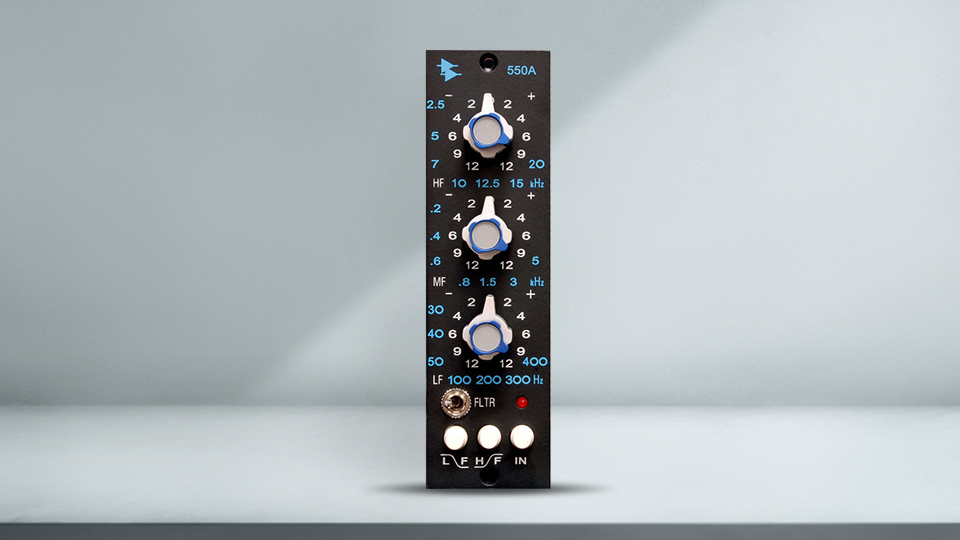
The API 550A and API 550B are highly regarded semi-parametric EQ modules, both operating with seven selectable frequency centers able to boost or cut up to ±12dB per band, along with a high and low shelf/peak switch for high and low bands. The difference between the two is the number of bands.
The API 550A has three frequency bands:
- LF: 30Hz - 400Hz
- MF: 200Hz – 5kHz
- HF: 2.5kHz - 20kHz
Whereas the API 550B has four frequency bands:
- LF: 30 – 400 Hz
- LMF: 75 – 1000 Hz
- HMF: 800 Hz – 12.5 kHz
- HF:2.5 kHz – 20 kHz
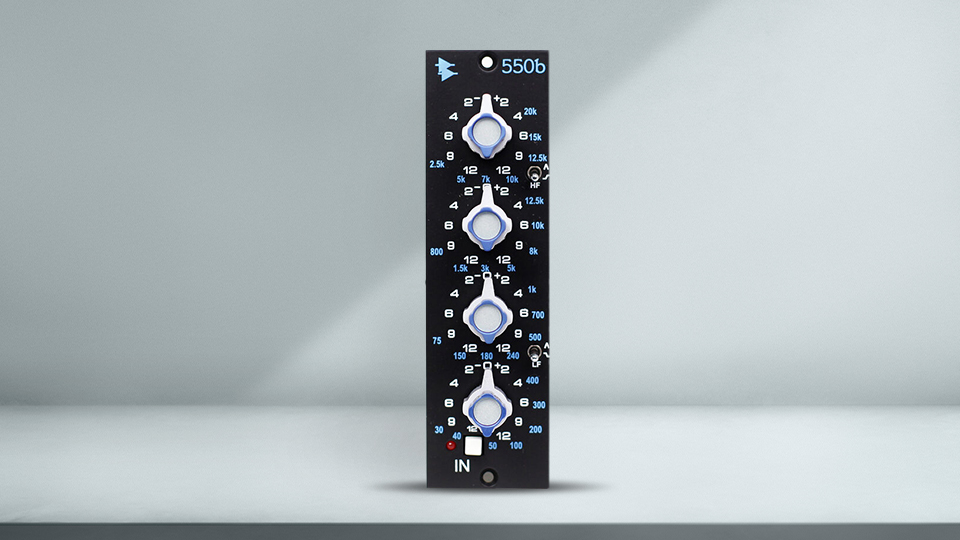
Notice that the frequency overlap of the 550B is far more layered and expansive than the 550A. The semi-parametric design of these devices means there is no controllable Q, but API’s EQs use a proportional Q system that narrows bandwidth as the amplitude/intensity of the parameter increases or decreases, making for a musical effect that avoids phase shifting.
The API 550A is a better choice for making broad boosts and cuts, for adding to a finished bus or mix, and for making fast decisions. Choose the API 550B if you’re looking for more surgical control—its broadly overlapping bands allow for some interesting movement while offering more overall versatility.
Now to the black sheep: as a 10-band graphic equalizer, the API 560 is a fundamentally different beast—but it still resembles the family by offering 12 dB of boost or cut per band with proportional Q, just like its siblings. Each of the 560’s bands intuitively represent an octave, each descending fader representing half the frequency of the last (a perfect octave), as such:
- 16 kHz
- 8 kHz
- 4 kHz
- 2 kHz
- 1 kHz
- 500 Hz
- 250 Hz
- 125 Hz
- 63 Hz
- 31 Hz
If you are wondering why the lowest two aren’t perfect doublings, well, I’ll do the math for you:
1000 Hz → 500 Hz → 250 Hz → 125 Hz → 62.5 Hz → 31.25 Hz
When it comes to sound, integers tend to be nicer when they’re bigger. Rather than doing some nonsense math or coming up with mathematically rigid halving/doubling, API just rounded up or down the number for convenience’s sake. Behold the peculiarities of audio engineering!
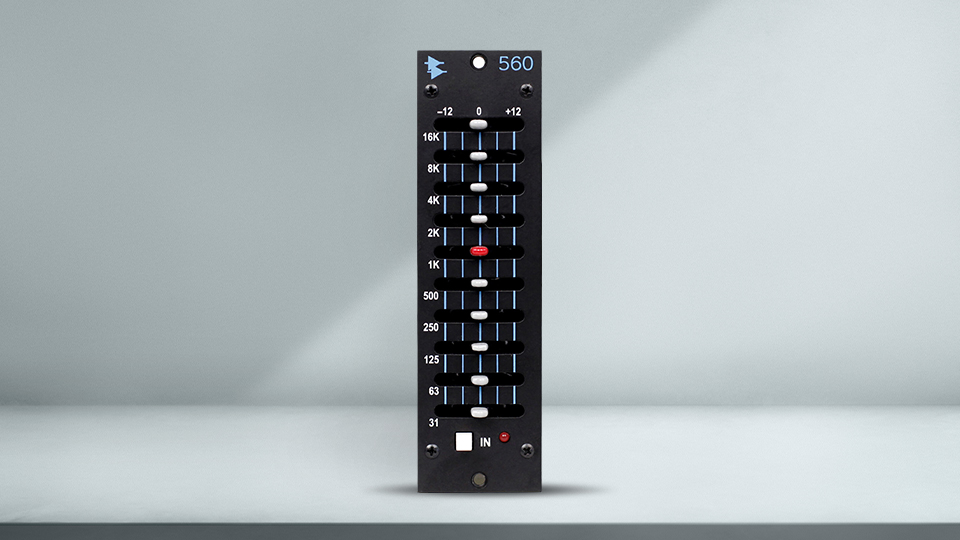
The API 560 can work fantastically by itself, great for sweetening or fine-tuning signals, but it shines most as a companion piece to either the 550A or 550B—if you got the scratch, I’d get either (or both) of the 550 EQs to pair with it.
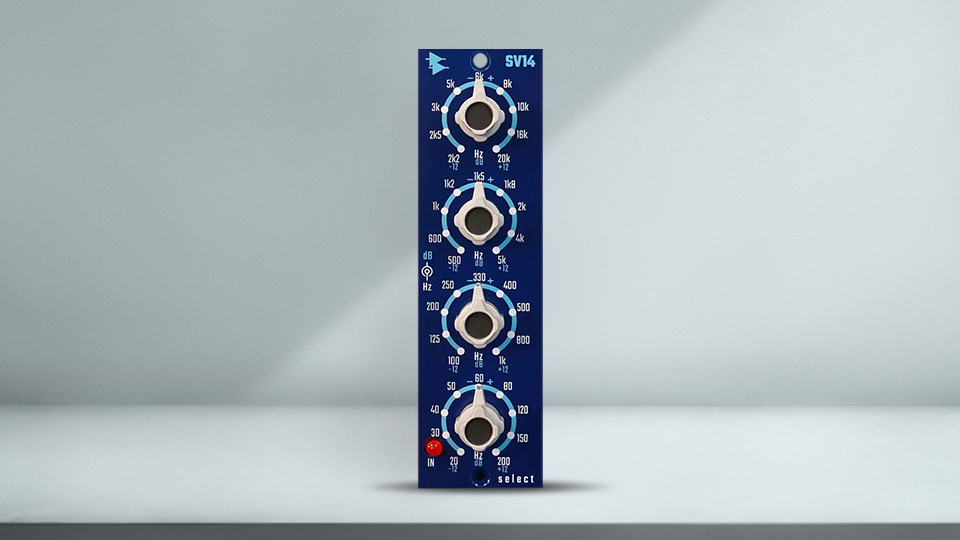
But who’s got that kind of money? Well, you’re in luck. If need that API EQ but are on a budget, check out the API SV14, based off the APSI 562. While it still delivers a distinct API sound, it has completely different internal architecture and circuitry, less headroom (+24 dB as opposed to +30 dB), and lacks the proportional Q system, going for fixed Q instead—you won’t get the same punch or versatility, but you will get that API sound you can’t quite get anywhere else.
Solid State Logic SSL E Series EQ Module
The SSL E Series EQ Module is a 500-series equalizer with identical circuitry to the EQs found on the channel strips on the vintage SSL 4000 E series produced in the 1980s. This 4-band module is fully parametric in the low-middle frequency (LMF) and high-middle frequency (HMF) bands with a variable Q control potentiometer, while the HF and LF bands include a bell curve option.
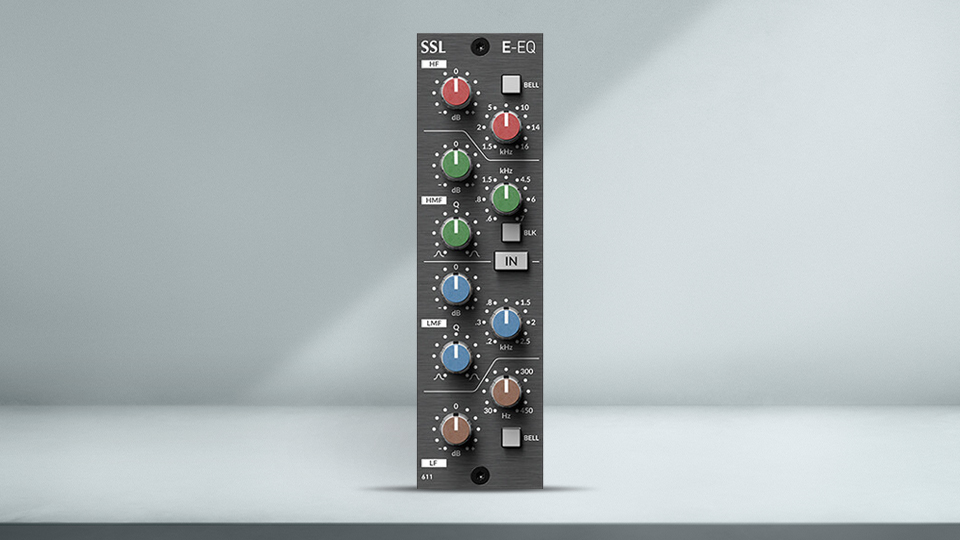
The SSL E Series EQ can toggle between two EQ designs: the “Brown-02” setting features enhanced but and boost ranges (±18 dB from ±15 dB) and has tighter control of low frequencies, where the “Black-242) setting uses logarithmically symmetric design so that the boosts and cuts retain the same harmonic interval regardless of frequency and amplitude settings.
If you want to grab ahold of a super versatile and useful EQ that classic SSL sound heard on countless hits from the 1980s and on, this is a great way to go.
BAE Audio B15 3-Band EQ 500-Series Module
The BAE Audio B15 is a fully-discrete 3-band EQ heavily inspired by the classic Neve 1023 and 1073 mic preamp EQs, so you can expect the harmonic saturation, thickness, and heavy low-end weight associated with that classic British sound—and while still expensive, you’ll avoid the thousand-dollar Neve tax.
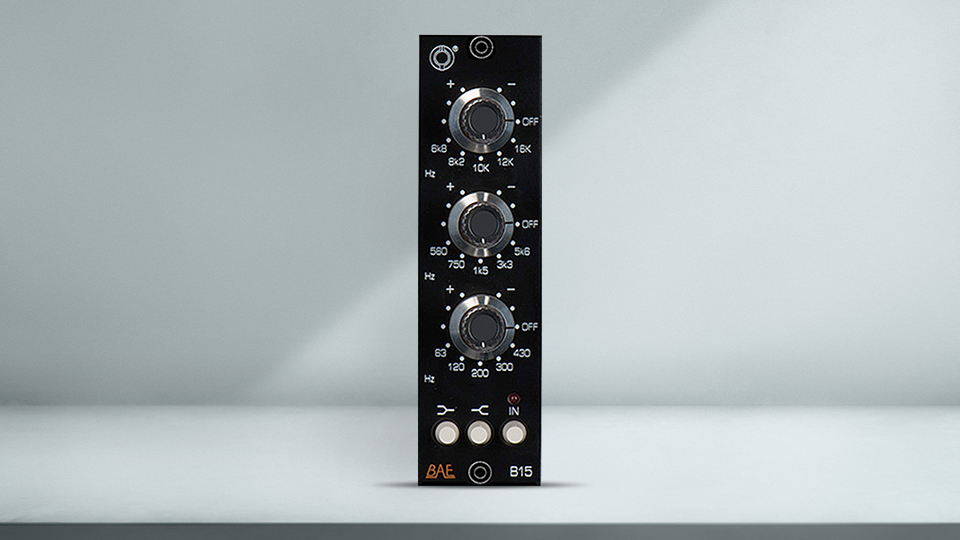
The BAE B15 is a modern take on the vintage style, offering an expanded frequency selection compared to its predecessors with low and high shelving options, five frequency selections per band, and up to 16 dB of boost and cut with a continuously variable potentiometer.
There’s not much more to say when it comes to BAE—they make some of the coolest gear around, and having one in your 500-series rack is a luxury.
dbx 530 Parametric Equalizer
American professional audio manufacturer dbx, Inc. has been making fantastic and affordable audio gear for more than five-decades, opening the door for fledgling and budget-oriented musicians and audio engineers looking to enter the professional audio industry—if you’re looking for a great 500-series EQ and don’t have fat stacks to burn, the dbx 530 Parametric EQ might be your ticket into your 500-series acquisitions.
The dbx 530 is a three band parametric EQ with fully adjustable Q on each band with up to ±15 dB of cut/boost and a low/high band bell/shelf toggle, so it’s just about as (and sometimes more than) capable of dialing in the mix as any of the previous EQs modules on this list.
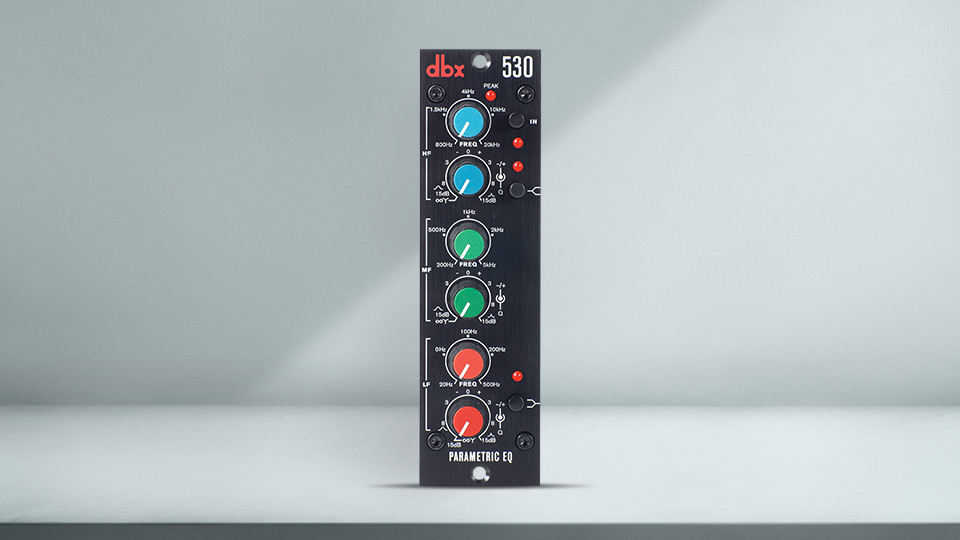
The dbx 530 isn’t the sexiest purchase (though it does look quite nice in the rack chassis), but for the price, this machine can be the difference between a shoddy mix and a pristine finished product. If you’re just starting out, on a budget, or are in need of a no-nonsense EQ module, this one might be the one for you.
Pultec EQP-500X and MEQ-500 Jack Douglas Edition EQs
Pultec is known for their legendary EQP tube based passive EQs, and while their 500-series entries to the line-up are not tube based (the size of the modules simply cannot afford the space for the technology), the EQP-500X Program Equalizer and the MEQ-500 Midrange Equalizer are both passive EQs that take advantage of a proprietary triad transformer that aggressively clips mid-range frequencies to deliver the famous in-your-face Pultec transient punch.
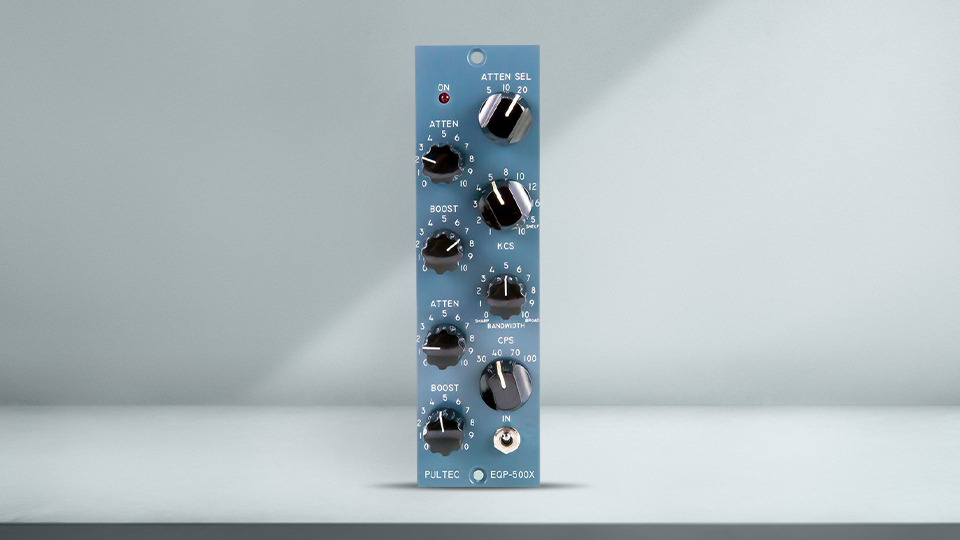
While both adopt API’s 2520 op-amp, the other feature that sets Pultec EQs apart is the ability to both boost and cut the same frequency simultaneously, a feature that allows you to perform the classic “Pultec Trick”—because the circuitry of the boost and attenuation potentiometers is different, their EQ curves differ as well. If you do this on the low-end, you create a unique resonant shelf that boosts the fatness of low-frequencies while cutting the mud and boominess of low-mid frequencies, cleaning up your track; a trick commonly used with aggressive/hip-hop style vocals. If you want to know more about the Pultec Trick, check out this Explora entry discussing studio legend EQ units (we also discuss the API 550 and 560 EQs).
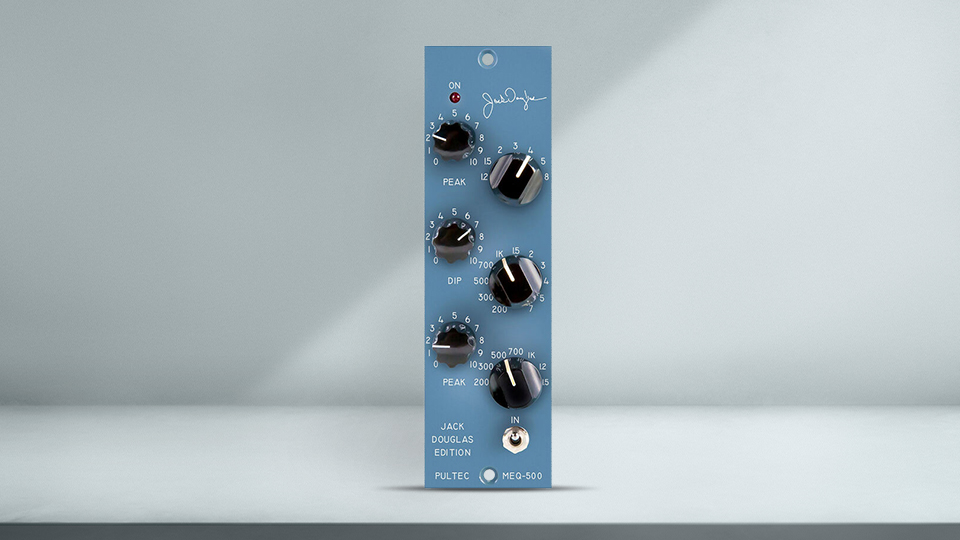
Both EQs share the same analog architecture but serve different roles. The Pultec EQP-500X is a 2-band program EQ, meant to affect broad tonal shaping of the extreme low- and high-end of the signal—this makes it perfect for performing the Pultec Trick and for adding sparkle and saturation to high frequencies. The Pultec MEQ-500 is a 3-band midrange EQ, aptly focusing entirely on the midrange of the source. This make it perfect for sculpting and adding sauce to vocals, guitars, snares, or anything you need to push through the mix. The MEQ does not have broadly overlapping frequencies like the EQP.
Either of these EQs are absolute weapons in the arsenal, but they especially shine when used in concert. If you decide to splurge, there isn’t quite anything else like a Pultec EQ.
Lindell Audio PEX-500 Pultec Style Passive EQ
If you want that Pultec style sound but don’t have the scratch to afford one, the Lindell Audio PEX-500 may just be the answer you’re looking for. At 20% of the cost, the PEX-500 is a passive EQ using an all-discrete design based on the 990 amplifier and can be outfitted with an API 2520 op-amp if you want to upgrade later. Like the EQP, the PEX-500 is a 2-band EQ that can pull off the Pultec Trick.
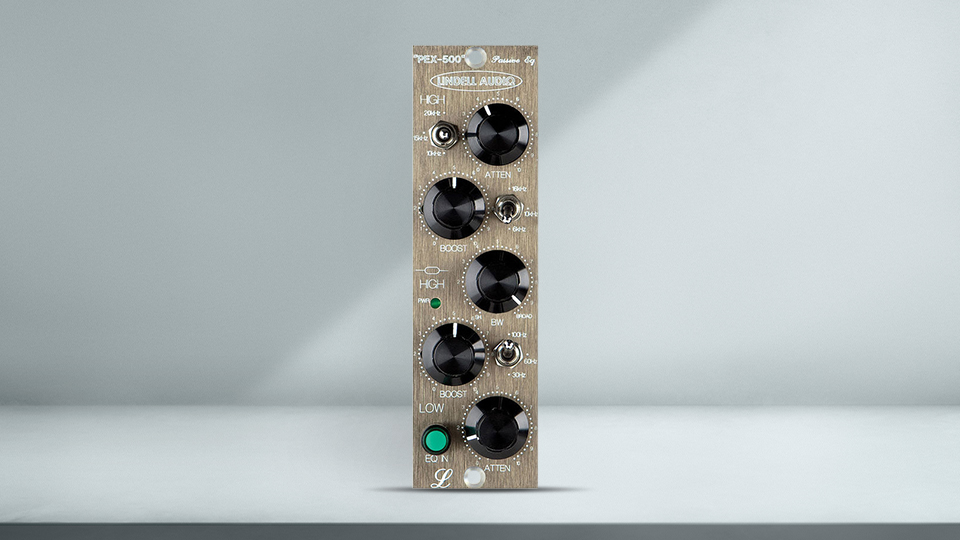
While you won’t get the vaunted punchy transients like you would an authentic Pultec, this module could be a worthy addition to your lunchbox if you want to get that clear and fat sound in the lows.
HAZELRIGG INDUSTRIES DLC Vacuum Tube Inductor Equalizer
The Hazelrigg DLC Vacuum Tube Inductor EQ is an interesting addition to this list because it is a rare example of a 500-series EQ using an actual vacuum tube in its circuitry. But, note that it is not a “true” vacuum tube 500-series EQ as it uses a 6072A tube for only its input stage while using a solid-state amplifier circuit for its output stage to bring the signal back up to line level; a true tube EQ would use a tube for both input and output stages.
However, this isn’t something to be hung up about; the Hazelrigg Industries DLC is a passive EQ whose input stage brings the warmth, saturation, and second-order harmonics to the sound as any analog tube-based gear would, meaning that you can sweeten a track without even engaging any parameters and even take advantage of the Pultec trick.
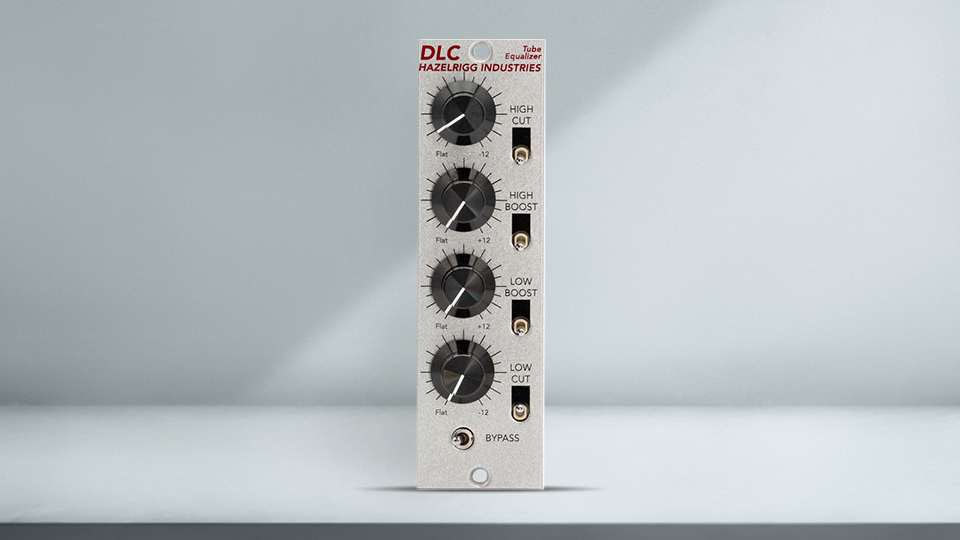
While technically a 4-band EQ, two are boost bands and two are cut bands, so it essentially acts like a two-band passive EQ. Each band has a fixed Q and can toggle between two frequencies within the bandwidth. This is meant to simplify the process so you EQ with your ears and not your eyes—and just like the Pultec, boosting and cutting same/similar frequencies simultaneously can create complex equalization curves—something the manufacturers strongly encourage the user to do.
Stereo EQs
When it comes to producing, mixing, and mastering in stereo, the nature of analog audio equipment comes with the reality that no two modules, however identical, are doing the exact same thing, especially if their controls and potentiometers aren’t stepped with detents—and this is especially true for EQs. Like anything else in real-space, analog circuitry bends the knee to physical reality.
For those who want to run EQ on the final stereo mix, anything less than a factory-matched pair of EQ modules just won’t do in today’s market; two unmatched modules can introduce phasing issues, uneven response, and other small-but-impactful incongruities that can be the difference between a pristine radio ready mix and a final print mired with problems.
One way avoid having to find a factory-matched pair of modules (and to save a few bucks on the side) is purchasing a stereo 500-series EQ; while they will take up two spaces in your rack chassis, it can be absolutely worth the extra space if you’re planning on mixing in stereo or mastering a final production.
elysia xfilter 500 4-band EQ
The well-regarded high-end German audio manufacturer elysia produces the impressive elysia xfilter 500 4-band EQ. While at first glance it looks like a standard 4-band EQ, the xfilter features true stereo link capability, able to process both channels with one set of control parameters—if you need to have both channels to behave in exactly the same manner, the xfilter 500 solves the problem.
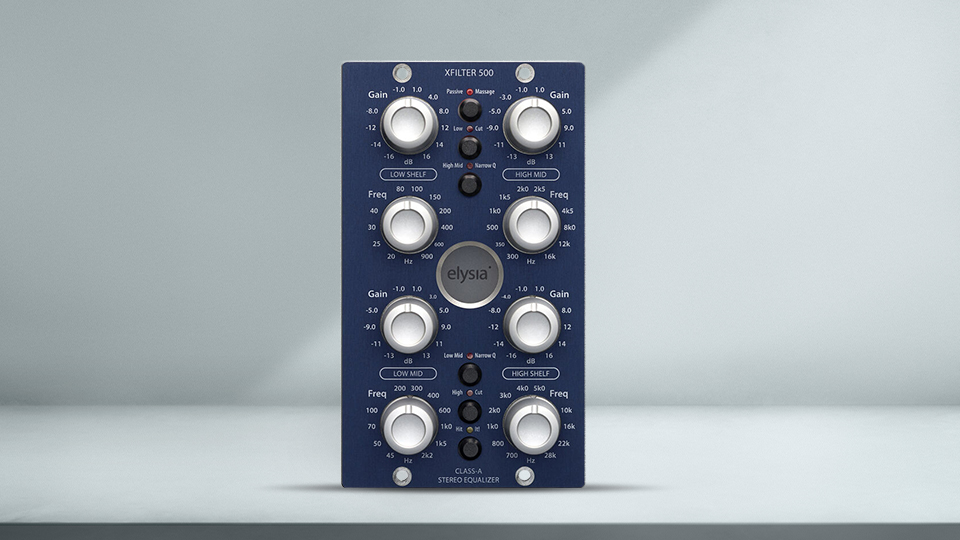
The xfilter 500 follows in the footsteps of its older sibling, the MuseQ, featuring a toggleable large or narrow Q (0.5 or 1.0 respectively), low and high shelving bands with toggleable low and high cut (with a bit of peak resonance, so the selected frequency is boosted while still cutting above or below it), and the “Passive Massage” switch that adds a resonance peak at 12 kHz, falling off at 17 kHz, opening up the top end without overemphasizing the entire high-frequency spectrum.
Coming from a storied pedigree, elysia is a boutique manufacturer that cares deeply about the quality and precision of their audio gear—if you need a stereo EQ with a lil’ bit of razzle-dazzle, check out the elysia xfilter or the rest their excellent audio hardware.
Solid State Logic UV EQ 500 Series UltraViolet Stereo Equalizer
The SSL UV EQ Stereo Equalizer is not dissimilar to the elysia xfilter in terms of its function and design philosophy, but it injects entirely different sound characteristics that adhere to the classic SSL sound of the late 20th and early 21st century. The UV EQ is a 4-band, dual-slot, 500-series module that borrows a lot of its internal technology from the SSL Fusion stereo outboard processor, a piece of rack gear dedicated to sweetening mixes with drive, compression, spatial adjustment, and harmonic saturation.
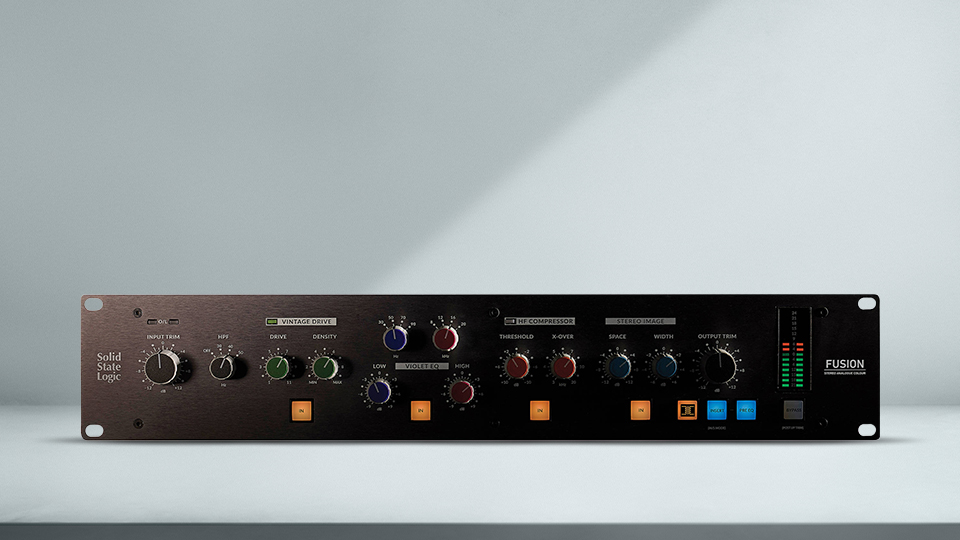
High and low bands are shelving filters with four frequency options per band, whereas the two midrange bands are fully parametric with complete frequency and Q controls, all along with a 18 dB/octave high-pass filter with selections between 30, 40, and 50 Hz. Another special feature is the toggleable “Focus Mode,” which automatically narrows the Q setting and increases the boost/cut range from 9dB to 18dB, allowing the user to choose between honing in on problematic frequencies or making broad musical adjustments.
If you’re looking for a more surgical stereo EQ tool that can inject that SSL sparkle into your mix, the SSL UV EQ might just what you’re looking for.
Preamp/EQ Combo Modules
While 500-series preamp modules’ additional EQ functionality isn’t exactly the first thing that comes to an audio engineer’s mind, I’d be remiss not mentioning this one this list—this category includes some of the most legendary gear ever produced. While the main attraction of these devices is their saccharine injection of harmonic distortion, an EQ is an EQ, so you basically get a two-for-one deal!
BAE Audio 1023L, 1066DL, and 1073D
If you’ve been around the audio engineering world for even just a bit, the Neve 1073 immediately comes to mind when thinking of a preamp/eq combo module. However, the OG version of the Neve 1073 with both the preamp and EQ has never been released as a 500-series module, instead only existing in the form of the rare and somewhat inscrutable 10-series that were housed in the even more obscure and esoteric Neve 80-series mixing consoles.
Neve has released variations of the pre/EQ combo 1073 in 500-series format, but the separate functionalities of the device were split into two separate modules: the Neve 1073LB preamp and the 1073LBEQ equalizer, meant to work in series and both not available at B&H.
However, we have an answer—BAE offers multiple 500-series preamp/EQ combos modeled after the Neve 1073:
- The BAE 1023L is most reminiscent of the classic Neve 1073, being a single-slot preamp and EQ with a high-pass filter and 3-band EQ
- The BAE 1066DL and 1073D mimic the form of the Neve 1073LB and LBEQ if they were built into a single dual-slotted device. Both offer slightly different EQ curves and detented selections
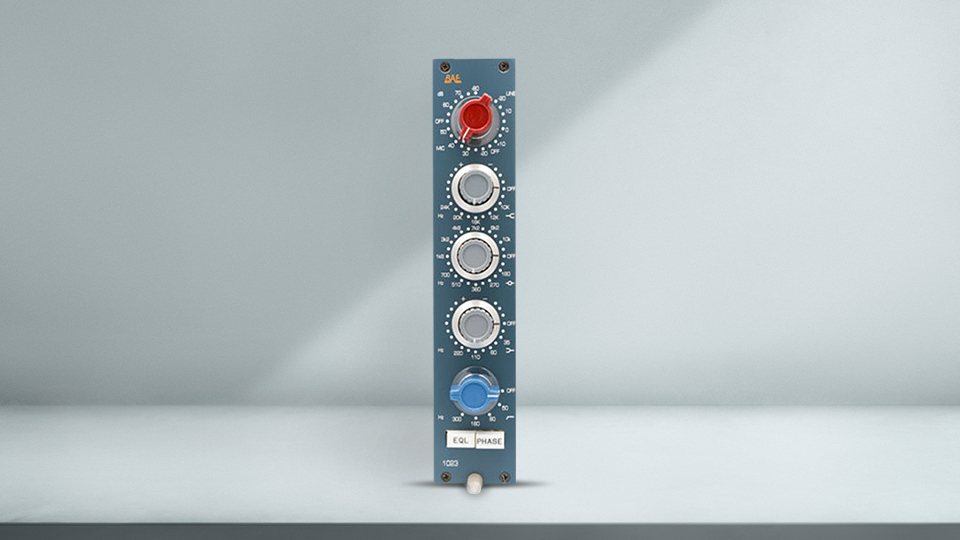
If you’re looking for that British 1073 sound and have some deep pockets, BAE is the modern solution to your search.
Other Considerations
With this article pushing past the 3,000 word mark, I’d just like to wrap up the discussion with some other preamp/EQ combo 500-series modules that you may want to consider:
- Lindell Audio 6X-500 and 6X-500VIN: Affordable 2-channel Pultec Style preamp/EQ combos
- dbx 580: While not exactly the most functional EQ, this module has a low and high detail boost/cut and a variable-frequency low-cut filter built in so you can fine tune the sound before it hits the mix bus
- Solid State Logic SiX CH 500: This is a channel strip with a very basic EQ—just high and low boost/cut, but also has a mic/line/hi-Z preamp input and compressor all built into one module
- AEA Ribbon Mics RPQ500: If you’re looking for clean, uncolored gain with a simple EQ and semi-variable Q, this guy will set you up right.
Conclusion
These are examples of some of the best 500-series EQs we have to offer here at B&H, but our catalog is extensive. Make sure to pour over the list of great gear we have until you find the perfect one that piques your interest, and if you have any additional questions, reach out to the pro audio team at B&H either online, on the phone, or in our Midtown SuperStore to learn more about your next favorite piece of gear. Happy hunting!