Search results for: lighting buying guide color temperature guide for video photography
About 18 filtered results
by Rebecca Melville · Posted
An on-camera flash is an indispensable accessory for many photographers. While it provides light to supplement dark conditions, an on-camera flash also allows you to achieve more balanced exposures in daylight conditions, permits freezing of fast-moving subjects, and can even be used to control other flash light sources. With so much to offer, an on-camera flash can become an integral part of your workflow, but where do you start? We are going to give you the on-camera flash rundown with everything you need to know to make the most of this

by Rebecca Melville · Posted
Shopping for lighting solutions can be overwhelming, even if you are a professional photographer with decades of experience. Sometimes it’s easier to cut right to the chase with a kit that has everything you need―whether that’s multiple fixtures, bundled accessories, or even just a good carrying case. We have compiled our top flash and continuous lighting kits you should consider for your own creative workflow.
Flash Lighting
Flash lighting,

by Bjorn Petersen · Posted
Time is running out to find the perfect gift for the photographer in your life. Or maybe you're the photographer and your partner, friend, spouse, or parent has just sprung the question on you: "What kind of gift should I get you?" Well, to help make things a bit easier, we've assembled a list of our top 10 last-minute gifts for photographers.
1. Mini LED Light
The best item you never knew you needed, a

by Rebecca Melville · Posted
If you ask most consumer-camera owners why they keep a filter on their lens, a majority will most likely reply, “For protection.” While filters do protect the surface of your lens against dust, moisture, and the occasional thumb print, the primary function of lens filters is really to improve the image quality of the pictures you take. There are many kinds of filters with obvious and lesser-known benefits, so if you’re looking for a lens

by Bjorn Petersen · Posted
For digital photographers, a well-calibrated and accurate photography monitor is an indispensable tool for a solid practice. Whether you like to print your photos or share exclusively online, a photo monitor you can trust will make a big difference in how someone views your photographs, yourself included. Besides just helping to achieve accurate colors and contrast, a finely tuned monitor is also more enjoyable to work on and contributes to a seamless all-around workflow. When looking for a monitor, you should consider size and resolution as
by Cory Rice · Posted
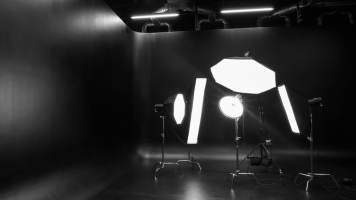
One of the leading trends in digital cameras over the past few years has been the development of advanced video capabilities in mirrorless and DSLR cameras. Features that could once only be found in costly cinema cameras now come standard in still cameras targeted toward hybrid photo-video content creators. Accompanying the interest in cameras able to create high-quality stills and videos has come a demand for lights that can be used for both purposes.
While on-camera flashes and strobes have long been the standard for photographers, the short

by Shawn C. Steiner · Posted
Considering the amount of video content now consumed daily by most people, it’s becoming harder and harder for photographers to isolate themselves fully from video. It’s an asset, and practically every DSLR and mirrorless camera made in the past five years not only has video recording but has near-cinema-quality video.
Whether you are learning video for work, want to use your best camera for family videos, or perhaps just want to gain a following online, there are some good tools you should acquire.
For Better Audio: Microphone
One thing

by Todd Vorenkamp · Posted
Almost every fashionista out there knows about the power and importance of accessories. Photographers, fashionistas, or not, also know that accessories are not only niceties, they are downright mandatory for all photographers in the digital age. Let us look at some innovative accessories that have hit B&H Photo over the past couple of years.
1. Gnarbox
There are portable backup devices for digital images, and then there is the
by Shawn C. Steiner · Posted
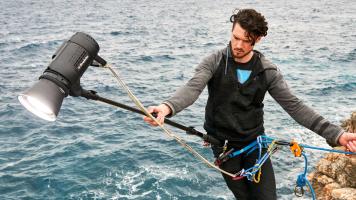
It’s unfortunate that when I am going out on longer hikes and trips, my lighting kit is generally one of the first things to get left behind. Usually, this is okay—if I’m shooting landscapes or doing some doc-style work, the lights probably wouldn’t even make it out of my bag if I did bring them. However, there are those shots that would benefit from a flash of light or a setup that needs a little bit of fill to make perfect. Fortunately, portable and durable lighting is becoming more and more common, and here are some of the best if you are
by Allan Weitz · Posted
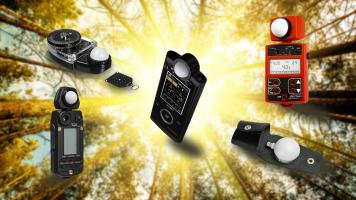
Almost every camera sold at B&H contains a light meter designed to calculate extremely accurate exposure readings, typically with a choice of Spot, Average, and Segmented metering modes. Good as they are, handheld light meters still have the upper hand when it comes to analyzing light.
For starters, the meter in your camera only reads reflected ambient light. If you’d prefer to take an incident reading, i.e., measure the light falling onto you subject rather than reflecting off your subject, you can’t do it without having to add
by Shawn C. Steiner · Posted
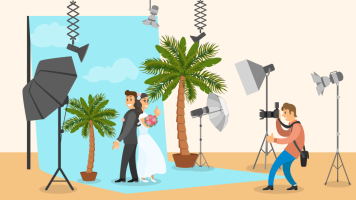
One of the best upgrades anyone can make to their photography gear is in the lighting department. Getting your first or, even, extra lights can transform your images in countless ways. It is also a great way to learn more about photography and expand your capabilities. Here is a quick list of seven lighting kits with options, for absolute beginners to seasoned professionals.
Bolt VD-410 Manual Flash, Times Two!
Absolute beginners don’t need much more than a speedlight to start experimenting with light. One of the most practical for them is one

by tom kirkman · Posted
The cameras in phones keep getting better and better, while the image quality in reduced-format cameras has shown superior quality in natural light. And they all have flashes, right? Then one day it hits you—usually after buying a DSLR and a flash—“I want more light,” and “I want it when I need it, not just on nice days, but maybe in the dark and rain.” Basically, you want to create light to more accurately express your perception of the subject or for cataloging or ecommerce, for example. Of the five kits below, four of them can be used by
by Steven Gladstone · Posted
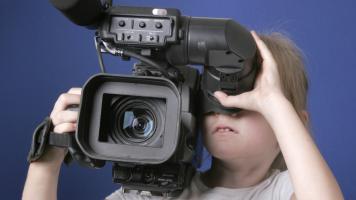
If you have a young filmmaker in your life and you are looking for some way to connect with them, then this is the article for you. From big to small, inexpensive to “it’s more than I paid for my first new car!” this article will briefly touch upon practical and fun gear for young filmmakers, beginning and experienced.
While you may be concerned that gear-buying is a very personal decision (and that is a valid concern), if the young filmmaker is starting from scratch, no worries—and if they already have gear, then there will be
by tom kirkman · Posted
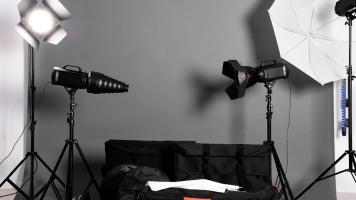
Everyone who has ever lugged around heavy gear has a soft spot for the breakdown studio. They all have in common the barest you'll need to get the job done, are fast to set up and break down, and are lightweight. Of course, there are choices to be made—flash or constant light, for instance. Flash has the benefit of stopping action, while constant sources allow you to see exactly what you'll get in the finished product. Constant light sources include tungsten-halogen (hot lights) that live up to their name, fluorescent, and the current

by Ryan Zanoni · Posted
It is 2015 and, still, a staggering 90-95% of the Earth’s oceans remain unexplored. This seems unbelievable, given the incredible advancements we’ve seen in technology over the years, and the fact that we’ve even explored the Moon and planets in some detail. Indeed, it has been said that we know more about the surface of the Moon or Mars than about the ocean floor. How is it that the vast majority of the ocean, which makes up 70% of our own planet, is as yet undiscovered? It speaks to the sheer vastness and depth of the underwater realm. It