Search results for: photography buying guide dslr vs mirrorless
About 11 filtered results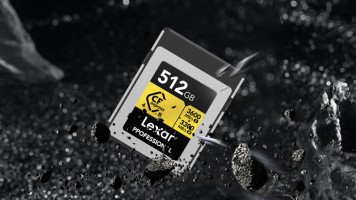
by Mathew Malwitz · Posted
Recording work and data in the form of thousands of pictures or hours of video is made possible by compact memory cards. These devices are the standard for photo and movie storage, saving and protecting your files until you can transfer them safely to a more permanent home on your computer or external hard drive. They are available in an array of different types, with a broad range of capacities and data-transfer

by Mathew Malwitz · Posted
If you've ever gone camera shopping, you've likely run into the term "mirrorless" more than a couple of times. After all, mirrorless cameras account for up to 90% of new interchangeable-lens cameras (according to Canon executives anyhow). But what does "mirrorless" actually mean? In this guide, we're going to explore what a mirrorless camera is, what makes it different from other cameras (hint: it's in the name), and how it can benefit

by Todd Vorenkamp · Posted
Choosing a lens is a highly personal choice, and that’s especially true for wildlife photography. This is in the realm of the telephoto lens after all. While almost any focal length lens works for landscapes and other types of photography, in general, when it comes to photographing animals in the wild, you'll want to have the longest reach you can. In this guide, we’re going to discuss the factors one should consider when purchasing a lens for wildlife photography.
Focal Length
The first and most straightforward factor to consider is focal

by Todd Vorenkamp · Posted
If your dreams involve capturing stunning images of beautiful, wild animals in nature, there is no getting around it—you need the right gear. Although every camera can capture wildlife, not all cameras are created equally and some certainly have technological advantages that benefit wildlife photography. We have discussed buying considerations for the right lens in this article, and here we will take a deep dive into what to look for in a camera for dedicated wildlife photography.
What Makes a Camera Better for Wildlife?
For wildlife

by Todd Vorenkamp · Posted
Many of us believe that astrophotography requires a ton of know-how plus the investment of highly specialized (and expensive) gear to create successful images. The truth is that you can capture astrophotography with any camera and any lens. But, as the saying goes, your mileage may vary.
If you already have a camera and lens, you might want to head over to my three-part series Basic Backyard

Posted
Professional photography Tony Gale is back with an in-depth guide to camera and lens buying, specifically for Sony cameras and lenses. What is the difference between a full frame vs. crop sensor? Should you get a prime or zoom, wide angle or telephoto? What type of lens is perfect for wildlife, portraits, street photography, etc.? Gale answers all these questions and more!
Are you a Sony fan? Use the Comments section below to share with us what’s in your kit.

by Bjorn Petersen · Posted
Just as mirrorless is now the dominant camera type, full frame is now the dominant sensor size. It wasn’t too long ago when full-frame cameras were seen strictly as tools for professional and high-end photo applications due to their expense and the associated feature sets that were part of the complete full-frame camera system. Over the last few years, however, full-frame options have begun to trickle down to the middle tier of interchangeable-lens camera development, with some instances placing entry-level full-frame cameras right alongside

by Allan Weitz · Posted
Before heading out on assignment, I make a mental checklist of the gear I will be needing, and camera supports are always on that list. Depending on where and what I plan to photograph, I might take a mid- or full-size tripod and be done with it. If I anticipate taking low-angle photographs, I will also pack along a tabletop-size tripod and, for ground-level shooting, one of my Platypods. Truth is, if I have the space, I take all three options, because if I leave any of these options behind, I know I will need it when I get where I’m going.

by Allan Weitz · Posted
Getting the most out of your camera and lens often means having to go beyond the limitations of these basic, though very essential components. Regardless of your choice of camera systems, be it DSLR or mirrorless, there are many accessories designed to up your game as a photographer, and maybe even enhance your photographic experience.
If your camera system of choice is a Micro Four Thirds (MFT) from Panasonic or

1,470 Views· Posted
Mirrorless vs. DSLR? This question harks back to the days when photographers debated over film vs. digital. In this short video, photographer David Flores highlights the important components of each form factor and the advantages of using one over the other. See which system may be the right choice for you.

by Shawn C. Steiner · Posted
Two-sided debates have always consumed the photographic industry, be it film versus digital, primes versus zooms, or manual versus automatic. It is only fitting that the latest developments in camera design have spawned a new conversation: DSLR or mirrorless. Photographers old and new are asking the question, “Should I go mirrorless?” and, as we look forward to 2016, a definitive answer has only become more difficult to pin down. Right now there are some clear pros and cons to each system and, hopefully, after seeing the main points you will