Search results for: photography buying guide how big of a camera can you bring to t
About 14 filtered results
by Mathew Malwitz · Posted
Lens selection is a highly personal choice for the professional photographer. Your shooting style, client needs, and cost all factor into how you choose to build your kit. Wedding photographers require a greater variety of lenses as they must cover a diverse assortment of compositions in various environments and lighting conditions. As working professionals, it’s only natural to begin investing in high-quality professional glass. For Canon users, this is the L series.
Easily identified by a thin red line circling the lens barrel, L glass is

by Bjorn Petersen · Posted
Time is running out to find the perfect gift for the photographer in your life. Or maybe you're the photographer and your partner, friend, spouse, or parent has just sprung the question on you: "What kind of gift should I get you?" Well, to help make things a bit easier, we've assembled a list of our top 10 last-minute gifts for photographers.
1. Mini LED Light
The best item you never knew you needed, a
by Christopher Witt · Posted
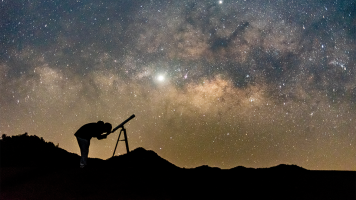
Humans’ fascination with the stars is as old as our ability to think and ask questions. For millennia we, as a species, were limited to observing the heavens with just our eyes. Of course, back then we were able to see more because light pollution didn’t exist, but making detailed observations was impossible. The invention of the microscope led to the development of the telescope, which allowed people to finally start exploring the larger universe. As technological advances were made and telescopes got bigger and better, their reach and the

by Steven Esposito · Posted
If you work with libraries of large image files, or in audio or video production, you need to be selective about your external hard drive. Reading and writing files directly to or from an external drive can incur some hefty performance demands, so it's best to determine your needs before you buy a drive. With the ever-increasing data-transfer demands brought on by more megapixels, complex audio layering, and higher-resolution video, keeping up with all of that data can be a burden.
The first thing to determine must be how much overall storage

by Todd Vorenkamp · Posted
The camera bag starts as an afterthought—something you get after you buy a camera and/or lenses, and for many, just about any camera bag will do the trick for them. But, when you get deeper into photography and expand your kit, the camera bag becomes an essential part of your everyday carry. There are many parallels between shopping for a camera bag and shopping for something like a pair of shoes—hundreds (maybe thousands?) of options,

by Todd Vorenkamp · Posted
One of the easiest and most enjoyable ways to expand your photographic horizons is to use your camera to explore the world on a very small scale. Close-up, or macro photography, can turn everyday objects into visually interesting images and bring a new dimension to your photography.
As in almost everything in the photographic universe, there is more than one way you can enter into the world of macro photography. Here we will

by John Harris · Posted
There is still one basic truth about photographing sports—access is everything. If you are not near the action, you will not get a photograph. Does this mean you need a sideline pass at the Super Bowl or a family member in the NBA? No. Those are good to have, and media credentials for a Super Bowl is a professional feather in your cap, but “access” can be found in many places and many ways. A good sports photo does not even have to be on-field action, so do not let a lack of access intimidate you, but understand that to join the upper echelons

by Todd Vorenkamp · Posted
Is your team playing in the final professional American football game of the current season? Or are you traveling to Los Angeles to see the Big Game? Are you a photographer wanting to capture the action of this or other professional gridiron games?
Here is what you need to know!
The American professional football league has stipulated requirements for what you can and cannot bring into a stadium, but individual venues have their own sets of rules.
As of February 2022, the league Stadium Bag Policy basically states that you cannot

by Todd Vorenkamp · Posted
Capturing amazingly sharp photos of birds in the wild is the goal of many birders. There are different ways to do this, but the most organic is using extremely long telephoto lenses for digital or film SLR cameras or mirrorless interchangeable lens cameras. Not only useful for photography, modern digital cameras also can record
by Shawn C. Steiner · Posted
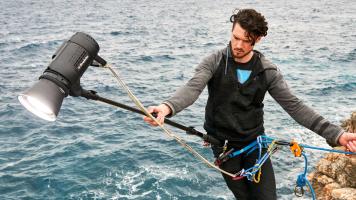
It’s unfortunate that when I am going out on longer hikes and trips, my lighting kit is generally one of the first things to get left behind. Usually, this is okay—if I’m shooting landscapes or doing some doc-style work, the lights probably wouldn’t even make it out of my bag if I did bring them. However, there are those shots that would benefit from a flash of light or a setup that needs a little bit of fill to make perfect. Fortunately, portable and durable lighting is becoming more and more common, and here are some of the best if you are

by Steven Gladstone · Posted
Cinematography, videography, photography: ultimately, it is about showing something in a way that hasn’t been seen before. How you achieve this is a combination of framing, exposure, and post effects. It is the Digital Age—you can create just about any effect you want if you have the time, tools, talent, and software, of course. You can also hire someone to pull it off for you. While either of those options are valid, as you probably know, there is more than one way to skin a cat, so the focus of this article will be practical lens

by Jill Waterman · Posted
The beginning of the New Year is a magical time, rich with the anticipation of new adventures that lie ahead. Photographers Jennifer Davidson and Krista Rossow, who both instruct photography on National Geographic/Lindblad Expeditions across the globe, recently steeped themselves in the magic of this season during a whirlwind journey through Cambodia and Vietnam, all while testing Fujifilm’s mirrorless camera system.
Above photograph © Jennifer Davidson
“I’m on a quest to find out if (camera) size really matters,” Rossow exclaimed at the
/explora/tag/17526

by Josh Taylor · Posted
How does a rangefinder camera work? What were the landmarks in rangefinder camera design? How have they influenced photography over the years? What are their pluses and minuses compared to SLRs? What do they do best, and why?
In the late 19th Century, there were two dominant camera types:
1. View cameras that required you to compose the shot upside-down and in reverse on a ground glass, and focus by moving the lens back and forth until the subject looked sharp. You then inserted a plate or sheet film holder in the exact same image plane,

by Eric Butterfield · Posted
With all of the technical considerations that go into choosing a digital camera, it's easy to forget the strap. You get one with your camera, but it looks like an afterthought—a functional necessity with no style. If it were a fashion statement, it would be the equivalent of wearing black knee socks with a cocktail dress—functional, but less than attractive.
You can easily improve this situation by picking up a higher-quality strap that's more comfortable, functional—and better looking. Plus, you don't have to break the bank. There are