Search results for: photography buying guide how heavy is your light
About 40 filtered results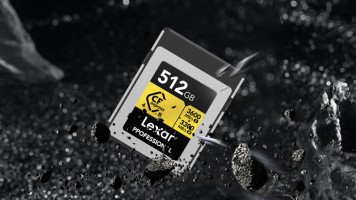
by Mathew Malwitz · Posted
Recording work and data in the form of thousands of pictures or hours of video is made possible by compact memory cards. These devices are the standard for photo and movie storage, saving and protecting your files until you can transfer them safely to a more permanent home on your computer or external hard drive. They are available in an array of different types, with a broad range of capacities and data-transfer

by Steven Esposito · Posted
One of the best pieces of advice I like giving photographers is that they should print their photos. For many, this will mean going to a lab or print shop, in which case you should learn about profiling and calibration. The rest of you are likely more interested in getting your hands dirty and printing on your own at home. This guarantees you have full control over the entire production process, from capture to output. To do this, you will need a

by Todd Vorenkamp · Posted
There is nothing that can replace the extreme close-up view of a rare bird in the wild. Binoculars can get you close but, if you want to look the bird in the eye or confirm that identification for your life list, you need a spotting scope. Spotting scopes pack incredible magnification in a generally simple and lightweight package that is
by Mathew Malwitz · Posted
We’ve all tried to photograph something up close. This small-scale world fascinates us all, whether it be a stunning flower or a bumble bee crawling about, but our cameras can’t seem to focus as close as we want. So, what is a struggling photographer to do?
There are several ways to do close-up, or "macro" photography, but the

by Mathew Malwitz · Posted
One of the most effective ways to improve your portraiture is by controlling the light, and one of the most effective ways to control your light is to move it. Seems like a simple enough concept, but it can be daunting at first, especially if you're using a speedlight or an on-camera flash. Despite its misleading name, an on-camera flash can, very easily, be used off the camera. The "on-camera" part simply refers to its form factor

by Zack Young · Posted
Video is getting bigger and better every year, and I’m sure nearly everyone knows at least one aspiring filmmaker. I love filmmaking and photography, but the main problem I have with it is the amount of equipment one needs to get the job done. This can mean big, important pieces such as a camera or lights as well as tiny, essential accessories that make life a whole lot easier. If you are looking for something to gift your filmmaking friend or for some key components to upgrade your kit, check out the following.
1. Compact Lights
If there is

by Cory Rice · Posted
Whether you are shooting a fashion editorial, a wedding reception, or anything in between, on- and off-camera lighting can make a huge difference outdoors. Natural light is wonderful, but there are scenarios in which you simply cannot run the risk of an unexpected cloud or rapidly setting sun ruining your shot. This article introduces the gear and accessories necessary to be prepared outdoors always, no matter what

by Christopher Witt · Posted
Humans’ fascination with the stars is as old as our ability to think and ask questions. For millennia we, as a species, were limited to observing the heavens with just our eyes. Of course, back then we were able to see more because light pollution didn’t exist, but making detailed observations was impossible. The invention of the microscope led to the development of the telescope, which allowed people to finally start exploring the larger universe. As technological advances were made and telescopes got bigger and better, their reach and the

by Todd Vorenkamp · Posted
Leave it to the world of photography to confuse size and speed. In lens-speak, the term “fast glass” refers to lenses with large apertures. In this article we take a look at the lenses with the largest-opening apertures. The aperture is the opening of a lens. The aperture’s size is expressed as a number that shows the ratio of the opening to the lens’s focal length. This number is referred to as an f/number, f/stop, focal

by Bjorn Petersen · Posted

by Todd Vorenkamp · Posted
Binoculars make great gifts. Regardless of who you are shopping for, or what their hobbies are, a nice pair of binoculars can be appreciated and enjoyed by just about anyone. If you think about it, almost all of us find ourselves out in the world wishing we could have a closer view of something almost every day.
Now that I have convinced you to gift a beautiful pair of binoculars, you’ll click through to the binocular section of the B&H website

by Jill Waterman · Posted
Bristling along the sidelines of practically every professional sporting event, super-telephoto lenses are known for their ability to reach out and capture distant subjects with exceptional clarity and speed. They feel incredible in the hand, with top-of-the-line build quality and a heft that gives shooters confidence in their equipment. Many feature a variety of switches and buttons that allow users to set up the lens for optimal performance in any situation.
In addition to length, these lenses feature all of the latest technology, such as

by Todd Vorenkamp · Posted
What is the best camera for beginners? While this seems like a straightforward question, and many websites will just throw a list of camera options at you, the answer can be more complex than one specific camera recommended for every newbie photographer. Giving this question some thought and considering a few options may pay future dividends as a novice photographer evolves into a photographic artist. One certainty is that an entry-level camera should be easy to use, convenient to carry and employ, as well as being intuitive, while also

by Todd Vorenkamp · Posted
Do you always want your selfies to be captured on tiny, tiny sensors through tiny, tiny lenses? You might, at first, say, “Yes, that is fine.” But think about it for a few minutes and realize that you want your beloved friends, adoring family members, and admiring fans to enjoy your self-portraits in the highest possible quality—captured by a capable camera that is practical and versatile. Right?
The popularity of the selfie has revolutionized photography and the self-portrait. The selfie has changed how we interact—or rather, don’t interact

by John Harris · Posted
There is still one basic truth about photographing sports—access is everything. If you are not near the action, you will not get a photograph. Does this mean you need a sideline pass at the Super Bowl or a family member in the NBA? No. Those are good to have, and media credentials for a Super Bowl is a professional feather in your cap, but “access” can be found in many places and many ways. A good sports photo does not even have to be on-field action, so do not let a lack of access intimidate you, but understand that to join the upper echelons