Search results for: photography buying guides focal length
About 84 filtered results
by Luke Rollins · Posted
Everyone and their mothers are in on the digicam trend, a fact reflected in the used-market prices found across most platforms. Facebook Marketplace, Craigslist, eBay, B&H Used--everywhere you look, the best-known models are selling for prices that often meet or exceed their debut MSRP.
Take that old favorite of mine, the Canon S95. Extraordinarily capable, exceedingly pocketable, I got it for a song ($130) back in 2023. Three years later, the going rate has more than tripled, with the average price sitting above $400 and pushing $500

by Mathew Malwitz · Posted
Traveling with our camera gear can be a daunting experience, especially as we start expanding our arsenal of lenses. Picking the right lens for the job is a challenge in itself, and now we're finding the space to pack it among our clothes and other essentials. Wouldn't it be nice if we had one lens to do it all?
Luckily, such lenses do exist, and these travel-ready all-in-one zooms come in a variety of mounts, some brand specific, and others available for many different cameras. In today's guide, we're covering the best travel zooms for full
by Luke Rollins · Posted
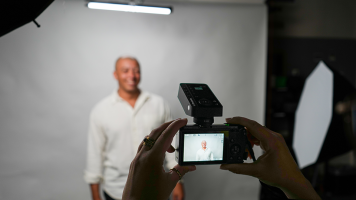
At first glance, studio photography and the compact camera may seem strange bedfellows. The type of work associated with the studio—still life, product photography, portraiture, macro photography—usually wants cameras with larger sensors and interchangeable lenses, especially in professional applications. Compact, point-and-shoot cameras, for their part, have their natural home in everyday, travel, nightlife, and street applications, where their discretion and size become virtues.
It might seem almost cruel to introduce the compact to the

by Mathew Malwitz · Posted
Traveling with camera gear can be a daunting experience, especially as we start expanding our arsenal of lenses. Picking the right lens for the job is a challenge in itself, and now we’re finding the space to pack it among our clothes, and other essentials. Wouldn’t it be nice if we had one lens to do it all?
Luckily, such lenses do exist, and these travel-ready all-in-one zooms come in a variety of mounts, some brand specific, and others available for many different cameras. In today’s guide, we’re covering the best travel zooms for APS-C or

by Mathew Malwitz · Posted
Let's face it: smartphone cameras are not the vibe anymore. What we want is a dedicated point-and-shoot camera, whether it be a classic hand-me-down model from the early 2000s or a more current spec'd out model with modern bells and whistles. These small point-and-shoot cameras may be made for travel but they excel in some scenarios more than others.
In today's guide, we're covering just a few of the best travel-friendly

by Mathew Malwitz · Posted
Dental photography is a unique genre of photography that requires a specialized set of tools to deliver the clarity, brightness, and color accuracy dentists rely upon to accurately record their patients’ progress.
In this guide, we’re going to cover the essential tools dental professionals need to capture the best quality images of their work, from the camera itself to the lighting tools required to accurately capture the color and detail of those pearly whites.
The Camera
Of course, one could use almost any camera, so long as it produces

by Mathew Malwitz · Posted
Bird watching and photography seem to go hand in hand. While there are some who prefer to enjoy the sights free of distraction, there are others who like to record their findings to share with others. To do that, we need a camera and picking one can be overwhelming. Many opt for the tried-and-true bridge camera, but these are limited in the quality they can deliver.
For

by Mathew Malwitz · Posted
When it comes to choosing the right camera, there’s often a gap between the small, pocketable point-and-shoot cameras and larger mirrorless ones. While interchangeable lens mirrorless cameras have much to offer, their higher price points and larger form factor often make them unfeasible for the average photo enthusiast. It often leads to the question of how a photographer can bridge that gap.
Enter the aptly named
by Mathew Malwitz · Posted
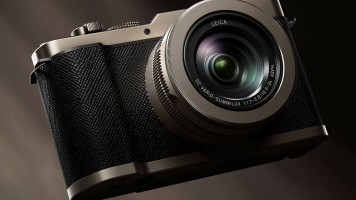
After the smartphone revolution, it appeared that the days of the compact camera were done. How wrong we were. It’s true that a few years back, point-and-shoot options were few and far between. There were just a handful of options on the market, and some industry titans even left the market entirely. Despite the long-rumored demise of the compact camera, it seems that photo enthusiasts still desire a dedicated device without the distractions that come with a smartphone.
What is a compact or “point-and-shoot” camera? Just because a camera is

by Bjorn Petersen · Posted
When assembling a kit of lenses for photographing a wedding, one should take into consideration the location in which the wedding is taking place, the number of guests and, of course, the type of imagery you are seeking to create. To best represent a wedding in a dynamic manner, it is often preferable to have a range of lenses to achieve different perspectives of the event, rather than maintaining a constant perspective of your subject matter. A wide-angle lens, specifically, is a highly effective tool for capturing many of the scenes that

by Shawn C. Steiner · Posted
Wedding season is upon us and whether you’re a first-time wedding photographer or an experienced pro, you’re likely debating which lenses you should keep or add to your daily kit. Sony makes deciding even tougher with an incredible variety of glass offerings for their E-mount mirrorless system.
Don’t worry though, we’re here to help with our picks for the best Sony lenses for wedding photography.
The New f/2 Zooms: FE 28-70mm f/2 GM and FE 50-150mm f/2 GM
Released in late 2024 and early 2025 respectively, the
by Mathew Malwitz · Posted
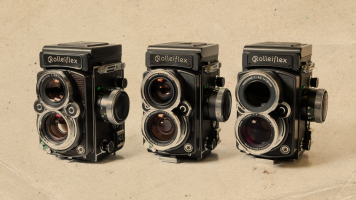
It's not every day that a piece of photography history passes through B&H. Sure, every camera and lens carries a little bit of the past with it, from a DSLR made in 2015 to an old rangefinder from the 50s. History lives in the images they've captured and the hands they've been passed through. That said, there are some cameras and lenses that stand out among the rest. Especially when they come bearing the serial numbers 0000001, 0000002, and 0000003.

by Mathew Malwitz · Posted
Today, we're going to learn about practical applications of other, less common lenses for street photography such as portrait lenses, ultra wide-angle landscape lenses, and special effect glass like mirror lenses and beyond. These are by no means the only unconventional lenses out there, but these should get your gears turning and inspire you to start experimenting.
Portrait Lenses
Portrait lenses are known for their unparalleled sharpness and eye-catching, subject isolating qualities. This is thanks to their simple design, top-of-the-line

by Mathew Malwitz · Posted
Mother’s Day and Father’s Day are right around the corner! Finding the right gifts can be a challenge, especially when it seems like they already have everything. Luckily, we’ve got the best gift ideas for the outdoorsy photographer parent in your life. Whether mom and dad are avid hikers, bird watchers, beachgoers, or polar bear guides in Svalbard, Norway, we’ve got you covered.
Camera
In a surprising twist, a camera is our first suggestion. One of the first things any outdoorsman should consider is a tool to record what they see so

by Todd Vorenkamp · Posted
There is nothing that can replace the extreme close-up view of a rare bird in the wild. Binoculars can get you close but, if you want to look the bird in the eye or confirm that identification for your life list, you need a spotting scope. Spotting scopes pack incredible magnification in a generally simple and lightweight package that is