Search results for: photography features adapting vintage lenses
About 12 filtered results
by Bjorn Petersen · Posted
What I miss most from the film era of photography is the uniqueness of different camera systems: brands’ idiosyncrasies, distinct ergonomics and accessories for various medium format outfits, and the overall modularity of what a camera can be. The Hasselblad 907X & CFV 100C is inspired by this sentiment, with its removable digital back design and an extremely simple camera body that purely serves as an

by Luke Rollins · Posted
It’s easy to overlook the fact that when you’re buying a camera, you’re not just buying the body—you’re buying the mount system and all the lenses, too. After a camera and two lenses, you’re locked in, and switching brands becomes as difficult as moving apartments or buying a new car. Sure, making a camera and making a lens are different beasts, and while in truth there are great cameras and great lenses across all the brands, some companies do some things a little better than others. And let’s face it—you know somebody is going to ask you

by Jordan Gallant · Posted
Need something extra to be thankful for this week? How about some new product releases! DJI added to its wireless microphone systems with the Mic Mini and Venus Optics released a full-frame version of their Laowa Nanomorph lenses.
DJI Shrinks Their Wireless Mic System
In the newest iteration of their wireless microphone system lineup, DJI has brought us the Mic Mini, a compacted version that does not skimp on features. The new system is designed with content creators in mind thanks to its compatibility with a wide array of devices. It is

by Bjorn Petersen · Posted
Third-party lenses—those made by a brand other than the camera manufacturer—present a wide variety of creative opportunities and fiscal benefits. Though there are certain sacrifices with some third-party options, such as mount availability and autofocus/electronic compatibility, more often than not, you’re rewarded with benefits you can’t achieve with in-system, first-party lenses—for example, a different take on the size and speed of a particular

by Todd Vorenkamp · Posted
Many of us believe that astrophotography requires a ton of know-how plus the investment of highly specialized (and expensive) gear to create successful images. The truth is that you can capture astrophotography with any camera and any lens. But, as the saying goes, your mileage may vary.
If you already have a camera and lens, you might want to head over to my three-part series Basic Backyard

by Todd Vorenkamp · Posted
Photographic art and style are both subjective topics about which many of us get passionate. The camera is a tool to make photographic art, but we all know that, as a tool—a machine—it can be a beautiful object unto itself. I talk about some of today’s stylistic photographic tools in my Recommended Stylish Cameras article, but let’s pass the microphone around the Internet to see what people think

by Rachel Leathe · Posted
Nothing kills creativity faster than an aching back. For all the benefits of full-frame cameras, telephoto lenses, and dedicated flashes, there’s something to be said for the freedom that comes with a lightweight setup. If you’ve been hunting for a simple camera to stick in your bag on your way out the door, a traveling companion, or something discreet when photographing on the streets, then you’ve come to the right place.
Test Photographs © Rachael Leathe
The heavy-hitting cameras on this list tend to box above their weight class. They

Posted
Vintage cameras and analog film have grown to be unprecedented media darlings within our crowded digital landscape. With a superstar status fueled by insatiable demand amid a limited supply, we investigate both the beauty and quirks of these trending tools in this week's podcast. Joining us in conversation are photographer/vintage camera buff Bill Bain, and expert camera technician/repair wizard Shlomo Weinberger from B&H Photo's Used Department. Whether you cut your teeth on old school tech or you're an analog adopter in the digital age,

by Todd Vorenkamp · Posted
A lens’s hyperfocal distance—a mathematical combination of lens focal length, aperture or f-stop, and focus distance—is a tool that photographers can use to maximize their depth of field for capturing nearby foregrounds and distant backgrounds in acceptable sharpness.
While you can always dial up your lens’s sharpest aperture (sweet spot), many landscape photographers want as
by Allan Weitz · Posted
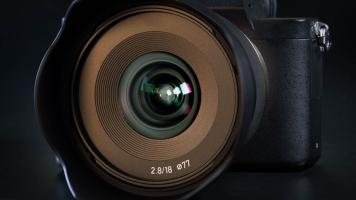
The first mirrorless digital camera was the Epson R-D1, which was introduced in 2004. The truth is, mirrorless cameras can be traced back to 1916, with the introduction of the Kodak 3A Autographic Special, a rangefinder film camera—or even further back still if we want to factor view cameras and plate cameras into the equation. Despite this, in the contemporary sense, mirrorless digital cameras are still relatively new, but there’s no doubt they’re also incredibly popular. Camera manufacturers have shifted their R&D budgets away from DSLRs

by John-Paul Pale… · Posted
Although I’ll always be a film photography enthusiast, one of the things I love about digital cameras is the ability to create a more classic look by adapting vintage glass to DSLR and mirrorless models. Shooting with the optics of yesteryear opens you up to a world of alternatives, some of which are no longer made and, some of which, in my opinion, rival their modern counterparts. While there are modern lenses that offer advantages and improvements, photography isn’t always about maximum sharpness, intense contrast, super saturated colors,
by David Flores · Posted
The widespread adoption of 4K video isn't a question of if but, rather, a mash-up of when and how. There are a handful of ways that we already consume the format. When you visit a modern movie theater, the odds are high that you’ll be screening a 4K digital video projection. Netflix, YouTube, and Vimeo are all experimenting with 4K streaming options—but most of us don't have the right kind of hardware to appreciate them. Premium 4K or Ultra