Search results for: photography tips solutions black white photography tips
About 155 filtered results
by Luke Rollins · Posted
By now, the film resurgence has eclipsed its charming underdog status to become a full-blown front in what has become an all-out, open revolt against the smartphone and its visual aesthetics. What distinguishes the “film look” from the digital—texture, material imperfections, color magic, and the analog halo of yesteryear—comes at a price tag as resurgent as the medium itself.
Despite the contradiction (or perhaps because of it), the pursuit of the film look in a digital format has become something of a cottage industry, with manufacturers,
by Mathew Malwitz · Posted
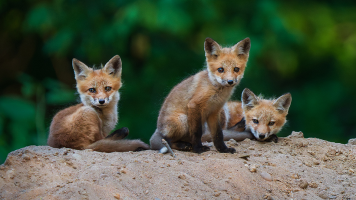
Wildlife photography is one of the most therapeutic and rewarding genres of photography and it’s also one of the most popular. There’s just something so special about being able to witness the magic, and with new camera tech, wildlife photography is easier than ever. That said, the thrill of the shot can overshadow good decision-making, leading to unethical practices. But what are ethical practices?
Take nothing but photographs, leave nothing but footprints—an adage well-known by nature enthusiasts of all levels, but not all that practical.

by Mathew Malwitz · Posted
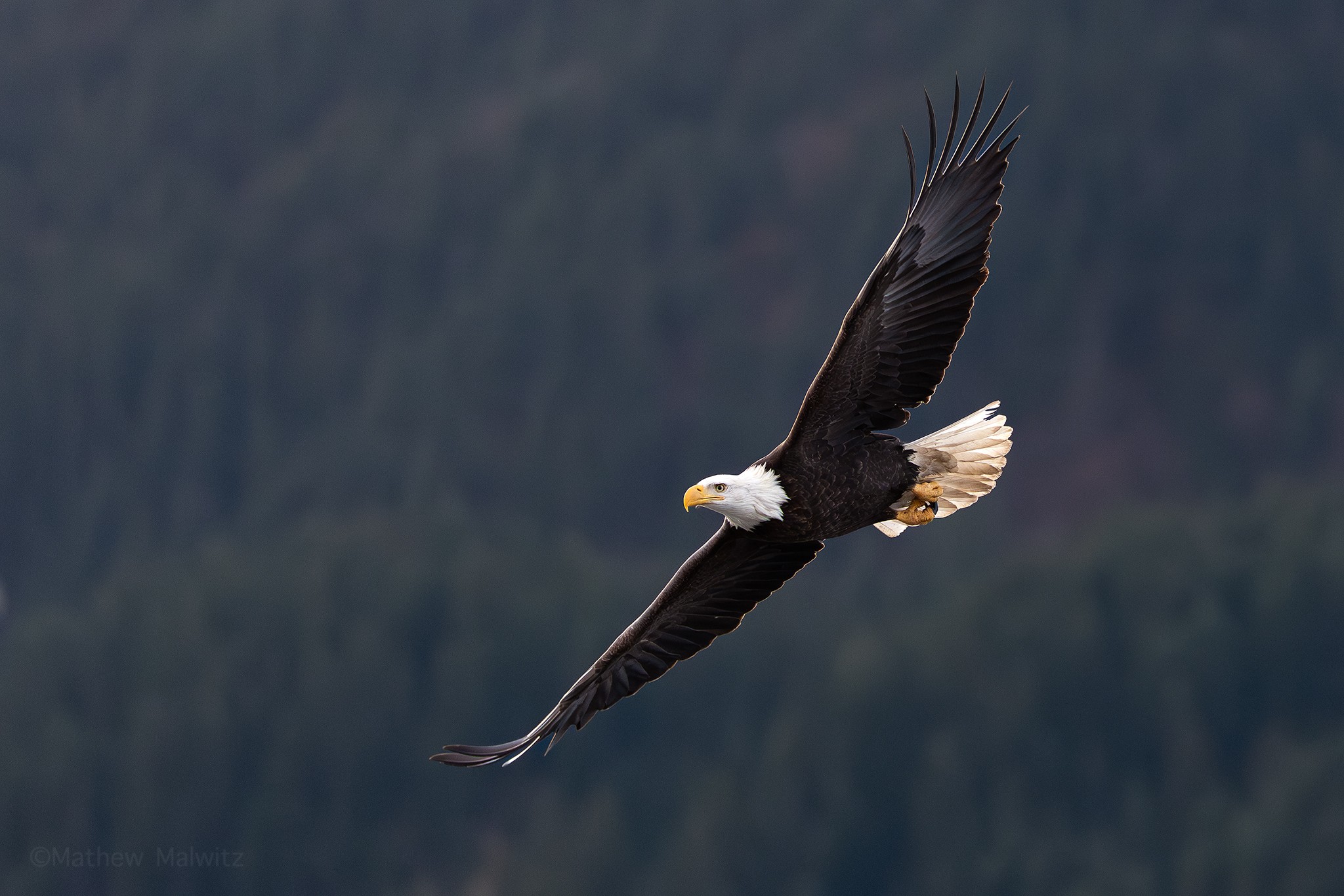
The bald eagle, one of the most regal birds of prey, has a secret. It’s notably one of the most difficult subjects to expose for. If we trust the camera in an automatic mode, we’re likely to get either an overly bright head, or a body that’s too dark in shadow to see. The only reliable way to capture good exposures of these birds is to expose to the right.
Mathew Malwitz
This technique is as useful as it is controversial,
by Luke Rollins · Posted
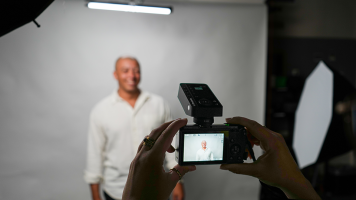
At first glance, studio photography and the compact camera may seem strange bedfellows. The type of work associated with the studio—still life, product photography, portraiture, macro photography—usually wants cameras with larger sensors and interchangeable lenses, especially in professional applications. Compact, point-and-shoot cameras, for their part, have their natural home in everyday, travel, nightlife, and street applications, where their discretion and size become virtues.
It might seem almost cruel to introduce the compact to the

by Luke Rollins · Posted
Achieving a standard of production value is an essential component of establishing a brand and growing a following. For part-time, burgeoning, and mid-level creators, it can feel like bridging that gap is less a matter of learned skill and more about the equipment you can afford.
In most cases, the problem isn’t budget at all. Acquiring the specific know-how can give your content professional sheen with little to no financial outlay.
Lighting design is arguably the most immediately visible production component—and the one most capable of
Posted
Sony Artisans of Imagery's Andy Katz explores light and how it turns a good photograph into a great photograph. Learn how to see, shape, and control light to enhance mood, depth, and storytelling.
0:00 - Intro
2:05 - Early career
11:10 - Look for interesting light & angles
21:03 - Putting the puzzle together
23:11 - Color to Black & White
25:04 - One camera, one lens
27:00 - Color creates contrast
29:36 - Photographing people & traveling
34:32 - Black & White vs. Color
37:02 - Depth of field
39:22 - Hands & eyes in

by Todd Vorenkamp · Posted
Do you want to preserve the memory of that awesome neighborhood fireworks show? Let's discuss the best ways to try to make a memorable photograph commemorating the event.
Before we get started, let me say that there are many ways to accomplish fireworks photography and no technique is usually worse or better than others. The only thing that really matters as you head home after the show is:
You enjoyed the photographic process.
You are left with a photograph or photographs that you personally enjoy.
You enjoyed the fireworks show!

by Mathew Malwitz · Posted
First, a disclaimer: Like composition, lighting portraits is a subjective exercise. A setup that works for one situation may not work for the next, and lighting that one photographer adores might repulse another. Cultivating a personal lighting style involves an awareness of conventional approaches and willingness to go beyond what everyone else is doing. Study portraits

by Todd Vorenkamp · Posted
One of the magical aspects of modern photography is the ability to review an image instantly within our EVF (electronic viewfinder) or right on the back of the camera.
Frequently, one possible mistake that digital photographers make is when reviewing an image on their camera—they evaluate exposure based on the reproduced image. Why might this be a mistake? Well, both your camera’s LCD and EVF likely have adjustable brightness. Also, you might be viewing your images in bright sunlight or in the pitch black of night. Just as viewing a computer

by Todd Vorenkamp · Posted
Every facet of photography is about controlling light, from the amount of light we allow to enter our camera via the aperture of a lens to the duration of our exposure set by the shutter speed. But how does the camera measure the brightness of the scene to set these settings automatically? How do you, the photographer, know how much to adjust your exposure settings to achieve a specific result for the final image? This is achieved with an in-camera light meter.
What Is Metering?
Metering is how a camera evaluates the available light to

Posted
You went out and took photos, now it's time to edit. Derek goes over the different tools in Adobe Lightroom, discussing basic and advanced techniques.
0:00 - Intro
5:22 - Post processing philosophy
12:44 - The fun(damentals) of editing
16:14 - Color or Black & White?
35:15 - Basic edits
38:07 - Kelvin scale
40:25 - Editing demo - basic edits
1:05:54 - Beyond basic editing
1:10:56 - Second editing demo
1:14:11 - Basic edits
1:25:50 - Curves tool
1:37:11 - Histogram
1:42:10 - Presets
1:44:22 - Color grading
1:48:38 - Black & White
1:55

by Luke Rollins · Posted
There comes a time in a photographer’s life—usually after some consistent success with an on-camera flash—when they say to themselves, "I’m ready to make my own light on demand." Thus begins a seemingly never-ending journey—first mastering the basics, then trying to put some feeling and expression into their photos.
Assuming you’re versed in

by Mathew Malwitz · Posted
As you begin to experiment with exposure, you’re likely to find many creative tricks. For example, one of the most visually stunning compositions you can capture is one where moving water is blurred while the rest of the scene remains tack sharp. You know the look. It’s a much sought-after effect that is quite easy to capture, once you know how. In order to achieve this look, your exposure must go on for a

by Mathew Malwitz · Posted
If there’s one area of wildlife photography that challenges even some of the most consummate artists, it’s birds in flight. A dynamic flight shot shows action, and a bit of technical prowess. As you can imagine, capturing birds in flight is no easy feat.
To consistently capture these shots, one must be proficient with their gear and have a knowledge of animal behavior. We’d go as far as to say you need a bit of luck too, but what is luck if not preparedness meeting opportunity. In order to make the most of the opportunities that present

by Mathew Malwitz · Posted
Good lighting is essential to creating a strong, visually pleasing image. This is as true for naturally lit outdoor shots as it is for studio portraits. For individual or even couples portraits, many photographers make use of on-camera flash or compact, battery-powered strobes to supplement natural light and fill shadows, but how do we situate these in the scene? What light shaping tools should we use? Groups alone can be tricky for a plethora of reasons. Whether it be getting everyone to smile, getting kids to look at the camera, or the