Search results for: photography tips solutions focal length portraiture
About 19 filtered results
by John Harris · Posted
It would be foolish to claim that there is only one way to take a portrait, but there are some accepted norms and basic camera settings that you should understand if portraiture is to become your area of photographic interest. Remember though, as you walk down your creative path, that a portrait is more than a headshot, more than a beautiful photo of your subject; it is an opportunity to get to know someone, to have a visual conversation with a person, and to use your photographic skills to pass that understanding of the person on to the

by Mathew Malwitz · Posted
What better place to spend a Saturday morning than the zoo. You can enjoy some time outside, all while seeing a variety of both local and exotic animals you'd otherwise never dream of encountering. Zoos also are great place to try your hand at photographing wildlife! In this guide, we're talking about taking our camera to the zoo to capture natural looking images of animals in their element! We'll be covering what you need as well as tips and tricks that'll help you capture stunning, natural looking images of animals.
Above photograph © Mathew

by Mathew Malwitz · Posted
Portraiture: It’s one of the most popular and prevalent forms of photography. Although it may seem simple on paper, it comes with its own unique obstacles. Of course, you’ll want to be familiar with your gear. This is essential to all working photographers, but it allows you to focus your efforts on the genre-specific challenges you’ll face.
When photographing people, you’ll find that some folks are photogenic, while others are not. Your job as a photographer is to break down the barriers set by your clients and to put them in the most

by Cory Rice · Posted
Using fast prime lenses to create razor-sharp portraits where the focus melts away like butter can be an addictive (and costly) pastime. The jump from an 85mm f/1.8 to an 85mm f/1.4 may seem minor on paper, but anyone who has used both lenses knows that the difference extends well beyond a few decimal points. This article is an homage to the top-tier primes designed for the most demanding portrait photographers. Hide your wallet before proceeding.
Photographs ©
Posted
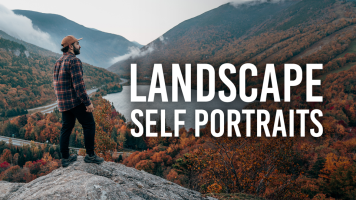
Including yourself in a landscape shot is a great way to tell a story, add emotion, and give a sense of scale. In this video, Matt Zefi discusses composition, posing, and angle options for your landscape self-portrait to convey the mood of your image.
0:00 - Introduction: Just Find Friends
0:44 - How to Take a Photo of Yourself
1:38 - Posing, Composition, and Storytelling
2:40 - Focal Length

Posted
Should you choose a 50mm, 85mm, or another lens entirely? In this video, Maria Perez explains how certain lenses distort or compress your image. She also discusses the most flattering focal length for your subject’s face, portraiture lenses, and much more.
0:00 - Introduction
0:55 - 24-70mm, 24-105mm
1:44 - 35mm
2:10 - 50mm "Nifty Fifty"
2:42 - 85mm
3:11 - Telephoto Zooms and Primes
4:06 - Supertelephoto

by M. Brett Smith · Posted
Portrait photography, or portraiture, remains one of the most popular genres of photography today—and for good reason. Portraits are compelling; they are evocative. Portraits tell a story; they elicit an emotion. Shot correctly, a portrait can reveal the true essence of a person, who they are and what they feel. According to Godard, portraiture is tantamount to capturing the soul. About what other medium or form of expression could you say such a thing?
As with most genres of photography, portraiture is not beholden to any one specific

by Todd Vorenkamp · Posted
Specular out-of-focus highlights have appeared in photographs since the first photos were taken through lenses. In 1997, Photo Techniques magazine introduced the word “bokeh” to the photography world’s vernacular and the out-of-focus areas of photographs have been scrutinized ever since. Before the term, there was certainly discussion about the aesthetics of the out-of-focus specular highlights of a photograph, but until 1997, there wasn’t a good word in the English language to describe the phenomenon. Credit goes to Mike Johnston, article

by Bjorn Petersen · Posted
There’s no denying the appeal of fast lenses and super versatile zooms, but sometimes a small and compact prime lens is all you really need—especially if you’re a landscape photographer. Whether it’s for the smaller footprint, lighter weight, or just because you like the look of a certain lens, there are many cases for trading in the huge, heavy, and complex lenses for the humble, compact, and slower prime.
Smaller and Lighter
The most obvious reason to go the way of the slow prime is because of the noticeable savings in weight and size. If
by Todd Vorenkamp · Posted
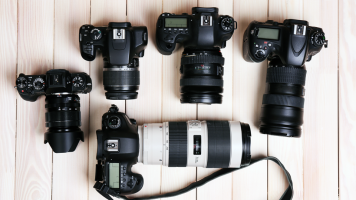
In the ever-changing digital world, it is often financially difficult to keep pace with the technology and constantly acquire the latest and greatest gear. Many of us save up our hard-earned cash to get the latest camera, only to see it be replaced weeks or months after we acquired our new toy. That can be disheartening, of course, but here are a few tips on how you can breathe new life into your aging digital camera.
I was going to conclude with a few thoughts, but let’s begin with them instead…
Remember/learn/know that an older digital

by Allan Weitz · Posted
I’ll never forget the first time I looked through the viewfinder of a camera fitted with a 20mm ultra-wide-angle lens. Everything looked amazing and I blew several rolls of film shooting everything I saw along the way. Prior to using this “exotic” lens, I had never shot with anything wider than the 50mm normal that came with my first 35mm camera.
The sobering part came when I developed the film and started eyeballing the results of my first outing. In a word, they were underwhelming, but I kept at it until I figured out how to use ultra-wide

by Todd Vorenkamp · Posted
Congratulations on getting your first telephoto zoom lens. Telephoto zooming makes for fun photography! Whether you got your 55-200mm or 55-300mm “kit lens” with a new camera, or you’re adding it, or a similar lens, to your quiver, your photography is about to enter a new world of awesomeness. In this article, we will discuss some tips for how to get the most out of your new telephoto zoom lens.
Photographs © Todd Vorenkamp

by John Harris · Posted
Bokeh is a word that carries a lot of weight in modern photography circles and can, surprisingly, breed heated conversations, but what does it really mean and how does it apply to portrait photography? As an introduction, consider the word—which is derived from the Japanese term for “blur” or “haze”—to mean the aesthetic quality of the out-of-focus parts of an image surrounding an in-focus subject. It is not simply something not in focus, it is a product of shallow depth of field and can be quite beautiful on its own, but also lends to
by Allan Weitz · Posted
In recognition of B&H Photo Macro Week, this week's FAQ topic is—you guessed it—macro lenses.
What is a macro lens?
Macro lenses are generally defined as lenses that can photograph an object at life-size (1:1) or half life-size (1:2) magnification.
Tamron SP 90mm f/2.8 Di Macro 1:1 VC USD Lens
Are macro lenses available in different focal lengths?
Yes. For full-frame 35mm cameras, macro lenses that focus down

by Allan Weitz · Posted
In this week’s edition of FAQ, the topic is a wide-angle lenses. When describing the focal lengths of lenses, there are three main groups: normal, wide-angle, and telephoto.
What is a wide-angle lens?
By way of comparison, normal lenses approximate the perspective and special relationships between elements within the viewing area the way our eyes do. In other words, normal lenses represent the world much like the way we see it.
Wide-angle lenses capture a wider view of the scene before the camera, but because they squeeze more of the scene