Search results for: photography tips solutions how to protect your camera from rain
About 15 filtered results
by Brian Zwiebel · Posted
When winter rolls around, many bird photographers choose to hibernate like a bear or fly south like a bunting. However, with a few precautions and considerations, winter can be an excellent time of year to photograph birds, even in the northern climates. Over the years, I have made dozens of trips to photograph birds in some pretty extreme locations, such as the high arctic, northern Michigan, and northern Minnesota. In this first part of my two-part series, I will share my strategies to prepare yourself and your gear in the best ways for

by Jill Waterman · Posted
In recent years, several incidents involving careless shutterbugs light painting with burning steel wool gained notoriety in the press, giving legitimate night photographers a bad reputation. With these unfortunate matters in mind, we interviewed a variety of night-photography specialists to compile the following eight tips on safety and etiquette when photographing in the darkness.
Above photograph © Troy Paiva
1. Do no harm and don’t be a jerk
Taking a cue from the Hippocratic Oath, Stu

by John Harris · Posted
As we slowly return to photographing live music events, it is an important moment to take into consideration aspects of that job that fall outside simple gear and technique concerns. I am talking about health and safety, and I doubt that there are any concert photographers who do not view that aspect of the work in a new light since 2020. We know how severe an impact the live music business has felt and that many precautions and protocols will be with us for the foreseeable future, so let’s talk about how to be safe while shooting live music

by Todd Vorenkamp · Posted
When most of us think of “sports photography,” we immediately think of iconic images from the world of land-based sports—American football, track and field, boxing, baseball, and others. One could argue, however, that yacht racing and sailing regattas provide the canvas for some of the most spectacular images in all of sports. And, if you have spent time around the water, seen the framed print on the wall of my physical therapist’s office, or flipped through the pages of any sailing magazine, you might have noticed that professional sailboat

by Jill Waterman · Posted
Jean Fruth is a diehard baseball fan. “Growing up in New York, with two great hometown teams, how could you not connect with the sport?” she asks. As a teen, she worked in a restaurant owned by serious Mets fans who had season tickets, “And they would take me to games,” she reminisces. “And my grandfather was a Mets fan, listening to games on the radio.”
Such formative influences foreshadow her ultimate path to becoming one of baseball’s preeminent photographers, yet it took many years of exploration for Fruth to put a plan into action. “My

by Allan Weitz · Posted
The leaves may be down and your frost-laden lawn might be making crunchy sounds when you cross it in the morning, but that doesn’t mean you have to pack your cameras away until Spring; if you do, you’re going to miss some fine picture-taking opportunities.
Appropriate layers of warm clothing and insulated boots aside, capturing strong stills and video during the cold months of the year requires a bit of foresight, a few recommended weather-related accessories, a measure of common sense, and the desire to take great pictures despite the cold.

by Cory Rice · Posted
When Nicéphore Niépce invented the first permanent photographic process in the early 19th century, he named it heliographie—or, sun-writing. Nearly two hundred years later, the sun continues to provide a quality light source to photographers at a fraction of the cost of its competitors. Like any creative decision, using natural light for portraits has its pros and cons. Its popularity stems from the facts that it is free, accessible,

by Jill Waterman · Posted
Ami Vitale has a remarkable affinity for life-changing events. A native of South Florida, Vitale was a self-described shy, gawky child who, like many young girls, possessed little confidence. The assessment of a grade school teacher, who told her she was not very good at English, stuck with her for years. “I just thought that I had no ability as a writer, or as a creative person,” she says. “I remember thinking I was going to become an engineer because I had almost perfect math scores on my SAT.”
Photographs © Ami Vitale

by Joshua Simons · Posted
If you have ever shopped for a camera bag, strap or case, we know your pain. There are so many options—too many options in the minds of some. After all, they’re just camera bags, how different can they be? Well, camera bags, while not having intricate image sensors, screen resolutions, or megapixels, are complex in their own ways. The following guide is meant to help you navigate the wide world of

by Allan Weitz · Posted
Seascapes are like landscapes… only more. I say that because just like landscapes, they contain open skies and land masses, but they also contain water—lots of water, and that’s where they differ.
Photographs © Allan Weitz, 2017
A seascape captured at sunset using a waterproof point-and-shoot camera. A number of available waterproof cameras offer inexpensive options for photographing seascapes and


by Elizabeth Groeschen · Posted
You’re bundled up under appropriate layers, complete with warm, waterproof boots, fingerless mittens, and disposable hand warmers for added comfort. Spare batteries are tucked under layers, close to your body, to keep them warm in an attempt to prolong their life outside. Spare lens cloths for fogged lenses and an

by Ryan Brenizer · Posted
There are a lot of reasons to like the New York City area, but weather usually doesn’t make the top 100. Every summer, we are reminded that we are the Northernmost U.S. city considered “humid subtropical,” and every degree of heat gets compounded with sticky wetness, reflected from concrete and asphalt on all sides like the interior of an Easy-Bake Oven, and filtered through the smell and collective grumpiness of closely huddled masses. But each winter we miss summer, because that same humidity makes the cold settle into our bones. There are

by Todd Vorenkamp · Posted
Lightning is one of Nature’s most impressive displays and capturing it with a camera is a challenge, but the results can be almost as grand as the natural spectacle. There are a lot of overlaps between lightning photography and fireworks photography, but lightning’s unscheduled appearance adds an element of luck to the adventure.
Before we get started, there are two points I’d like to make:
Lightning is incredibly awesome, fun to

by Mike Mezeul · Posted
The weather is something we all have to adjust to accordingly with each passing day. Sometimes it’s the heat, sometimes snow, sometimes the threat of beastly supercell thunderstorms and tornadoes, especially here in the Central Plains. It’s on these days in particular that I grab my camera, hop in my car, and drive hundreds of miles to document these monstrously beautiful yet destructive wonders of nature.
For the past 14 years I have spent my springtime traversing the country, from the Texas/Mexico border to Canada, documenting severe
by Gabriel Biderman · Posted
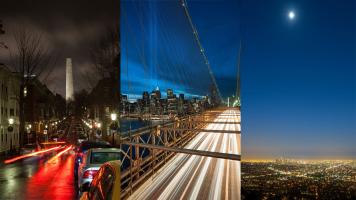
The greatest challenge in travel photography and in photography in general is capturing the essence of a person or place. The world is smaller than ever and almost everyone is traveling and taking pictures. So how do you separate yourself from the pack?We are often told that the best time to photograph is during the magic hours of dusk and dawn. The lighting can be very gentle, even, with wonderful shades of yellow and blue dancing together. However, I think more magic can be found when we photograph at night and extend our exposure into the