Search results for: photography tips solutions manual mode made simple
About 17 filtered results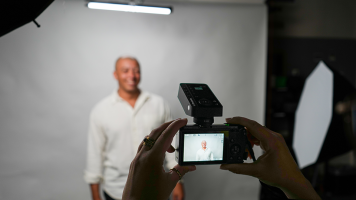
by Luke Rollins · Posted
At first glance, studio photography and the compact camera may seem strange bedfellows. The type of work associated with the studio—still life, product photography, portraiture, macro photography—usually wants cameras with larger sensors and interchangeable lenses, especially in professional applications. Compact, point-and-shoot cameras, for their part, have their natural home in everyday, travel, nightlife, and street applications, where their discretion and size become virtues.
It might seem almost cruel to introduce the compact to the

by Mathew Malwitz · Posted
Exposure can be challenging to master. There are many moving parts, and knowing which settings affect what aspect of our image takes time and practice. The goal might be to take full control and use manual exposure mode, but first, we need to learn the ropes using auto exposure modes.
These modes let us use our camera with a little help. As covered in our introduction to exposure article, photography consists of

by Mathew Malwitz · Posted
As photographers, we are faced with a wide array of lighting conditions, ranging from bright sunlight to dimly lit interiors. Using ambient light as your main source is often preferable; however, in a situation such as an event or portrait where time is of the essence, you will need to know how to properly expose all these varying scenes using both natural and artificial light sources.
Being resourceful with your lighting setups lends greater efficiency, and having a lighting system you can easily move from one situation to the next quickly is

by Mathew Malwitz · Posted
Back in the good old days, during the infancy of autofocus, you had two options when it came to autofocus: On or Off. Now, with advancements in technology, many cameras, even simple point-and-shoot cameras, have a dizzying array of high-tech autofocus modes to choose from. Honestly, they can be intimidating to even to the most experienced shooters.
Before we dive in, be forewarned: almost every manufacturer has proprietary autofocus technology, nomenclature, and features. Even more confusing, the interface to access these modes can often

by Tim Ireland · Posted
Photography is often described as painting with light, and understanding how to manipulate light effectively is a fundamental skill for any photographer. While natural light has its place, using strobes and lighting modifiers can give you greater control over your lighting conditions, especially for product photography. Having a solid understanding of basic lighting gear and lighting modifiers will introduce you to simple yet effective lighting techniques, helping you take your product photography to new dimensions.
Understanding Strobes

by Robert Sansivero · Posted
If you’re just getting started with food photography, you probably have some questions. I certainly did. There are countless ways to set up a beautiful shot of a meal or enticing ingredient. Where to start?
This three-part series will focus on how to light food for photographs. We’ll start with natural light since it is the most abundant and affordable light source. Many successful food photographers create stunning images using only natural light. Next, we will consider continuous lights, ranging from incandescent bulbs at home to tunable

by Jill Waterman · Posted
Making pictures by night is a curious practice. While specialists of this subject embrace it as a deep-seated passion and have a never-ending quest for technical and creative advancement, those more familiar with daytime photography are often unaware that tried and true photography rules often need to be adapted or even overlooked at night. With this in mind, consider the following tips the next time you venture out in the darkness, to help you to adapt.
1. Take a Chance and Explore the Unknown
What’s my exposure time? This is the number one

by Shawn C. Steiner · Posted
Time lapses feel a lot like photography during capture stages and a lot like video during the editing process. Creating them is a common progression for photographers looking to dip their toes into video and motion because you can start making high-quality time lapses with your current still photo equipment. If you are starting to tackle time-lapse projects, applying some video tricks can help smooth out your final product.
The Absolute Basics
I’m hoping that by the time you make it to this article you already have a basic understanding of how

by Todd Vorenkamp · Posted
So, you just bought a shiny, new, and maybe expensive, lens for your camera, and being the savvy consumer, you did your homework. You pored over customer reviews on the B&H Photo website, read online reviews splattered all over the Internet, grabbed a copy of every photo magazine that reviewed the lens, bookmarked dozens of websites, and now have the lens’s MTF curve charts burned into your retinas.
Now, your lens is here and it is time to go out shooting.

by Todd Vorenkamp · Posted
Is it strange to sit back and think that buying a film camera is a new experience to many—even most—photographers? Just 20 years ago, almost everyone was buying and using film cameras. Today, there are legions of photographers who have never shot a single roll of film. Luckily for us, film photography still exists and there are both film and film cameras that you can buy with which

by Cory Rice · Posted
Mastering studio lighting can feel like a Herculean feat when you’re just getting started. Like any aspect of photography, it requires patience, practice, and plenty of mistakes before it comes naturally. In an effort to shorten your learning curve, we’ve rounded up 10 common issues that beginners encounter and how to fix them.
Technical Issues
Lighting setups can be as simple or complicated as your heart desires—or your shot requires. However, before you can begin to think about how to use your lights creatively, you need to understand how

by Stan Moniz · Posted
Being a photographer and a filmmaker, I've gravitated heavily toward the art form of time-lapse photography. It's the perfect blend of photography and videography, the best of both worlds. Because I mix this art form up with my undying love for capturing the night sky, I’m incredibly passionate about this process and sharing it with others.
Time-lapse photography is capturing consecutive photographs over a long period of time and then playing them back quickly in a series so that slow action appears to happen faster. Examples include clouds

by Josh Taylor · Posted
Today’s digital cameras are capable of awesome imaging performance and they offer an unparalleled combination of convenience, efficiency, and cost effectiveness that has made them the dominant mode of image capture. Nevertheless, shooting black-and-white film, especially in medium format, is a fascinating and worthwhile experience that’s rewarding, fun, and can also go a long way toward making you a more thoughtful and effective digital photographer.

by Todd Vorenkamp · Posted
Many of us have been there. We get into photography and then we start getting more serious about the art, craft, hobby, or profession. Eventually, the “kit lenses” don’t seem to cut it any longer. Regardless of your path through the world of photography, it is likely that you set your gaze on the camera bag of a professional photographer and saved your hard-earned nickels to buy a set of “pro” lenses. Those lenses usually include the triad of f/2.8 aperture zooms covering wide (14-24mm), mid-range (24-70mm), and telephoto (70-200mm) needs.

by Todd Vorenkamp · Posted
Panoramic photography has never been easier than it is today, thanks to digital technology. In the days of film, your options for panoramic photos were the purchase of expensive, but very capable, panoramic cameras, stitching images together in a darkroom, or physically cutting and pasting prints together. Panoramic cameras, like the Linhof Technorama-series, Hasselblad XPan, Fujifilm GX617, or Horseman SW-series cameras, are beautiful machines and still incredibly viable tools of the trade if you want to take exquisite panoramic images with