Search results for: photography tips solutions best times to take photos
About 87 filtered results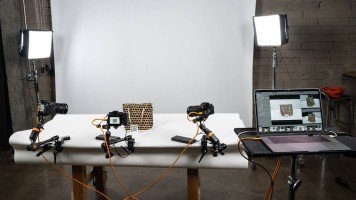
by Luke Rollins · Posted
At its most basic, tethered shooting involves connecting your camera, wired or wirelessly, to your computer as you shoot. You’ve likely seen it in some behind-the-scenes video for a professional studio shoot, or you just have a friend who swears it’s the best thing since sliced bread. Tethering is a shooting technique that can benefit many a photographer’s workflow significantly, though upon first hearing of it, the idea of tethering can be something that first requires a bit of education. Hopefully, this introduction will help get you started

by Luke Rollins · Posted
There comes a time in a photographer’s life—usually after some consistent success with an on-camera flash—when they say to themselves, "I’m ready to make my own light on demand." Thus begins a seemingly never-ending journey—first mastering the basics, then trying to put some feeling and expression into their photos.
Assuming you’re versed in

by Mathew Malwitz · Posted
Lighting is the key to all photography. While elaborate, multi-light setups may appear to be the standard, the creative photographer can produce a seemingly endless range of images using just one light source. This guide is designed to help those beginners out there build the perfect one-light kit for portrait photography.
Why One Light?
I completely understand why multi-light “studio in a box” kits are tempting to beginner and budget-conscience photographers. Why spend hundreds of dollars on one light when you can get three lights complete

by Mathew Malwitz · Posted
Are you interested in the wide and wonderful world of photography? Well, you’ve certainly come to the right place! Check out this short checklist of a dozen items, designed to get you started in digital or film photography and headed in the right direction.
1. Interest
The first thing you need is an interest in photography. If you are reading these words, you likely already checked that box. If you are debating whether to take the dive into photography, you might want to give it some careful thought, or cater your purchases toward your level

by Todd Vorenkamp · Posted
Before you venture out to photograph your first lunar eclipse, you should get some practice taking photos of the moon. If lunar photography is varsity-level stuff, lunar eclipse photography is all-pro. There are some unique challenges to the art, and great ways to get creative results, but the basics of lunar photography apply. Unlike

by Rachel Leathe · Posted
I can’t count the number of times a stranger has approached me while I’ve been setting up my drone to ask if they can watch the launch. I imagine this is how the world’s first television owners must have felt as the neighborhood kids crowded around the only television on their block to witness such groundbreaking technology.

by Allan Weitz · Posted
For the longest time, comparing image quality between point-and-shoot cameras and full-frame cameras, or even APS-C format cameras, was a conversation you could have start to finish during the course of an elevator ride. Point-and-shoot cameras were convenient, but the detail and dynamic range of their smaller sensors never measured up to the detail and dynamic range you get from larger sensors. And then one day Sony introduced a new 1" format CMOS sensor, and BOOM! People started having second thoughts about slinging heavy camera bags over

by Todd Vorenkamp · Posted
Photographing holiday lights and candles is one of the most fun holiday adventures any photographer can have and a great way to explore and enjoy the festive lights in your neighborhood and home.
Here are some tips on how to make the most of your captures of holiday lights while you wait to receive gifts from your B&H wish list!
1. Use Low-Light / Night Photography Techniques
The best time to view holiday lights is when the lights go down (indoors and outside). Therefore, you will benefit from the tried-and-true practices of

by Emily Mandagie · Posted
"Alright, your time in flight will be approximately twelve minutes." Berty and I swallowed that weighted sentence and nervously nodded in response. Smiles were on the outside, but deep inside we were wondering how in the world we were going to make the most of those fleeting seconds in that helicopter and capture exactly what we wanted from the sky!
Aerial photography can be exciting and exhilarating. But it can also come with a lot of added challenges, such as time limits, weather conditions, and—let's be real—a large expense! (Flights aren't

by Rachel Leathe · Posted
Did you know that the first photograph ever taken was of a landscape?
“View from the Window at Le Gras” was captured by Nicéphore Niépce, in 1827. It features a very abstract view from Niépce’s window. Then, in 1839, Louis-Jacques-Mandé Daguerre made history with his image of

by Allan Weitz · Posted
If wanderlust is starting to get the best of you, consider upgrading your camera gear before heading out on your next outdoor adventure.
1. Clean Your Gear
Your first order of business should be to make sure your camera bodies and lenses are clean and in proper working order. To learn more about cleaning and optimizing the performance of your cameras, camera sensors, lenses, and other photo essentials, refer to the tips I offer in

by Todd Vorenkamp · Posted
When the moon passes directly between Earth and the sun, those on Earth are treated to one of nature’s greatest spectacles—a total solar eclipse. It is a phenomenon that almost every observer would like to capture in a photograph.
Due to the rarity of the event, the short duration in which to capture it, and the dynamic nature of the subject, it is one of those photographic opportunities that requires the proper gear, setup, planning, and practice.
Eclipse and solar

by Theanos Nikitas · Posted
Now that you know the basics of Fashion Week from Part 1 of this article, it’s time to learn about the types of conditions you may face, and the needed gear (and settings) for getting great images.
Shooting Conditions and Gear Requirements
Each venue and runway show is unique. Some shows are well lit, while others may have no professional lighting or minimal illumination (I once shot a show in an historic building where the only

by Todd Vorenkamp · Posted
How unfortunate is it that some of the best photographic opportunities present themselves when it's miserably cold outside? It doesn't matter what kind of camera equipment you're using; proper preparation and knowledge of your gear and environment are essential to helping ensure success when you're out in the cold, making photographs.
Before we talk photography, let me say this: be smart. Cold causes hypothermia and frostbite. There is no potential

by Todd Vorenkamp · Posted
One of the first words I learned how to say was, “Moon.” All of my life, I have been fascinated by our natural satellite and I have been photographing it for as long as I have had a camera. My photos have gotten better over the years, but I still search for the perfect photo of the moon. Here are some tips and thoughts for your own lunar photography.
Above photograph: A waxing gibbous moon the day before the full moon. FUJIFILM X-T1; Leica APO-Televid 77 spotting scope @ 1000mm (1500mm, 35mm equivalent); f/13, 1/500-second, ISO 200