Search results for: photography tips solutions using lens adapters
About 26 filtered results
by Mathew Malwitz · Posted
You don’t have to go far to capture fun and engaging images of wildlife. In fact, you may not have to go anywhere at all. A carefully landscaped yard and the right tools can attract an impressive variety of animal life to observe and photograph. Pair that with a little patience and soon you’ll be capturing stunning images from the comfort of your own home.
Attracting Birds
Birds are part of nearly every environment, from the densest cities to rural areas. While they are common, we’ll need to offer three essentials—water, shelter, and food—to

by Luke Rollins · Posted
The wealth of B&H is not measured in sales, but in the accumulated knowledge of its people. The breadth of such experience is impossible to quantify, let alone price, which is why we’re offering this batch of wedding photography advice completely free of charge.
Andrea Buritica, Sales Associate – Chat & Email
Burikitak Photography
One of the best parts about working at B&H is that I get to talk about gear all day. However, it’s doing wedding

by Mathew Malwitz · Posted
Who doesn’t want to capture fun and creative portraits of our four-legged friends? We know we love it. In fact, pet photography may just be the most popular form of photography there is. Think of all the smartphone snaps of yawns, big stretches, and funny moments we all take of our cats, dogs, chinchillas, and beyond.
Quick snaps aside, you know what really ups the quality of our pet portraits? Lighting. Just as with any form of portrait, lighting unlocks possibilities that can be impossible without it. But what lighting system should we use?

by Mathew Malwitz · Posted
For macro photographers, having the right gear is essential. Magnification and lighting are key, but you don’t necessarily need the biggest, priciest macro lenses out there to get close-up shots. If you’re a macro photographer yourself or buying a gift for one, we have some excellent recommendations for every budget.
Gifts Under $50
1. Close-up macro filters (like this Macro Lens

Posted
Photographers often react instinctively against artificial intelligence, typically focusing on controversial generative AI. Meanwhile, a different branch of AI technology—machine learning systems—has been making remarkable progress helping photographers manage overwhelming image workflows under tight deadlines.
Above Image © Sam Hurd
In today's show, we explore this trending topic in a discussion with Justin Benson and Sam Hurd, both accomplished wedding photographers and tech entrepreneurs.
Justin begins by clarifying the distinction between

by Tim Ireland · Posted
Macro photography allows photographers to explore the intricate details of subjects at a 1:1 or greater magnification ratio. However, capturing sharp, stable, and well-lit macro shots can be challenging, due to factors like camera shake, focusing difficulties, and lighting issues. This comprehensive guide will delve into the support systems and related tools that can enhance your macro photography experience, addressing specific challenges that may arise.
Stabilization Tools
Studio Stands: Studio stands are large, stable support systems

by Todd Vorenkamp · Posted
When the moon passes directly between Earth and the sun, those on Earth are treated to one of nature’s greatest spectacles—a total solar eclipse. It is a phenomenon that almost every observer would like to capture in a photograph.
Due to the rarity of the event, the short duration in which to capture it, and the dynamic nature of the subject, it is one of those photographic opportunities that requires the proper gear, setup, planning, and practice.
Eclipse and solar

by M. Brett Smith · Posted
It's holiday season, and if you're reading this on any kind of electronic device (shout out to everyone who still subs my handwritten newsletter, btw), you likely know someone who either is or is interested in becoming a vlogger or mobile content creator. If said creator or aspiring vlogger is on your holiday shopping list and you're not quite sure what to get them, fear not, for we have put together a gift guide of some of our favorite mobile photo and video accessories.
SmallRig 1.55X Anamorphic Lens
Thanks to the continued advancement of

by Todd Vorenkamp · Posted
A lens’s hyperfocal distance—a mathematical combination of lens focal length, aperture or f-stop, and focus distance—is a tool that photographers can use to maximize their depth of field for capturing nearby foregrounds and distant backgrounds in acceptable sharpness.
While you can always dial up your lens’s sharpest aperture (sweet spot), many landscape photographers want as
by Todd Vorenkamp · Posted
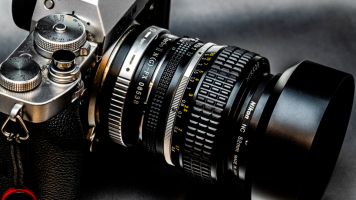
If you use an interchangeable-lens mirrorless digital camera, you know that one of the pleasures of mirrorless shooting is the ability to use lens-mount adapters to photograph with any number of vintage lenses (manual focus or autofocus), as well as some modern-day lenses from your favorite optical manufacturers. When using a crop sensor camera, you might have stumbled across adapters with the monikers

by Todd Vorenkamp · Posted
Imagine seeing an incredibly rare bird at a great distance through a spotting scope. Those birding next to you cannot see the same bird. You need to prove to them, and to your own life list, that you have spotted this rare species. It is way too far away for your camera to capture. What can you do? This is a job for… digiscoping!
Digiscoping with a spotting scope, telescope
by Todd Vorenkamp · Posted
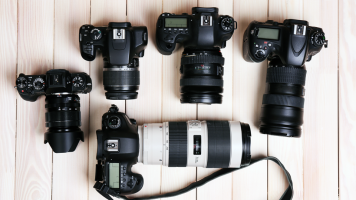
In the ever-changing digital world, it is often financially difficult to keep pace with the technology and constantly acquire the latest and greatest gear. Many of us save up our hard-earned cash to get the latest camera, only to see it be replaced weeks or months after we acquired our new toy. That can be disheartening, of course, but here are a few tips on how you can breathe new life into your aging digital camera.
I was going to conclude with a few thoughts, but let’s begin with them instead…
Remember/learn/know that an older digital

by Todd Vorenkamp · Posted
We cannot be certain, but it is a fair bet that the folks who invented the modern digital cameras, be they DSLR or mirrorless, did not envision that they would be attached to large format view cameras. Can you do it? Yes. Does it work? Yes… I guess. Is it practical and easy? Nope. Should you do it? Maybe. Is it fun? Yes!
I will admit, I’ve never shot large format film. I have friends who shoot large format and it always looked super cool watching them adjust focus on a view camera and compose the scene from an inverted image on a beautiful
by Allan Weitz · Posted
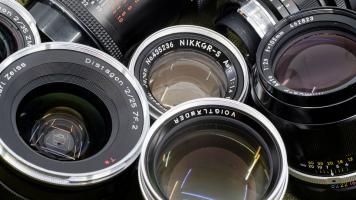
How “good” are vintage lenses when used on modern digital cameras? In a word, vintage lenses are “fine,” though I would have to immediately follow that statement by adding, “It depends,” because there are always exceptions to the rules, though even in these cases, the lens in question often works fine albeit with a technical or optical shortcoming of sorts.
Original photographs © Allan Weitz 2020
When adapting older-generation film camera lenses to DSLRs and mirrorless cameras, most perform well in terms of sharpness, color fidelity, color
by Allan Weitz · Posted
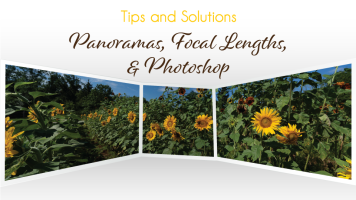
Panoramas are visually interesting, and that’s why Panorama modes can be found on many consumer cameras. Simply set the camera to Panorama mode, frame your shot, and follow the panning instructions in your viewfinder. Move slowly, evenly, and keep your camera level with the horizon. If your camera is on a tripod, so much the better. Do it right and you get a terrific panoramic image of up to 360 degrees, depending on how you set your camera.
I have long been a fan of panorama imaging, you can imagine my surprise when I realized my