Search results for: photography tips solutions understanding tripod heads
About 9 filtered results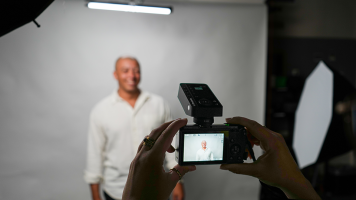
by Luke Rollins · Posted
At first glance, studio photography and the compact camera may seem strange bedfellows. The type of work associated with the studio—still life, product photography, portraiture, macro photography—usually wants cameras with larger sensors and interchangeable lenses, especially in professional applications. Compact, point-and-shoot cameras, for their part, have their natural home in everyday, travel, nightlife, and street applications, where their discretion and size become virtues.
It might seem almost cruel to introduce the compact to the

by Mathew Malwitz · Posted
You don’t have to go far to capture fun and engaging images of wildlife. In fact, you may not have to go anywhere at all. A carefully landscaped yard and the right tools can attract an impressive variety of animal life to observe and photograph. Pair that with a little patience and soon you’ll be capturing stunning images from the comfort of your own home.
Attracting Birds
Birds are part of nearly every environment, from the densest cities to rural areas. While they are common, we’ll need to offer three essentials—water, shelter, and food—to
by Mathew Malwitz · Posted
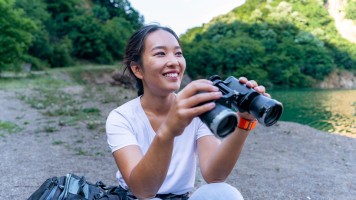
Optic size is measured by what it can do, but when you’re new to the hobby, this can be confusing. Pick up a spotting scope or any pair of binoculars and you’ll see them adorned with a set of numbers like 8x42, 7x32, or 20-60x80. What exactly do those numbers mean and what do they tell us about an optic?
At the most

by Mathew Malwitz · Posted
If there’s one area of wildlife photography that challenges even some of the most consummate artists, it’s birds in flight. A dynamic flight shot shows action, and a bit of technical prowess. As you can imagine, capturing birds in flight is no easy feat.
To consistently capture these shots, one must be proficient with their gear and have a knowledge of animal behavior. We’d go as far as to say you need a bit of luck too, but what is luck if not preparedness meeting opportunity. In order to make the most of the opportunities that present

by Mathew Malwitz · Posted
As we learn about exposure, we need to talk about shutter speed. Your camera’s shutter controls the duration of an exposure and is one of the three settings that determine the exposure of an image. Together, these settings are known as the exposure triangle.
Where aperture controls the amount of light we allow to reach our imaging area, it is the duration of our exposure that will directly influence whether an image is sharp or blurred. This is what makes it such a significant piece of the exposure puzzle. Now, let’s take a closer look

by Mathew Malwitz · Posted
What better place to spend a Saturday morning than the zoo. You can enjoy some time outside, all while seeing a variety of both local and exotic animals you'd otherwise never dream of encountering. Zoos also are great place to try your hand at photographing wildlife! In this guide, we're talking about taking our camera to the zoo to capture natural looking images of animals in their element! We'll be covering what you need as well as tips and tricks that'll help you capture stunning, natural looking images of animals.
Above photograph © Mathew

by Mathew Malwitz · Posted
For macro photographers, having the right gear is essential. Magnification and lighting are key, but you don’t necessarily need the biggest, priciest macro lenses out there to get close-up shots. If you’re a macro photographer yourself or buying a gift for one, we have some excellent recommendations for every budget.
Gifts Under $50
1. Close-up macro filters (like this Macro Lens

by John Harris · Posted
Landscape photography is often considered the realm of the wide-angle lens, but as my editor made clear in the pitch for this article—“It isn’t all about wide-angle.” And she is right: As photographers, we tend to grab the 35mm (or wider) lens when we are inspired by our vistas. Could it be the sheer scale—the vastness of the oceans and mountains—that enchants us? And is it human folly to try to encapsulate what cannot be confined? Do we want to replicate what our natural angle of view perceives, or, perhaps, is it the distortion created by

by Mary Latvis · Posted
If you’ve lived in New York long enough, it’s bound to happen to you one day as you turn a corner: you’ll be gazing from the sidewalk as a movie, TV show, or commercial is being shot. You may ask yourself, “Who are all those people besides the actors standing around on the set?” Read on to discover the crew positions that you’ll find listed in the credits of most professional productions, and how, despite appearances to the contrary, the crew is indeed putting in a full day’s work, and then some.
As befits B&H Photo Video’s focus on all