Search results for: photography tips solutions using manual focus wildlife photography
About 13 filtered results
by Mathew Malwitz · Posted
Photography is by definition, the capture of light on a light sensitive surface. That surface could be glass, tin, film, or a digital imaging sensor like those found in most modern cameras. The amount of light that reaches our light-sensitive surface is what we can define as exposure.
A good exposure will look accurate to life or the photographer's creative vision. It will maximize an images quality and

by Mathew Malwitz · Posted
Back in the good old days, during the infancy of autofocus, you had two options when it came to autofocus: On or Off. Now, with advancements in technology, many cameras, even simple point-and-shoot cameras, have a dizzying array of high-tech autofocus modes to choose from. Honestly, they can be intimidating to even to the most experienced shooters.
Before we dive in, be forewarned: almost every manufacturer has proprietary autofocus technology, nomenclature, and features. Even more confusing, the interface to access these modes can often

by Mathew Malwitz · Posted
What better place to spend a Saturday morning than the zoo. You can enjoy some time outside, all while seeing a variety of both local and exotic animals you'd otherwise never dream of encountering. Zoos also are great place to try your hand at photographing wildlife! In this guide, we're talking about taking our camera to the zoo to capture natural looking images of animals in their element! We'll be covering what you need as well as tips and tricks that'll help you capture stunning, natural looking images of animals.
Above photograph © Mathew

by Mathew Malwitz · Posted
Winter brings with it some of the best photographic opportunities imaginable. As the temperatures begin to drop, our approach to photography changes a bit. Cooler weather brings with it snow, stunningly colorful evening skies, wintering birds, and an assortment of beautiful weather conditions. Some of the best photographic opportunities present themselves in these unfortunately cold times. That being said, if we prep ourselves and our gear appropriately, we can capture stunning images.
Before You Head Out
First, some safety precautions. Cold
by Brian Zwiebel · Posted
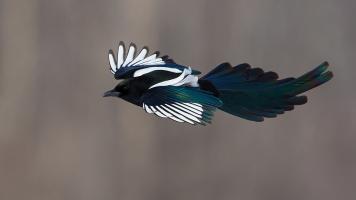
The technological advancements in photography could hardly be imagined by photographers using slow film with manual focus, non-stabilized lenses just 20 years ago. Go back further and cameras did not even have built-in meters. Photographers had to use an incident meter to determine a proper exposure, then dial-in the settings manually. Everyone had to know how to use manual mode!
Above image: Black-billed Magpie; manual mode; 1/2000 second; f/8; ISO 800
The above image was the ultimate exposure challenge. A high-contrast bird was flying in

by John Harris · Posted
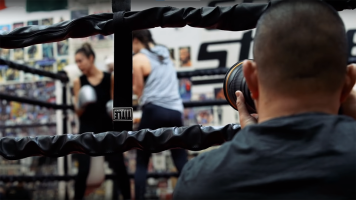
What can you do with a high-end telephoto lens? Be a boss, is what you can do. I mean, c’mon! Strutting around the sidelines or cuttin’ through the bush with one of these beasts resting on your shoulder―not only do you look tough, but you’re also carrying a lens that you need to get the best photos in sports and wildlife photography. When I say best, let’s not underestimate the greatness of photographers who can create wonderful images with a wide-angle lens or even a telephoto of lesser quality, but to really excel in the disciplines of
by John Harris · Posted
Great photos, in any discipline, can result from infinite techniques, but in sports photography—at least in sports photojournalism—there is little room for the aesthete who chooses a slow approach or the kind that eschews the available camera functions that will increase the proverbial “hit rate.” In other words, sports photographers need to use all measures to get that decisive, well-composed, and most important, in-focus photograph. Thank goodness, therefore, for continuous focus tracking, a blessing for sports photographers everywhere.

by Todd Vorenkamp · Posted
Imagine seeing an incredibly rare bird at a great distance through a spotting scope. Those birding next to you cannot see the same bird. You need to prove to them, and to your own life list, that you have spotted this rare species. It is way too far away for your camera to capture. What can you do? This is a job for… digiscoping!
Digiscoping with a spotting scope, telescope

by Jill Waterman · Posted
Each autumn, as the days get shorter and the weather cools, chlorophyll production slows in hardwood trees and bushes, causing leaves to lose the vibrant green of summer. As these conditions overtake the map, nature puts on a brilliant show of color in many parts of the United States. The changing of the leaves follows a rough pathway from north to south, starting in early September and often lasting into November in southern locales.
Above photograph: Colorado Gold, Maroon Bells Scenic Area © Bryan Carnathan
Fall foliage season is a big draw

by Jill Waterman · Posted
Ami Vitale has a remarkable affinity for life-changing events. A native of South Florida, Vitale was a self-described shy, gawky child who, like many young girls, possessed little confidence. The assessment of a grade school teacher, who told her she was not very good at English, stuck with her for years. “I just thought that I had no ability as a writer, or as a creative person,” she says. “I remember thinking I was going to become an engineer because I had almost perfect math scores on my SAT.”
Photographs © Ami Vitale

by Theano Nikitas · Posted
The smell of fresh sea air, miles of beautiful sandy beaches, and the lulling sound of the ocean may make for a perfect vacation spot, as well as an idyllic setting for a wedding. As beautiful as beach weddings may be, photographers face many challenges when capturing a couple’s special day by the sea. To assist you in troubleshooting this refreshing wedding photography niche, we spoke to several photographers who shared many of the challenges (and some of the rewards) that they face when shooting beach weddings.
Above photograph © Christina

by Mary Latvis · Posted
If you’ve lived in New York long enough, it’s bound to happen to you one day as you turn a corner: you’ll be gazing from the sidewalk as a movie, TV show, or commercial is being shot. You may ask yourself, “Who are all those people besides the actors standing around on the set?” Read on to discover the crew positions that you’ll find listed in the credits of most professional productions, and how, despite appearances to the contrary, the crew is indeed putting in a full day’s work, and then some.
As befits B&H Photo Video’s focus on all

by John Harris · Posted
So, you just bought your first DSLR camera and you are interested in joining the ranks of image-makers everywhere who find pleasure and creativity in documenting the world as they see it. What are you gonna do now? Do you know how to set your aperture? Or what ISO is? Did you know that DSLR stands for Digital Single Lens Reflex? It doesn’t matter: what you do know is that you’re ready to step up from your point-and-shoot camera and create images over which you have more control.
A digital SLR camera is a great machine that allows you to