Search results for: photography wide angle lenses
About 711 filtered results
Posted
The choice of a lens can be a critical decision to make on the field. Your choice of lens can affect the way the story is told through the image. Photographer Joe McNally breaks down some of his work and goes in depth on what lens he used and how he got the shot.
0:00 - Intro
5:17 - Old lenses compared to newer ones
10:15 - Long lenses
17:19 - Wide-angle lenses
27:23 - Longer lenses for portraits
32:35 - Working for National Geographic
37:23 - Working with Nikon testing their new lenses
52:48 - Photographing corporate jobs
1:09:16 - The

by Mathew Malwitz · Posted
If renowned landscape photographer Ansel Adams were alive today, he would surely be astounded at the variety of cameras available. When compared to his hulking 8x10 view camera, today’s cameras look like child’s play. He would also be flabbergasted at the image quality these little devices produce.
This year, we have a bottomless well of cameras
by Mathew Malwitz · Posted
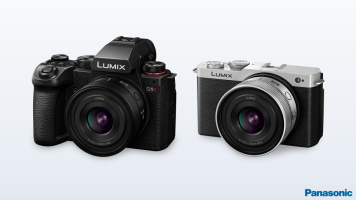
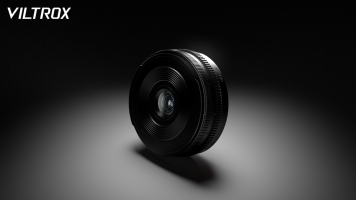
Panasonic just announced the LUMIX S 20mm f/2.5, a full-frame ultra-wide angle prime lens. Whether you're a traveling landscape photographer or someone who loves shooting dramatic street portraits, this lens might just be the perfect tool for the job. Let's see how it stacks up.
Panasonic LUMIX S 20mm f/2.5 Lens
The ultra-compact
by Luke Rollins · Posted
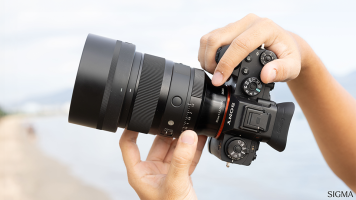
Sigma announces its highly anticipated 85mm f/1.2 DG Art lens alongside a new 20-60mm f/2.8-4 DG Contemporary lens, both for L-Mount and Sony E-mount full-frame mirrorless cameras.
Sigma 85mm f/1.2 DG Art lens

by Mathew Malwitz · Posted
Traveling with our camera gear can be a daunting experience, especially as we start expanding our arsenal of lenses. Picking the right lens for the job is a challenge in itself, and now we're finding the space to pack it among our clothes and other essentials. Wouldn't it be nice if we had one lens to do it all?
Luckily, such lenses do exist, and these travel-ready all-in-one zooms come in a variety of mounts, some brand specific, and others available for many different cameras. In today's guide, we're covering the best travel zooms for full
by Luke Rollins · Posted
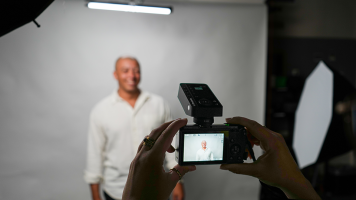
At first glance, studio photography and the compact camera may seem strange bedfellows. The type of work associated with the studio—still life, product photography, portraiture, macro photography—usually wants cameras with larger sensors and interchangeable lenses, especially in professional applications. Compact, point-and-shoot cameras, for their part, have their natural home in everyday, travel, nightlife, and street applications, where their discretion and size become virtues.
It might seem almost cruel to introduce the compact to the

by Mathew Malwitz · Posted
Ever find yourself still struggling to make out a bird, even when your binoculars are trained directly on it? No matter how steady you hold yourself, you simply just don’t have the reach. You could get a stronger pair of binoculars, but these come with inherent drawbacks, such as stability issues and, of course, a heftier build. What’s our solution?
It’s only natural that after using a pair of binoculars, some birders will find that they yearn for more, and the only way to practically get more reach is to use a spotting scope. These are
by Mathew Malwitz · Posted
Traveling with camera gear can be a daunting task. Unless you’re headed out on a dedicated photo excursion, the idea of lugging an entire backpack of gear around is just not feasible. For that reason, we’ve compiled this list of super zooms that make for the perfect travel companion. No matter which camera you’re using, there’s likely a lens for you.
In this guide, we’re looking at the most practical Micro Four Thirds (MFT) lenses for travel, from all-in-one zooms to lesser-known options that offer fun albeit niche features.
What Is a Micro

by Luke Rollins · Posted
Compact, point-and-shoot cameras have become an increasingly popular way for people to explore the possibilities of photography beyond the smartphone. Brands like Camp Snap, Kodak, Yashica, and Kreate offer buyers affordable options for turning unforgettable moments into lasting memories across skill levels, feature sets, and applications.
Camp Snap
A world dominated by screens is a world where screenless-ness is a feature. Inspired by summers frolicking in the outdoors before the ubiquity of electronic devices, Camp Snap cameras are designed
by Luke Rollins · Posted
by Mathew Malwitz · Posted
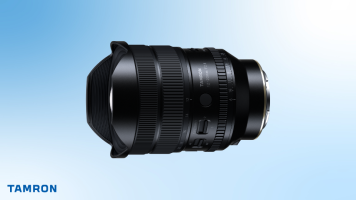
Tamron has unveiled their latest mirrorless lens in the ultra-wide 12-20mm f/2.8 for Sony E Mount and Nikon Z Mount cameras. This full frame zoom lens delivers professional performance without the bulk and weight.
Tamron 12-20mm f/2.8 Lens
Characterized best by its dramatic wide-angle perspective, this zoom has

Posted
Wide angles are a staple in landscape photography, but don't sleep on telephoto lenses. They are an underrated gear choice that makes your photos appear more grandiose. Sam is in the field sharing telephoto photography ideas and teaching how to utilize these types of lenses.
0:00 - A Lens Secret
0:28 - Why Telephoto Lenses?
1:08 - A Point of Interest
2:22 - Lens Compression
3:14 - Full Moon Photography
9:55 - Which Do You Prefer?
Sponsored by

by Mathew Malwitz · Posted
When it comes to image quality, the one piece of gear everyone recommends is the tripod. A good-quality tripod is one of the most important accessories you can get for your camera, but with so many new brands and options out there, choosing the right one can be a challenge. For this article, I spoke to the experts at the B&H SuperStore and have put my hands on several different full-sized tripods and tripod heads and can share with you my

by Luke Rollins · Posted
Chiaro, a brand best known for their UV filters, recently expanded their inventory with the launch of a line of circular polarizer (CPL) filters available exclusively at B&H. Available in 18 different thread sizes from 37 to 112mm, the new filters come in two build configurations, Core (aluminum) and
by Mathew Malwitz · Posted
If there’s one question fledgling photographers often ask, it’s “How did you get such a nice background?” Backgrounds are an essential element of a photograph that are often neglected. In fact, it’s safe to say that a background is as important to a composition as the subject itself. After all, a distracting one will detract from an image.
In this guide, we’re going to cover the many methods used to capture clean, smooth backgrounds in our images. This will encompass the settings and gear involved as well as the in-the-field techniques you can