Search results for: depth of field guide
About 148 filtered results
by Mathew Malwitz · Posted
Traveling with camera gear can be a daunting experience, especially as we start expanding our arsenal of lenses. Picking the right lens for the job is a challenge in itself, and now we’re finding the space to pack it among our clothes, and other essentials. Wouldn’t it be nice if we had one lens to do it all?
Luckily, such lenses do exist, and these travel-ready all-in-one zooms come in a variety of mounts, some brand specific, and others available for many different cameras. In today’s guide, we’re covering the best travel zooms for APS-C or
by Mathew Malwitz · Posted
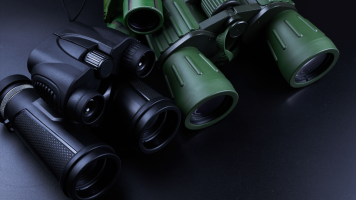
You see a flutter of color outside of your kitchen window. You rush over, only to see this mystery critter as a distant speck working its way through the dense shrubs of your yard—it's just too far and too obscure to make it out. What do you do? Do you shrug it off and go about your day, or do you grab a pair of binoculars to get a closer view?
We know what our answer would be, and we feel that nearly every household could use a trusty pair of binoculars, also called "bins" for short. Whether it's for bird watching, sporting events, the opera,

by Todd Vorenkamp · Posted
Do you want to preserve the memory of that awesome neighborhood fireworks show? Let's discuss the best ways to try to make a memorable photograph commemorating the event.
Before we get started, let me say that there are many ways to accomplish fireworks photography and no technique is usually worse or better than others. The only thing that really matters as you head home after the show is:
You enjoyed the photographic process.
You are left with a photograph or photographs that you personally enjoy.
You enjoyed the fireworks show!

by Bjorn Petersen · Posted
When assembling a kit of lenses for photographing a wedding, one should take into consideration the location in which the wedding is taking place, the number of guests and, of course, the type of imagery you are seeking to create. To best represent a wedding in a dynamic manner, it is often preferable to have a range of lenses to achieve different perspectives of the event, rather than maintaining a constant perspective of your subject matter. A wide-angle lens, specifically, is a highly effective tool for capturing many of the scenes that

by Mathew Malwitz · Posted
Binoculars are a birdwatcher's best friend. They allow you to get close-up views of distant objects without having to actually get close. Some birders use spotting scopes and others use cameras with telephoto lenses, but you may be hard-pressed to find a serious birder without a pair of binoculars at the

by Todd Vorenkamp · Posted
There is nothing that can replace the extreme close-up view of a rare bird in the wild. Binoculars can get you close but, if you want to look the bird in the eye or confirm that identification for your life list, you need a spotting scope. Spotting scopes pack incredible magnification in a generally simple and lightweight package that is

by Todd Vorenkamp · Posted
Taking a look at any modern mirrorless or DSLR camera, you’ll notice a slew of controls, buttons, and dials. Atop nearly all cameras sits a large dial labeled with many letters and icons. This is our mode dial. It is how we control the level of power we give to our camera or take for ourselves.
One of the wonderful things that modern electronic digital and film cameras give you is many high-tech options for your image making. One of the horrible things that modern electronic digital and film cameras give you is many high-tech options for your

by Freddy Gerngross · Posted
Of all the terms we use to define microphones, "parabolic" isn't one that often comes up in conversation. But what is a parabolic microphone? How do they work and what are they used for? If you're curious to learn the answers to these questions—or if you just want to know why broadcast crew members are always holding those big plastic domes on the sidelines of professional sporting events—then you've come to the right place.
What are Parabolic Microphones?
Unlike other descriptors (dynamic, ribbon, etc.), the word "parabolic" does not refer to

by Mathew Malwitz · Posted
Despite what you might have seen on the internet, you don’t need all the money and time in the world to photograph wildlife. Sure, an African safari would be nice, but it is by no means the only way to capture stunning images of wild animals. In fact, regardless of where you live, odds are there’s a vast ecosystem that likely goes unnoticed. If you have trees in your neighborhood, you’re off to a great start.
What You Need to Photograph Wildlife
While gear plays a crucial role in our ability to photograph wildlife, it isn’t everything. In this

by Luke Rollins · Posted
Like a painter choosing a paintbrush, a photographer’s lens choice will dramatically affect the resulting picture. This is especially true when it comes to landscape photography. Lens choice can make a big difference when you don’t have the benefit of directing your subject. A mountain will not turn its face toward the sun, no matter how hard you beg. As a result, your creativity is limited to a couple of key factors, such as time of day, weather, and―you guessed it, lens choice.
Similar to the range of unique considerations to keep in mind

by Mathew Malwitz · Posted
It is probably safe to say that many of us photographers have, either with our cameras or smartphones, tried to capture a close-up image of an insect, flower, toy, or other object. We have an idea of what we want this photograph to look like as we prepare to capture the image. We've seen and admired beautiful close-up images before but, when we nose the camera lens up to the object, we see nothing but a blur—the lens can't focus close enough to

by Todd Vorenkamp · Posted
If you are stranded on a desert island and can only have one camera lens with you, which lens would you choose? That may depend on your specific area of expertise, but for the average photographer, the 50mm focal length is an essential tool to have in your kit. The 50mm prime lens, or “Nifty Fifty,” features a field of view close to that of the human eye, and delivers exceptional image quality, subject isolation, and background rendering, all in a compact package.
The Origin of the “Nifty Fifty”
In the bygone era of film SLR photography, many

by Bjorn Petersen · Posted
Photographers are a tricky bunch to shop for, especially those avid shooters who seemingly already have all the gear they need. Cameras, lenses, bags, tripods, and so on—it’s a tough task to find a photo-related gift for the photographer who already has it all. Since the Pope’s Leica is no longer on the market, here are some ideas for not-so-common gift options sure to please all types of photographers.
Lensbaby Special Effects Lens
Sure, your
by Luke Rollins · Posted
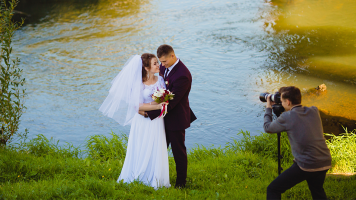
Many hobbyists reach a turning point in their craft when they decide to pursue wedding photography seriously. With the transition to pro comes the task of updating your lens kit accordingly, and most photographers would agree that investing in quality glass is essential. Unlike the rapid turnover of camera bodies, lenses will last for years and can make all the difference in creating quality images. Understanding what some of the best available options are will help you invest appropriately.
What to Consider
Weddings are long affairs, often

by Mathew Malwitz · Posted
These days, everyone has a camera right in their pocket. Smartphones have long been the go-to camera for quick photos of our friends, family, pets, and of course, ourselves. With features like portrait mode, users can simulate blurry backgrounds and isolate their subject for more eye-catching images. What else could you ever need? What if I told you that with the