Search results for: photography basics three point lighting
About 48 filtered results
by Mathew Malwitz · Posted
There are many ingredients that make up a good photographic portrait, from foreground to background, setting, pose, expression, color, lighting, and so on. That said, one element that can be as important to the result as the portrait sitter is the lens used to capture the portrait and help create

by Mathew Malwitz · Posted
There’s an old adage that gear doesn’t make the picture, it’s the photographer. This is partly true. A super-telephoto prime with a fast aperture will make quick work of busy backgrounds, and the faster focusing systems of high-end full-frame cameras will more easily track a bird’s eye in some of the most challenging lighting conditions. But there’s another factor to consider. At the heart of the image is a creative eye and technical proficiency. High-end camera gear only serves a purpose once you know what you’re doing.
In this guide, we’re
by Steven Esposito · Posted
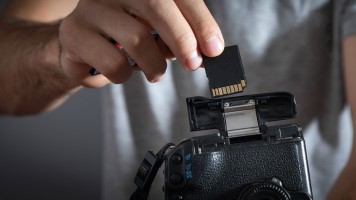
When it comes to preserving and protecting your digital photographs, choosing the right storage solution is critical. In this guide, we’ll walk you through some of the important factors to consider when shopping for a storage solution, including which specs to focus on and the different storage category types. We’ll also include some of our favorite storage options and explain what makes them so great.
Understanding Your Storage Capacity
A good rule of
by Luke Rollins · Posted
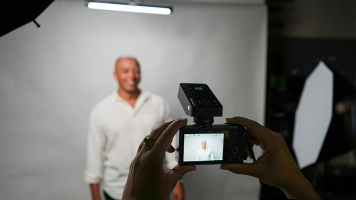
At first glance, studio photography and the compact camera may seem strange bedfellows. The type of work associated with the studio—still life, product photography, portraiture, macro photography—usually wants cameras with larger sensors and interchangeable lenses, especially in professional applications. Compact, point-and-shoot cameras, for their part, have their natural home in everyday, travel, nightlife, and street applications, where their discretion and size become virtues.
It might seem almost cruel to introduce the compact to the

by Mathew Malwitz · Posted
Ever find yourself still struggling to make out a bird, even when your binoculars are trained directly on it? No matter how steady you hold yourself, you simply just don’t have the reach. You could get a stronger pair of binoculars, but these come with inherent drawbacks, such as stability issues and, of course, a heftier build. What’s our solution?
It’s only natural that after using a pair of binoculars, some birders will find that they yearn for more, and the only way to practically get more reach is to use a spotting scope. These are

by Jennifer Hahn · Posted
Point-and-shoot cameras are a great value-add to your photography kit, social media sharing, or as a vacation companion for quick stills and capturing memories on the fly. And these days, the value is even greater with point-and-shoot video recording. The point-and-shoot design makes things simple to change to video mode and press record. Though after you’ve captured your video, it can become cumbersome to edit and share that footage.
Some cameras allow you to edit/trim your video footage (also called “Movies” in some cameras) in camera, which

by Mathew Malwitz · Posted
Have you ever taken a photo that looked so good on the back of your camera, only to get home and see that it’s just not sharp? We’ve all been there, and even the experts miss more shots than they keep. That said, there are many tricks and techniques we can learn to improve the odds. In today’s guide, we’re looking at five techniques to aid us in confidently capturing tack-sharp photographs.
Sharpness is critical in most genres of photography, especially nature and wildlife. Sure, we can intentionally blur elements to showcase motion. We

by Mathew Malwitz · Posted
Content creation can be as simple as we make it, but if you truly want to make your content stand out, you’ll need the right tools to do it. Visually pleasing lighting and quality audio can go a long way to legitimizing your work and giving it a pro level feel. In this guide, we’ve put together a few kits ranging from budget friendly to higher end and everything in between.
Best Budget Kit
It’s said that the best camera is the one you have available. Odds are, you likely have a smartphone, so that’s our budget camera. Most modern smartphones
by Mathew Malwitz · Posted
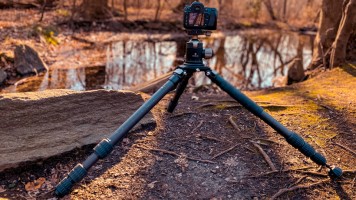
Love them or hate them, tripods are an essential piece of the photography puzzle. They allow us to capture images that would otherwise be impossible to create, whether it be due to low light or long exposures where keeping our camera motionless is essential. Even in bright daylight, tripods aid us in producing sharper images, all while freeing our hands to do other tasks.
Choosing a tripod is a highly personal choice, and there are many considerations we should take

by Mathew Malwitz · Posted
Exposure can be challenging to master. There are many moving parts, and knowing which settings affect what aspect of our image takes time and practice. The goal might be to take full control and use manual exposure mode, but first, we need to learn the ropes using auto exposure modes.
These modes let us use our camera with a little help. As covered in our introduction to exposure article, photography consists of
by Mathew Malwitz · Posted
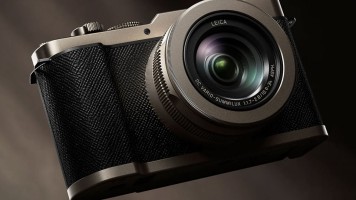
After the smartphone revolution, it appeared that the days of the compact camera were done. How wrong we were. It’s true that a few years back, point-and-shoot options were few and far between. There were just a handful of options on the market, and some industry titans even left the market entirely. Despite the long-rumored demise of the compact camera, it seems that photo enthusiasts still desire a dedicated device without the distractions that come with a smartphone.
What is a compact or “point-and-shoot” camera? Just because a camera is
by Luke Rollins · Posted
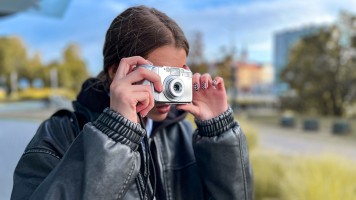
The market for point-and-shoot cameras is in an interesting place at the moment, with some of the most affordable options available new instead of used. As vintage Y2K-era imagery circulates social media, demand for these old digicams surges, all but erasing the value proposition that caused these old cameras to go viral in the first place. If you're in search of a fun, casual, and budget-friendly digital point-and-shot camera that still brings those retro vibes, B&H carries a range of available new options catering to different needs.
It

by Luke Rollins · Posted
There comes a time in a photographer’s life—usually after some consistent success with an on-camera flash—when they say to themselves, "I’m ready to make my own light on demand." Thus begins a seemingly never-ending journey—first mastering the basics, then trying to put some feeling and expression into their photos.
Assuming you’re versed in

by Mathew Malwitz · Posted
If you’ve been around photography for any length of time, you’ve probably heard of ISO. ISO is one of the three settings that determine our exposure in photography. These settings are collectively referred to as the exposure triangle. ISO is unique in this equation, and in this guide, we’re going to explore why.
ISO can be referred to in two ways. It’s most commonly spoken as an abbreviation, but it is also sometimes referred to as a word pronounced as eye-so. General consensus is that you call it whichever you like. After all, it’s not what

by Mathew Malwitz · Posted
As we learn about exposure, we need to talk about shutter speed. Your camera’s shutter controls the duration of an exposure and is one of the three settings that determine the exposure of an image. Together, these settings are known as the exposure triangle.
Where aperture controls the amount of light we allow to reach our imaging area, it is the duration of our exposure that will directly influence whether an image is sharp or blurred. This is what makes it such a significant piece of the exposure puzzle. Now, let’s take a closer look