Search results for: photography buying guide light stands
About 92 filtered results
by Mathew Malwitz · Posted
When it comes to choosing the best camera for sports and action photography, there are three factors to focus on. Speed, autofocus performance, and reliability are all essential to tracking, freezing, and nailing the shot time and time again. Speed and performance have become increasingly affordable with mid-tier cameras and even some entry-level ones can keep up with sporting events. In this guide, we’ve narrowed things down to the very best cameras in each class, from the pro-level flagships to everyday cameras that are right at home on your
by Steven Esposito · Posted
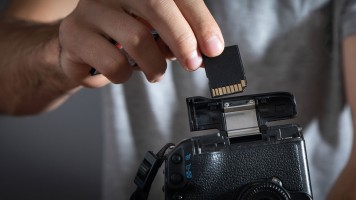
When it comes to preserving and protecting your digital photographs, choosing the right storage solution is critical. In this guide, we’ll walk you through some of the important factors to consider when shopping for a storage solution, including which specs to focus on and the different storage category types. We’ll also include some of our favorite storage options and explain what makes them so great.
Understanding Your Storage Capacity
A good rule of

by Steven Esposito · Posted
One of the best pieces of advice I like giving photographers is that they should print their photos. For many, this will mean going to a lab or print shop, in which case you should learn about profiling and calibration. The rest of you are likely more interested in getting your hands dirty and printing on your own at home. This guarantees you have full control over the entire production process, from capture to output. To do this, you will need a

by Luke Rollins · Posted
Everyone and their mothers are in on the digicam trend, a fact reflected in the used-market prices found across most platforms. Facebook Marketplace, Craigslist, eBay, B&H Used--everywhere you look, the best-known models are selling for prices that often meet or exceed their debut MSRP.
Take that old favorite of mine, the Canon S95. Extraordinarily capable, exceedingly pocketable, I got it for a song ($130) back in 2023. Three years later, the going rate has more than tripled, with the average price sitting above $400 and pushing $500
by Luke Rollins · Posted
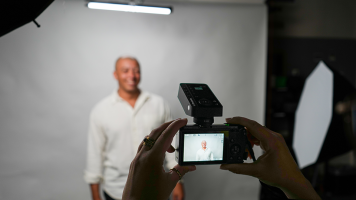
At first glance, studio photography and the compact camera may seem strange bedfellows. The type of work associated with the studio—still life, product photography, portraiture, macro photography—usually wants cameras with larger sensors and interchangeable lenses, especially in professional applications. Compact, point-and-shoot cameras, for their part, have their natural home in everyday, travel, nightlife, and street applications, where their discretion and size become virtues.
It might seem almost cruel to introduce the compact to the
by Mathew Malwitz · Posted
Let's face it: smartphone cameras are not the vibe anymore. What we want is a dedicated point-and-shoot camera, whether it be a classic hand-me-down model from the early 2000s or a more current spec'd out model with modern bells and whistles. These small point-and-shoot cameras may be made for travel but they excel in some scenarios more than others.
In today's guide, we're covering just a few of the best travel-friendly

by Steven Wong · Posted
When processing photos for clients, you probably want to get in and out of the editing bay as quickly as possible. But it can be challenging to find the right professional display or monitor that fits into your workflow and budget. Don’t worry, we’re here to help with three things to keep in mind when considering a professional display. That way, you can find the perfect look and get back to shooting.
Color Accuracy
by Mathew Malwitz · Posted
The new school year is nearly upon us, which means it’s time to start stocking up on necessary gear and supplies. For film and photo students, that means finding the camera and gear that’s right for you.
Generally, schools require a DSLR or mirrorless camera with detachable lenses and full manual controls. Far from the smartphone or point-and-shoot pocket camera many of us are used to. To help you get the perfect tool, we’ve put together a list of some of our favorite cameras broken down into four categories:
Best Overall Cameras
Best Mid

by Mathew Malwitz · Posted
Bird watching and photography seem to go hand in hand. While there are some who prefer to enjoy the sights free of distraction, there are others who like to record their findings to share with others. To do that, we need a camera and picking one can be overwhelming. Many opt for the tried-and-true bridge camera, but these are limited in the quality they can deliver.
For

by Mathew Malwitz · Posted
You don’t have to go far to capture fun and engaging images of wildlife. In fact, you may not have to go anywhere at all. A carefully landscaped yard and the right tools can attract an impressive variety of animal life to observe and photograph. Pair that with a little patience and soon you’ll be capturing stunning images from the comfort of your own home.
Attracting Birds
Birds are part of nearly every environment, from the densest cities to rural areas. While they are common, we’ll need to offer three essentials—water, shelter, and food—to
by Mathew Malwitz · Posted
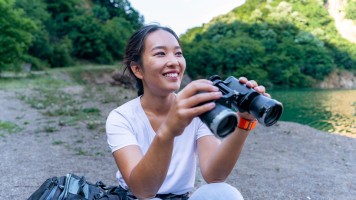
Optic size is measured by what it can do, but when you’re new to the hobby, this can be confusing. Pick up a spotting scope or any pair of binoculars and you’ll see them adorned with a set of numbers like 8x42, 7x32, or 20-60x80. What exactly do those numbers mean and what do they tell us about an optic?
At the most

by Mathew Malwitz · Posted
Who doesn’t want to capture fun and creative portraits of our four-legged friends? We know we love it. In fact, pet photography may just be the most popular form of photography there is. Think of all the smartphone snaps of yawns, big stretches, and funny moments we all take of our cats, dogs, chinchillas, and beyond.
Quick snaps aside, you know what really ups the quality of our pet portraits? Lighting. Just as with any form of portrait, lighting unlocks possibilities that can be impossible without it. But what lighting system should we use?

by Mathew Malwitz · Posted
There’s an old adage that claims in order to be a wildlife photographer, you need a lot of time and a lot of money. This is only partly true. Many great wildlife photo opportunities can occur in urban parks and even in your own backyard, as long as we know what we’re doing. In this article, we’re going to cover a number of essential tips that will help you become a better wildlife photographer.
If you’ve read our introduction

Posted
One of the most polarizing questions in the mind of any photographer is “Should—or shouldn’t I—get an agent?”
The role of an agent in a photographer’s career is often misunderstood, leading hungry creatives to think that securing representation is their number one key to success. In truth, the relationship between a photographer and agent is far more nuanced than simply booking more assignments.

by Rebecca Melville · Posted
An on-camera flash is an indispensable accessory for many photographers. While it provides light to supplement dark conditions, an on-camera flash also allows you to achieve more balanced exposures in daylight conditions, permits freezing of fast-moving subjects, and can even be used to control other flash light sources. With so much to offer, an on-camera flash can become an integral part of your workflow, but where do you start? We are going to give you the on-camera flash rundown with everything you need to know to make the most of this