Search results for: photography buying guide understanding color spaces
About 13 filtered results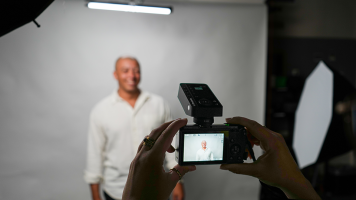
by Luke Rollins · Posted
At first glance, studio photography and the compact camera may seem strange bedfellows. The type of work associated with the studio—still life, product photography, portraiture, macro photography—usually wants cameras with larger sensors and interchangeable lenses, especially in professional applications. Compact, point-and-shoot cameras, for their part, have their natural home in everyday, travel, nightlife, and street applications, where their discretion and size become virtues.
It might seem almost cruel to introduce the compact to the

by Mathew Malwitz · Posted
You don’t have to go far to capture fun and engaging images of wildlife. In fact, you may not have to go anywhere at all. A carefully landscaped yard and the right tools can attract an impressive variety of animal life to observe and photograph. Pair that with a little patience and soon you’ll be capturing stunning images from the comfort of your own home.
Attracting Birds
Birds are part of nearly every environment, from the densest cities to rural areas. While they are common, we’ll need to offer three essentials—water, shelter, and food—to

by Mathew Malwitz · Posted
There’s an old adage that claims in order to be a wildlife photographer, you need a lot of time and a lot of money. This is only partly true. Many great wildlife photo opportunities can occur in urban parks and even in your own backyard, as long as we know what we’re doing. In this article, we’re going to cover a number of essential tips that will help you become a better wildlife photographer.
If you’ve read our introduction

by Mathew Malwitz · Posted
Most photos consist of a balance between bright and dark tones, creating what we typically consider to be “proper exposure.” In proper exposure, there should be ample detail in all areas of the image, no matter how dark or how bright. At least, that’s what we should do when trying to capture a balanced exposure.
Balance, while important to most photographic situations, is not always best for a scene. There are

by Rebecca Melville · Posted
An on-camera flash is an indispensable accessory for many photographers. While it provides light to supplement dark conditions, an on-camera flash also allows you to achieve more balanced exposures in daylight conditions, permits freezing of fast-moving subjects, and can even be used to control other flash light sources. With so much to offer, an on-camera flash can become an integral part of your workflow, but where do you start? We are going to give you the on-camera flash rundown with everything you need to know to make the most of this

by Mathew Malwitz · Posted
What better place to spend a Saturday morning than the zoo. You can enjoy some time outside, all while seeing a variety of both local and exotic animals you'd otherwise never dream of encountering. Zoos also are great place to try your hand at photographing wildlife! In this guide, we're talking about taking our camera to the zoo to capture natural looking images of animals in their element! We'll be covering what you need as well as tips and tricks that'll help you capture stunning, natural looking images of animals.
Above photograph © Mathew

by Luke Rollins · Posted
Where other camera-makers might have the specs or the buzz, only one has the throne: Canon. Industry reports indicate the company has notched yet another year atop global sales of interchangeable lens cameras, extending that reign to 21. Yes, Canon's reign is now old enough to drink. And that's not to say their 2025 was booze-addled, but rather that there may be some unease in the

by Mathew Malwitz · Posted
Anyone who has dabbled in pet photography knows that it can be a rewarding yet challenging experience. While pets are considered to be part of the family, they’re still animals who walk to the beat of their own drum and do things at their own pace. Even the best listeners can be easily distracted or have trouble sitting still for more than two seconds. If you’re considering trying your hand at photographing our fuzzy friends, we’ve put together this helpful guide for you. In this guide, we’re going to cover the essentials for those with a

by Mathew Malwitz · Posted
Photography is, by definition, the capture of light on a light sensitive surface. Exactly what kind of light this is in reference to is up to you as the photographer. When we think of lighting for photography we may immediately conjure up images of on-camera speedlights or big studio lights with soft boxes atop towering light stands.
While these lights can give us control over our scene in a variety of lighting conditions, they're not the only way we can light our images. Natural and ambient lighting can be harnessed to dramatic effect, if we

by Mathew Malwitz · Posted
For macro photographers, having the right gear is essential. Magnification and lighting are key, but you don’t necessarily need the biggest, priciest macro lenses out there to get close-up shots. If you’re a macro photographer yourself or buying a gift for one, we have some excellent recommendations for every budget.
Gifts Under $50
1. Close-up macro filters (like this Macro Lens

by Steven Esposito · Posted
With the recent announcement of the new MacBook Pro with M4 chips, creatives all over the world might be thinking about upgrading from their current system. While in some cases upgrading can be straightforward, Apple has expanded upon their traditional chip architecture and configuration profiles that may require some finesse. Luckily, we are here to help guide you along the path and get the best machine for you in your hands.

by Rachel Leathe · Posted
Nothing kills creativity faster than an aching back. For all the benefits of full-frame cameras, telephoto lenses, and dedicated flashes, there’s something to be said for the freedom that comes with a lightweight setup. If you’ve been hunting for a simple camera to stick in your bag on your way out the door, a traveling companion, or something discreet when photographing on the streets, then you’ve come to the right place.
Test Photographs © Rachael Leathe
The heavy-hitting cameras on this list tend to box above their weight class. They

by Jill Waterman · Posted
“How do you make pictures about a person who doesn't exist anymore?” This was the fundamental question facing Jessica Hines while sorting through a box of her brother Gary’s letters, photographs, and other objects from his military service in Vietnam some 35 years after his return—25 years after his life ended in a battle with post-traumatic stress.
Photographs © Jessica Hines