Search results for: photography buying guide what is a dslr camera
About 106 filtered results
by Mathew Malwitz · Posted
The new school year is nearly upon us, which means it’s time to start stocking up on necessary gear and supplies. For film and photo students, that means finding the camera and gear that’s right for you.
Generally, schools require a DSLR or mirrorless camera with detachable lenses and full manual controls. Far from the smartphone or point-and-shoot pocket camera many of us are used to. To help you get the perfect tool, we’ve put together a list of some of our favorite cameras broken down into four categories:
Best Overall Cameras
Best Mid

by Mathew Malwitz · Posted
The travel tripod conundrum is a cruel reality of physics and practicality. The larger and heavier a tripod is, the steadier it will hold a camera. The larger and heavier a tripod is, the less likely you will ever want to carry it around or take it on a trip. Why are we left with a photographic reality like that which makes the tastiest food bad for you?
Tripods come in all shapes, weights, heights, and styles. If you are new to the world

by Todd Vorenkamp · Posted
There is nothing that can replace the extreme close-up view of a rare bird in the wild. Binoculars can get you close but, if you want to look the bird in the eye or confirm that identification for your life list, you need a spotting scope. Spotting scopes pack incredible magnification in a generally simple and lightweight package that is
by Mathew Malwitz · Posted
We’ve all tried to photograph something up close. This small-scale world fascinates us all, whether it be a stunning flower or a bumble bee crawling about, but our cameras can’t seem to focus as close as we want. So, what is a struggling photographer to do?
There are several ways to do close-up, or "macro" photography, but the
by Shawn C. Steiner · Posted
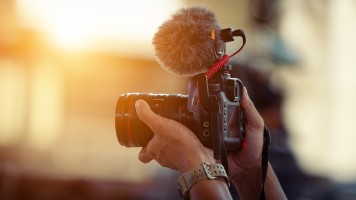
Audio is extremely important. Photographers haven’t really had to worry about this, but it is something that can make or break your videos. Watch some of your favorite movies and pay close attention to the sound—you will probably pick up some audio cues or effects that amplify the scene or action. If recorded poorly, audio can make something completely unwatchable. Have you ever opened a video online to crackling and noise and decided that it just wasn’t worth enduring? Clarity in audio is one of the most important things for keeping your

by Zack Young · Posted
Video is getting bigger and better every year, and I’m sure nearly everyone knows at least one aspiring filmmaker. I love filmmaking and photography, but the main problem I have with it is the amount of equipment one needs to get the job done. This can mean big, important pieces such as a camera or lights as well as tiny, essential accessories that make life a whole lot easier. If you are looking for something to gift your filmmaking friend or for some key components to upgrade your kit, check out the following.
1. Compact Lights
If there is

by Mathew Malwitz · Posted
Getting great pictures of your newborn or infant is certainly no easy task. Indeed, the window of opportunity for coaxing a perfect expression and a picturesque pose from your little bundle of joy is fleeting, at best. For parents (and others) who aspire to capture such moments, user-friendly gear, highly functional accessories, and photogenic props can make all the difference. With this in mind, here are our best recommendations to help make photo sessions with your unpredictable little darlings a success.
Pick the Right Camera for the Job

by Mathew Malwitz · Posted
Wedding and portrait photographers looking for a lightweight, compact system with exceptional performance need look no further than the FUJIFILM X cameras and lenses. While the size and weight advantage of mirrorless cameras spans from Micro Four Thirds to full frame, the APS-C sensors in the FUJIFILM X system allow the cameras and lenses to be relatively small and light. Full-frame mirrorless is attractive to many, but the portability advantage of APS-C sized lenses is not to be understated.
For those looking to one-up the full-frame shooters

by Mathew Malwitz · Posted
Lens selection is a highly personal choice for the professional photographer. Your shooting style, client needs, and cost all factor into how you choose to build your kit. Wedding photographers require a greater variety of lenses as they must cover a diverse assortment of compositions in various environments and lighting conditions. As working professionals, it’s only natural to begin investing in high-quality professional glass. For Canon users, this is the L series.
Easily identified by a thin red line circling the lens barrel, L glass is

by Bjorn Petersen · Posted
As a student, much of your life is about making choices and sacrifices. “Should I skip this class and sleep in?” or “Should I go to class even though I’m too tired to pay attention?” There are a lot of hard decisions to make as a student, especially if you’re a burgeoning photographer looking to attain professional status.
But, as a student, means are often limited and you need to be more conscious about what gear to add to your kit. What gear is critical and worth the investment versus what are some of the things you can ignore for now and

by Christopher Witt · Posted
Humans’ fascination with the stars is as old as our ability to think and ask questions. For millennia we, as a species, were limited to observing the heavens with just our eyes. Of course, back then we were able to see more because light pollution didn’t exist, but making detailed observations was impossible. The invention of the microscope led to the development of the telescope, which allowed people to finally start exploring the larger universe. As technological advances were made and telescopes got bigger and better, their reach and the

by Todd Vorenkamp · Posted
Leave it to the world of photography to confuse size and speed. In lens-speak, the term “fast glass” refers to lenses with large apertures. In this article we take a look at the lenses with the largest-opening apertures. The aperture is the opening of a lens. The aperture’s size is expressed as a number that shows the ratio of the opening to the lens’s focal length. This number is referred to as an f/number, f/stop, focal

by Bjorn Petersen · Posted
When it comes to choosing the best camera for wildlife, sports, and action photography, three key factors to focus on are speed, reliability, and autofocus performance. In the past, with SLRs, the flagship models usually translated to being the top models for action photography. The same is still true today, with mirrorless cameras, but speed is now more
by Bjorn Petersen · Posted
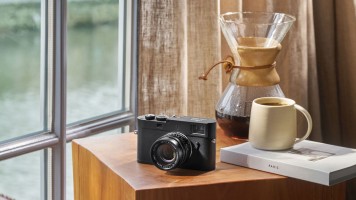
Most of our articles on cameras concern their performance, their features, what’s new, what they’re good for, and where they fit in a brand’s lineup, but it’s worth also considering a camera’s design and aesthetics. While it’s the definition of superficial judgement, thinking about how good a camera looks—how stylish it is—can affect your desire to use the camera. You might be more likely to reach for the camera that looks good, feels good, and is a joy to use and carry rather than a camera that outperforms on paper but isn’t enjoyable to work

by Todd Vorenkamp · Posted
The camera bag starts as an afterthought—something you get after you buy a camera and/or lenses, and for many, just about any camera bag will do the trick for them. But, when you get deeper into photography and expand your kit, the camera bag becomes an essential part of your everyday carry. There are many parallels between shopping for a camera bag and shopping for something like a pair of shoes—hundreds (maybe thousands?) of options,