Search results for: photography composition action shot composition
About 82 filtered results
by Steven Gladstone · Posted
When creating images for a film, you try to balance your shots so that you draw the audience into the movie, while at the same time they forget that they are watching a movie. Usually, the last thing you want is to break the illusion and have the audience snap out of their reverie.
As you read this article, you may want to pause and rewatch some classic films, or films that had a powerful effect on you. Examining the new and different techniques, lighting, and compositions used to create impact, mood, and feeling will help you grow as a
by Mathew Malwitz · Posted
Through the cacophony of forest sounds, your ears home in on a buzzy, almost garbled ascending song. Perhaps you recognize it immediately, or maybe you need to confer with one of the trusty internet databases or apps. You train your eyes on the canopy, scanning for movement of any kind, when you see it: the cerulean warbler, a small rowdy songbird with wings slightly splayed from the body. Quickly, you lower your binoculars and train your camera on the little blue passerine before snapping a few frames.
The resulting photos clearly show the

by Jill Waterman · Posted
There is perhaps no truer sign of summer than Independence Day in the United States. The Fourth of July is when the summer season kicks into full gear, with barbeques, pool parties, family gatherings, and road trips galore—not to mention the fireworks!
One lead-up to this holiday that I will never forget found me hurtling down the New Jersey Turnpike at sunset in a Greyhound bus. As the twilight deepened, bright bursts of fireworks began shooting up past the tree line, close by and at a distance, reflecting in the darkened glass of the

by Todd Vorenkamp · Posted
Do you want to preserve the memory of that awesome neighborhood fireworks show? Let's discuss the best ways to try to make a memorable photograph commemorating the event.
Before we get started, let me say that there are many ways to accomplish fireworks photography and no technique is usually worse or better than others. The only thing that really matters as you head home after the show is:
You enjoyed the photographic process.
You are left with a photograph or photographs that you personally enjoy.
You enjoyed the fireworks show!

by John Harris · Posted
It would be foolish to claim that there is only one way to take a portrait, but there are some accepted norms and basic camera settings that you should understand if portraiture is to become your area of photographic interest. Remember though, as you walk down your creative path, that a portrait is more than a headshot, more than a beautiful photo of your subject; it is an opportunity to get to know someone, to have a visual conversation with a person, and to use your photographic skills to pass that understanding of the person on to the

by Mathew Malwitz · Posted
Who doesn’t want to capture fun and creative portraits of our four-legged friends? We know we love it. In fact, pet photography may just be the most popular form of photography there is. Think of all the smartphone snaps of yawns, big stretches, and funny moments we all take of our cats, dogs, chinchillas, and beyond.
Quick snaps aside, you know what really ups the quality of our pet portraits? Lighting. Just as with any form of portrait, lighting unlocks possibilities that can be impossible without it. But what lighting system should we use?

by Mathew Malwitz · Posted
There’s an old adage that claims in order to be a wildlife photographer, you need a lot of time and a lot of money. This is only partly true. Many great wildlife photo opportunities can occur in urban parks and even in your own backyard, as long as we know what we’re doing. In this article, we’re going to cover a number of essential tips that will help you become a better wildlife photographer.
If you’ve read our introduction

by Todd Vorenkamp · Posted
Taking a look at any modern mirrorless or DSLR camera, you’ll notice a slew of controls, buttons, and dials. Atop nearly all cameras sits a large dial labeled with many letters and icons. This is our mode dial. It is how we control the level of power we give to our camera or take for ourselves.
One of the wonderful things that modern electronic digital and film cameras give you is many high-tech options for your image making. One of the horrible things that modern electronic digital and film cameras give you is many high-tech options for your

by Todd Vorenkamp · Posted
One of the magical aspects of modern photography is the ability to review an image instantly within our EVF (electronic viewfinder) or right on the back of the camera.
Frequently, one possible mistake that digital photographers make is when reviewing an image on their camera—they evaluate exposure based on the reproduced image. Why might this be a mistake? Well, both your camera’s LCD and EVF likely have adjustable brightness. Also, you might be viewing your images in bright sunlight or in the pitch black of night. Just as viewing a computer

by Mathew Malwitz · Posted
Do you plan your images? Really think about that question. Do you have an idea of an image before you head out for a shoot, or do you let the moment inspire you as the pieces fall into place? There's no wrong answer here. Planning or "pre-visualization" is a key piece of the photography puzzle that some put a lot of thought and effort into while others effortlessly come up with ideas on the fly.
No matter how you go about taking a picture, there is some level of planning that goes into a shot. With that said, there's a big difference between

by Luke Rollins · Posted
Of the many decisions a wedding photographer makes, the choice between digital and film might be the most crucial of all, determining both how one shoots and the look of the final product.
The technology that turns an entire congregation into content creators also unlocks immense advantages, creative and logistical, for wedding photographers. And yet, twenty-plus years into the age of digital photography, the aura of film remains as strong as ever and is sought after

by Mathew Malwitz · Posted
Weddings are fast-paced events for photographers, and there’s so much to do. From portraits of the bride and groom to family formals, there’s much to cover, and we haven’t even scratched the surface yet. While all focus is on the bride, groom, and their families, there’s a lot of behind-the-scenes material to capture. As wedding photographers, you need to wear many hats, and that includes landscape, food, and product photography.
Proficiency in photographing product is a must, as there are many details and accoutrements to photograph

by Mathew Malwitz · Posted
Composition in photography refers to the way in which we arrange visual elements in an image. It's how we position the subject in the frame and how all elements combine to create a visually appealing photograph.
All photographs © Mathew Malwitz
Expensive cameras and long lenses can only get us so far. It's not the gear that makes the photo, but the photographer. A creative and observant eye is the key to making visually pleasing photographs. These skills can be learned, and with practice, you'll be well on your way to creating strong

by Mathew Malwitz · Posted
Despite what you might have seen on the internet, you don’t need all the money and time in the world to photograph wildlife. Sure, an African safari would be nice, but it is by no means the only way to capture stunning images of wild animals. In fact, regardless of where you live, odds are there’s a vast ecosystem that likely goes unnoticed. If you have trees in your neighborhood, you’re off to a great start.
What You Need to Photograph Wildlife
While gear plays a crucial role in our ability to photograph wildlife, it isn’t everything. In this

by Mathew Malwitz · Posted
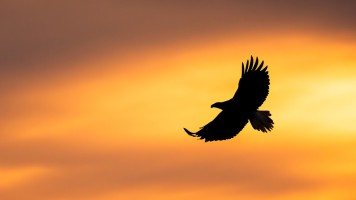
If there’s one area of wildlife photography that challenges even some of the most consummate artists, it’s birds in flight. A dynamic flight shot shows action, and a bit of technical prowess. As you can imagine, capturing birds in flight is no easy feat.
To consistently capture these shots, one must be proficient with their gear and have a knowledge of animal behavior. We’d go as far as to say you need a bit of luck too, but what is luck if not preparedness meeting opportunity. In order to make the most of the opportunities that present