Search results for: photography composition depth of field
About 106 filtered results
by Mathew Malwitz · Posted
Who doesn’t love a close-up shot of a flower or bumble bee? Some of the most beautiful aspects of nature are quite small and require special tools to capture them in a meaningful way. Whether it be of a cute little insect visiting our garden, or miniature figurines you paint and sell, we need a camera that can focus close and deliver good, quality results.
Before you panic, hear us out. We don’t need to get carried away with complicated lenses and accessories, and can just enjoy yourself with a simple compact,

by Todd Vorenkamp · Posted
Do you want to preserve the memory of that awesome neighborhood fireworks show? Let's discuss the best ways to try to make a memorable photograph commemorating the event.
Before we get started, let me say that there are many ways to accomplish fireworks photography and no technique is usually worse or better than others. The only thing that really matters as you head home after the show is:
You enjoyed the photographic process.
You are left with a photograph or photographs that you personally enjoy.
You enjoyed the fireworks show!

by John Harris · Posted
It would be foolish to claim that there is only one way to take a portrait, but there are some accepted norms and basic camera settings that you should understand if portraiture is to become your area of photographic interest. Remember though, as you walk down your creative path, that a portrait is more than a headshot, more than a beautiful photo of your subject; it is an opportunity to get to know someone, to have a visual conversation with a person, and to use your photographic skills to pass that understanding of the person on to the

by Bjorn Petersen · Posted
When assembling a kit of lenses for photographing a wedding, one should take into consideration the location in which the wedding is taking place, the number of guests and, of course, the type of imagery you are seeking to create. To best represent a wedding in a dynamic manner, it is often preferable to have a range of lenses to achieve different perspectives of the event, rather than maintaining a constant perspective of your subject matter. A wide-angle lens, specifically, is a highly effective tool for capturing many of the scenes that

by Todd Vorenkamp · Posted
Taking a look at any modern mirrorless or DSLR camera, you’ll notice a slew of controls, buttons, and dials. Atop nearly all cameras sits a large dial labeled with many letters and icons. This is our mode dial. It is how we control the level of power we give to our camera or take for ourselves.
One of the wonderful things that modern electronic digital and film cameras give you is many high-tech options for your image making. One of the horrible things that modern electronic digital and film cameras give you is many high-tech options for your

by Todd Vorenkamp · Posted
One of the magical aspects of modern photography is the ability to review an image instantly within our EVF (electronic viewfinder) or right on the back of the camera.
Frequently, one possible mistake that digital photographers make is when reviewing an image on their camera—they evaluate exposure based on the reproduced image. Why might this be a mistake? Well, both your camera’s LCD and EVF likely have adjustable brightness. Also, you might be viewing your images in bright sunlight or in the pitch black of night. Just as viewing a computer

by Mathew Malwitz · Posted
Despite what you might have seen on the internet, you don’t need all the money and time in the world to photograph wildlife. Sure, an African safari would be nice, but it is by no means the only way to capture stunning images of wild animals. In fact, regardless of where you live, odds are there’s a vast ecosystem that likely goes unnoticed. If you have trees in your neighborhood, you’re off to a great start.
What You Need to Photograph Wildlife
While gear plays a crucial role in our ability to photograph wildlife, it isn’t everything. In this

by Mathew Malwitz · Posted
These days, everyone has a camera right in their pocket. Smartphones have long been the go-to camera for quick photos of our friends, family, pets, and of course, ourselves. With features like portrait mode, users can simulate blurry backgrounds and isolate their subject for more eye-catching images. What else could you ever need? What if I told you that with the

by Mathew Malwitz · Posted
Portraiture: It’s one of the most popular and prevalent forms of photography. Although it may seem simple on paper, it comes with its own unique obstacles. Of course, you’ll want to be familiar with your gear. This is essential to all working photographers, but it allows you to focus your efforts on the genre-specific challenges you’ll face.
When photographing people, you’ll find that some folks are photogenic, while others are not. Your job as a photographer is to break down the barriers set by your clients and to put them in the most

by Allan Weitz · Posted
Though there aren’t any hard rules on the subject—and all rules are made to be broken—wide-angle and ultra-wide-angle lenses are often considered to be the go-to lenses for landscape photography. It’s not like you can’t capture wonderful landscapes with normal or telephoto lenses (you absolutely can), but due to their broad capture angles, wide- and ultra-wide-angle lenses usually win out over the alternative choices. For those who wish to go wider than ultra-wide, you have to turn to fisheye lenses.
Photographs © Allan Weitz 2020
What Is a
by Bjorn Petersen · Posted
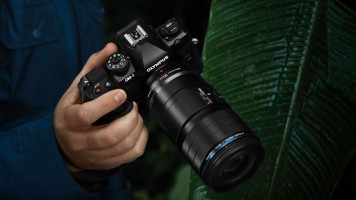
In the close-up, high-magnification world of macro photography, it is seldom that the tools vary from the so-called “standards.” The main reason for this is that there is something simple and elegant about that classic 100mm f/2.8; it is a proven design that simply works well. It offers a comfortable working distance, is easy to design to 1:1 magnification, and is versatile in that many photographers tend to work with these short telephoto macro

by Jill Waterman · Posted
Bristling along the sidelines of practically every professional sporting event, super-telephoto lenses are known for their ability to reach out and capture distant subjects with exceptional clarity and speed. They feel incredible in the hand, with top-of-the-line build quality and a heft that gives shooters confidence in their equipment. Many feature a variety of switches and buttons that allow users to set up the lens for optimal performance in any situation.
In addition to length, these lenses feature all of the latest technology, such as

by Rachel Leathe · Posted
Did you know that the first photograph ever taken was of a landscape?
“View from the Window at Le Gras” was captured by Nicéphore Niépce, in 1827. It features a very abstract view from Niépce’s window. Then, in 1839, Louis-Jacques-Mandé Daguerre made history with his image of

by Todd Vorenkamp · Posted
Our lives are marked by firsts: First love, first car, first marriage, first kid, first heartbreak, and first camera (hopefully, not in that order). For many generations of photographers, that first “real camera” was the Pentax K1000.
Photographs © Todd Vorenkamp
Early models of the Pentax K1000 feature


by Jill Waterman · Posted
A thirst for discovery and lust for adventure is the fuel behind automotive and adventure lifestyle photographer Shelby Knick. After sampling the rarefied world of high fashion merchandising, Knick reinvented herself by chasing down pictures on the racetrack, and her career has skyrocketed from there. Among the many accolades from her global trek to capture elegant living and all things fast, Knick is one of the first Hasselblad Heroines, leading us to celebrate her many accomplishments in honor of