Search results for: photography features rule thirds guide
About 11 filtered results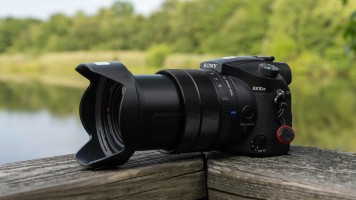
by Mathew Malwitz · Posted
Let's face it: throwing a heavy camera over your shoulder can seem like a hassle, especially if photography isn't the main purpose of your trip. Those big mirrorless and DSLR cameras might stun with their incredible clarity, but not every outing calls for a "serious" camera. Still, there's a desire to capture fun photos, either for your own enjoyment, or to share with friends and family when you return.
Enter the bridge camera. Bridge cameras are an excellent, all-in-one solution for wildlife enthusiasts looking to capture images of their

by Mathew Malwitz · Posted
Composition in photography refers to the way in which we arrange visual elements in an image. It's how we position the subject in the frame and how all elements combine to create a visually appealing photograph.
All photographs © Mathew Malwitz
Expensive cameras and long lenses can only get us so far. It's not the gear that makes the photo, but the photographer. A creative and observant eye is the key to making visually pleasing photographs. These skills can be learned, and with practice, you'll be well on your way to creating strong

by Mathew Malwitz · Posted
These days, everyone has a camera right in their pocket. Smartphones have long been the go-to camera for quick photos of our friends, family, pets, and of course, ourselves. With features like portrait mode, users can simulate blurry backgrounds and isolate their subject for more eye-catching images. What else could you ever need? What if I told you that with the

by Mathew Malwitz · Posted
Typically confined to the northernmost latitudes of our planet, the northern lights—or "aurora borealis"—are a natural spectacle many dream of seeing. Recently, it may seem like auroras are occurring more often and are visibly farther south than ever before. Maybe you've already seen one or even photographed one with your phone.
While rare, exceptionally powerful auroras have been seen with the naked eye as far south as Alabama. These are uncommon, but in mid-latitude states, visible auroras are a bit more frequent. Last summer, I found myself

by Mathew Malwitz · Posted
Anyone who has dabbled in pet photography knows that it can be a rewarding yet challenging experience. While pets are considered to be part of the family, they’re still animals who walk to the beat of their own drum and do things at their own pace. Even the best listeners can be easily distracted or have trouble sitting still for more than two seconds. If you’re considering trying your hand at photographing our fuzzy friends, we’ve put together this helpful guide for you. In this guide, we’re going to cover the essentials for those with a

by Rachel Leathe · Posted
Did you know that the first photograph ever taken was of a landscape?
“View from the Window at Le Gras” was captured by Nicéphore Niépce, in 1827. It features a very abstract view from Niépce’s window. Then, in 1839, Louis-Jacques-Mandé Daguerre made history with his image of

by Todd Vorenkamp · Posted
In Part 1 of this three-part series, we discussed the advantages of using binoculars for astronomical viewing of the night sky and we talked about the different types of targets you can enjoy on clear, dark nights. At the conclusion of each section, I mentioned “binocular magnification considerations.” Here, we will get into that subject, as well as other characteristics of binoculars that make them better, or worse, for studying the stars. Then, in
by Linda LeNoir · Posted
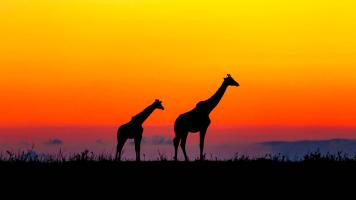
Are you ready for some photographic tips for your upcoming African safari? In Part 1 of this series, we discussed the things you need to do to prepare for your trip. Part 2 delves into photo gear [every B&H Explora reader’s favorite subject]. And here, in Part 3, we share some essential tips for getting great photos once you have embarked on your safari.
Above photograph: Mother and Child. Giraffes walking in the Masai Mara at Sunrise; Masai Mara National Reserve, KenyaCanon EOS 5D Mark III; EF 400 f/4 DO IS USM lens; manual exposure, 1
by Shawn C. Steiner · Posted
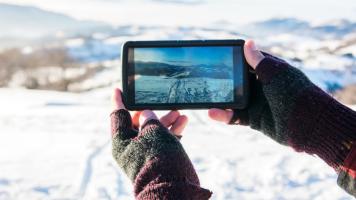
Even among the most serious professional photographers, there is recognition that the smartphone is an extraordinarily capable and convenient tool. They have it easy, though, with years of experience that make taking a photo with their mobile devices intuitive, and then follow it up with stellar editing that really makes the subject pop. If you have always wanted to make your smartphone photos shine like the pros, you have come to the right place, because this

by Peter Ward_1 · Posted
Things aren’t as simple as the days when most video cameras (broadcast and ENG cameras aside) just came with a built-in lens and that was that. Now, between DSLRs, mirrorless cameras being used for video, and cinema cameras that have still-camera lens mounts, one is stuck with the daunting task of picking out a set of lenses.
If I can only choose one lens, what is the best?
First, I would like to dispel any notion that there is one “best” lens. There isn’t. Lenses come in different focal lengths because different shots work best (or at all)

by Allan Weitz · Posted
Sometimes, the phrases, acronyms and strings of numbers or number-letter combinations used to identify photographic hardware or techniques can be daunting to the uninitiated neophyte photographer.
We've prepared a list of the basic terms. Have we left any out that you think should be added? Please let us know!
0-9 | A | B | C | D | E | F | G | H | I |