Search results for: photography features ultimate guide telephoto lenses
About 17 filtered results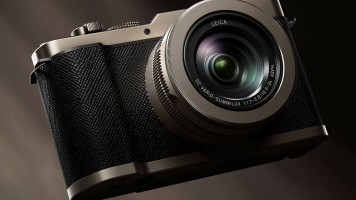
by Mathew Malwitz · Posted
After the smartphone revolution, it appeared that the days of the compact camera were done. How wrong we were. It’s true that a few years back, point-and-shoot options were few and far between. There were just a handful of options on the market, and some industry titans even left the market entirely. Despite the long-rumored demise of the compact camera, it seems that photo enthusiasts still desire a dedicated device without the distractions that come with a smartphone.
What is a compact or “point-and-shoot” camera? Just because a camera is
by Mathew Malwitz · Posted
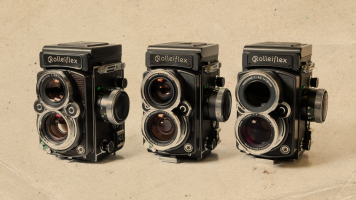
It's not every day that a piece of photography history passes through B&H. Sure, every camera and lens carries a little bit of the past with it, from a DSLR made in 2015 to an old rangefinder from the 50s. History lives in the images they've captured and the hands they've been passed through. That said, there are some cameras and lenses that stand out among the rest. Especially when they come bearing the serial numbers 0000001, 0000002, and 0000003.
by Mathew Malwitz · Posted
We’ve all tried to photograph something up close. This small-scale world fascinates us all, whether it be a stunning flower or a bumble bee crawling about, but our cameras can’t seem to focus as close as we want. So, what is a struggling photographer to do?
There are several ways to do close-up, or "macro" photography, but the

by Todd Vorenkamp · Posted
Choosing a lens is a highly personal choice, and that’s especially true for wildlife photography. This is in the realm of the telephoto lens after all. While almost any focal length lens works for landscapes and other types of photography, in general, when it comes to photographing animals in the wild, you'll want to have the longest reach you can. In this guide, we’re going to discuss the factors one should consider when purchasing a lens for wildlife photography.
Focal Length
The first and most straightforward factor to consider is focal

by Mathew Malwitz · Posted
Lens selection is a highly personal choice for the professional photographer. Your shooting style, client needs, and cost all factor into how you choose to build your kit. Wedding photographers require a greater variety of lenses as they must cover a diverse assortment of compositions in various environments and lighting conditions. As working professionals, it’s only natural to begin investing in high-quality professional glass. For Canon users, this is the L series.
Easily identified by a thin red line circling the lens barrel, L glass is

by Rachel Leathe · Posted
No matter what adventure you’re planning, finding the perfect pack is the first step. You don’t want to be ten miles deep in the backcountry, realizing that your bag lacks weather coating, or that the shoulder straps you thought were sufficiently padded now feel like a taut seatbelt. Before you run out and buy your first bag, you’ll need to think deeply about what kinds of pictures you will be taking. Are you more interested in trail hiking or ski touring? Will you be bringing telephoto lenses to photograph wildlife, or will you be taking

by Todd Vorenkamp · Posted
If your dreams involve capturing stunning images of beautiful, wild animals in nature, there is no getting around it—you need the right gear. Although every camera can capture wildlife, not all cameras are created equally and some certainly have technological advantages that benefit wildlife photography. We have discussed buying considerations for the right lens in this article, and here we will take a deep dive into what to look for in a camera for dedicated wildlife photography.
What Makes a Camera Better for Wildlife?
For wildlife

by Todd Vorenkamp · Posted
The camera bag starts as an afterthought—something you get after you buy a camera and/or lenses, and for many, just about any camera bag will do the trick for them. But, when you get deeper into photography and expand your kit, the camera bag becomes an essential part of your everyday carry. There are many parallels between shopping for a camera bag and shopping for something like a pair of shoes—hundreds (maybe thousands?) of options,
by Shawn C. Steiner · Posted
This week was a busy one with a few lenses, a few firmware updates, and some other categories garnering newsworthiness. Of particular note is Nikon, with the release of an even more comprehensive all-in-one zoom for Z-mount: the NIKKOR Z 28-400mm f/4-8 VR Lens. Sigma went for speed with the 50mm f/1.2 DG DN Art Lens for

by Rachel Leathe · Posted
There's nothing quite like the thrilling spontaneity of grabbing your camera and stepping out the door with no plan other than to point and shoot at whatever captivating scenes you encounter. In the realm of professional photography, where meticulous control over light, talent, and location is the norm, street photography throws all of that out the window, transforming the world into your unscripted canvas. The absence of predetermined variables and the sheer randomness of it all can be an incredibly liberating and enlightening experience for

by Bjorn Petersen · Posted
When it comes to camera and lens choice, wedding photography is a tricky genre, requiring versatility, speed, and image quality for successful results. Versatility comes in the form of photo and video capabilities since it’s now common to deliver content in both mediums. Speed comes in terms of focusing and burst shooting because a wedding can be a fast-paced event. And image quality, naturally, because a wedding is a beautiful, once-in-a-lifetime experience that deserves to be recorded in the best quality. Building a camera kit to fulfill

by Mos Khan · Posted
As each year goes by, smartphone cameras keep getting better, and this also means more and more people have access right at their fingertips to a powerful camera. Social media platforms such as TikTok, Instagram, and Facebook wouldn’t be as big as they are without the proliferation of smartphone photography. Still, even with the impressive improvements that have put these mobile cameras in competition with traditional camera systems, there are times that they show their limitations. This is why many companies have been developing mobile photo
by Jill Waterman · Posted
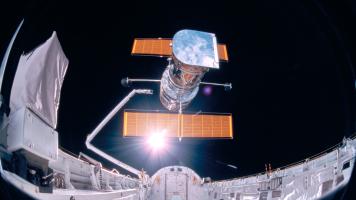
Dr. Kathryn Sullivan has an elite status among groundbreaking American women. In January 1978, she was selected by NASA as part of the first astronaut class to include females. "All six of us in that first batch of women felt a self-imposed pressure," Sullivan says in a 2017 interview for the multimedia project TIME Firsts. "One of us would be the first to fly, another would be the first to do a spacewalk—which only a small group of the Astronaut Corps gets to do. We knew our performance would have a big influence on the prospects of the women

by Allan Weitz · Posted
Sometimes, the phrases, acronyms and strings of numbers or number-letter combinations used to identify photographic hardware or techniques can be daunting to the uninitiated neophyte photographer.
We've prepared a list of the basic terms. Have we left any out that you think should be added? Please let us know!
0-9 | A | B | C | D | E | F | G | H | I |

by Elizabeth Groeschen · Posted
For many photographers, carrying multiple lenses quickly becomes more of a requirement than an elective. And as most already know, with additional lenses come additional lens accessories and the inevitable question of which is worth the investment and space it will take up in your camera bag. While some accessories like caps and hoods often come in the box with a new lens, other protective gear like cases, wraps, and bands are typically sold separately. These protective items get lost quickly out in the field or in loose pockets, and are