Search results for: photography guides
About 442 filtered results
Posted
In session 2, photographer Aaron Anderson explores how lighting, color, composition, and contrast shape emotion and guide the viewer's eye. Learn how to light with intention, build a cinematic mood, and adapt on set while staying true to the original concept.
0:00 - Intro
0:55 - Setting up your camera for high sync
6:04 - Tethering
8:08 - What is cinematic lighting?
10:33 - Balance between ambient & strobe
12:50 - Gels
17:05 - Haze & fog
20:02 - Feathering
36:40 - Lighting with flare
48:00 - Using two lights to make it look like one

by Mathew Malwitz · Posted
Are accessories essential to completing a look? As a camera store, we're not exactly fashion experts. That said, we can confidently say that certain photo accessories are essential to getting the most out of your compact cameras. In this guide, we're looking at the must-have accessories that every compact camera owner should own—from absolute necessities to the more stylish options. Let's get started.
Memory Cards
When unboxing a point-and-shoot camera, expect to find a camera, battery, wrist strap, and a charger. What's usually not included

by Mathew Malwitz · Posted
The travel tripod conundrum is a cruel reality of physics and practicality. The larger and heavier a tripod is, the steadier it will hold a camera. The larger and heavier a tripod is, the less likely you will ever want to carry it around or take it on a trip. Why are we left with a photographic reality like that which makes the tastiest food bad for you?
Tripods come in all shapes, weights, heights, and styles. If you are new to the world

by Mathew Malwitz · Posted
Throughout the history of photography, few aspects have remained the same. Famous names have come and gone, but few have remained strong in their place as pillars of the industry. Among those names sits Olympus, better known today as OM Digital Solutions.
Founded in 1919 as Takachiho Seisakusho, the future Olympus aimed to domestically produce microscopes. It wasn’t until well into the 20s that the moniker “Olympus” came to be, and it wasn’t a camera that bared the name either—it was one of their microscopes. In fact, their first camera wouldn

by Mathew Malwitz · Posted
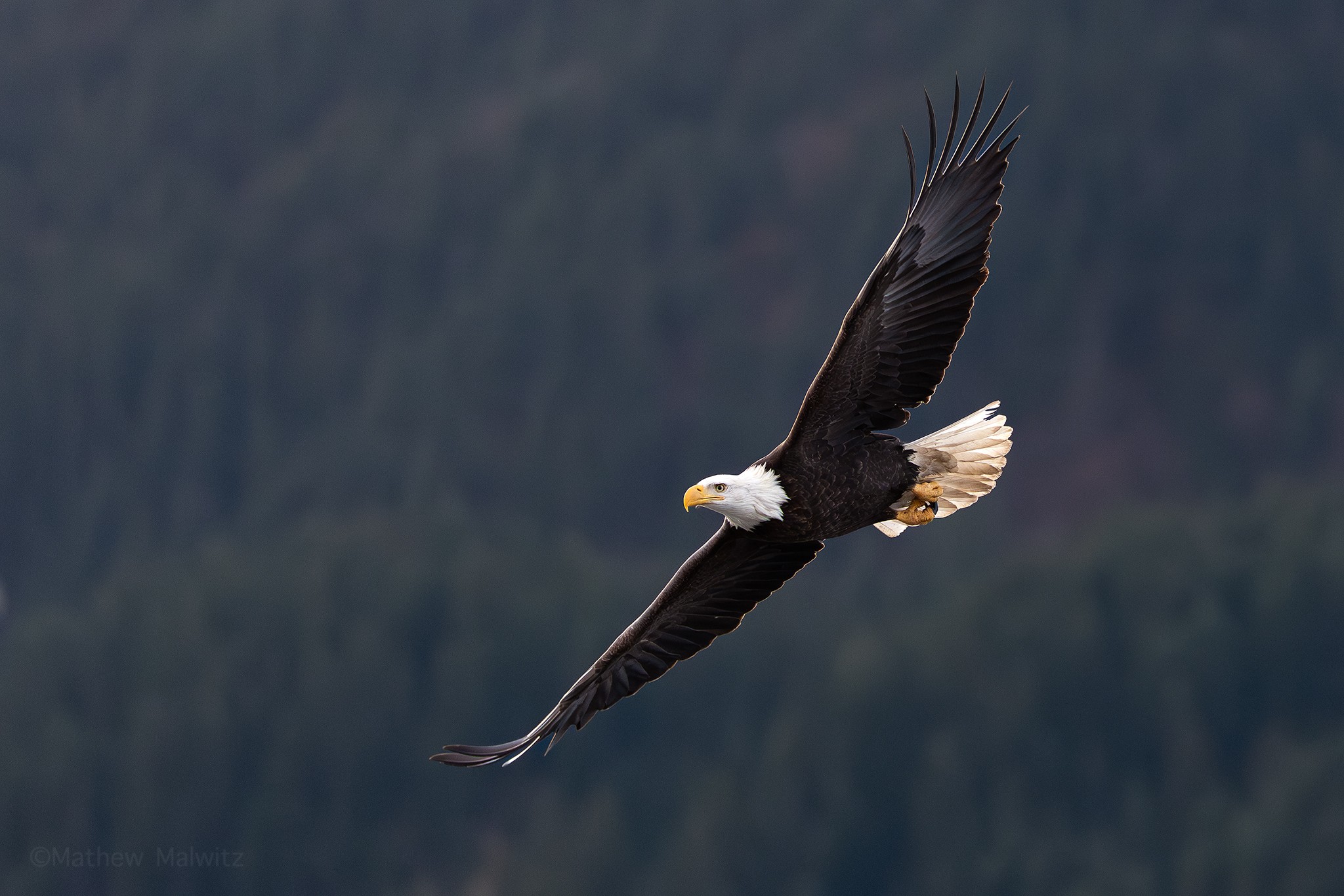
The bald eagle, one of the most regal birds of prey, has a secret. It’s notably one of the most difficult subjects to expose for. If we trust the camera in an automatic mode, we’re likely to get either an overly bright head, or a body that’s too dark in shadow to see. The only reliable way to capture good exposures of these birds is to expose to the right.
Mathew Malwitz
This technique is as useful as it is controversial,

by Luke Rollins · Posted
Learn about how to get started with dental photography, including what gear to use, which photographic fundamentals you should be focusing on, and why dental photography is critical for both clinical care and promoting your own dental practice.
IN THIS ARTICLE
1. (Don’t Fear) the Gear2. Good Dental Photography Is Good Photography3. Macro Discipline, Portrait Mindset4. Embrace the Flash5. Clinical,

Photography is all about light, and the light we capture with our cameras is known as an exposure. What goes into making an exposure, you may ask? And what constitutes a good or proper exposure? We’ve got you covered. We’ve put together the ultimate guide to teach you the basics, from the three pillars of exposure to how we can manipulate it to achieve our artistic vision.

by Luke Rollins · Posted
Everyone and their mothers are in on the digicam trend, a fact reflected in the used-market prices found across most platforms. Facebook Marketplace, Craigslist, eBay, B&H Used--everywhere you look, the best-known models are selling for prices that often meet or exceed their debut MSRP.
Take that old favorite of mine, the Canon S95. Extraordinarily capable, exceedingly pocketable, I got it for a song ($130) back in 2023. Three years later, the going rate has more than tripled, with the average price sitting above $400 and pushing $500

by Mathew Malwitz · Posted
Traveling with our camera gear can be a daunting experience, especially as we start expanding our arsenal of lenses. Picking the right lens for the job is a challenge in itself, and now we're finding the space to pack it among our clothes and other essentials. Wouldn't it be nice if we had one lens to do it all?
Luckily, such lenses do exist, and these travel-ready all-in-one zooms come in a variety of mounts, some brand specific, and others available for many different cameras. In today's guide, we're covering the best travel zooms for full
by Luke Rollins · Posted
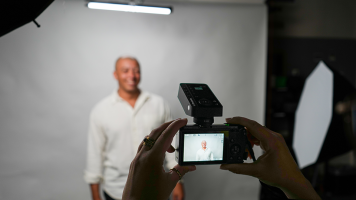
At first glance, studio photography and the compact camera may seem strange bedfellows. The type of work associated with the studio—still life, product photography, portraiture, macro photography—usually wants cameras with larger sensors and interchangeable lenses, especially in professional applications. Compact, point-and-shoot cameras, for their part, have their natural home in everyday, travel, nightlife, and street applications, where their discretion and size become virtues.
It might seem almost cruel to introduce the compact to the
by Mathew Malwitz · Posted
When choosing binoculars or scopes, a term that should be heavily considered is "exit pupil." What is exit pupil, and what does it do? In optics, we're often focused on magnification and light-gathering capabilities, and these are essential for understanding how optics works, but overall viewing experience shouldn't be discounted.
If you look at any optic at arm's length, you'll see the small pinpoint sized window of

by Mathew Malwitz · Posted
Ever find yourself still struggling to make out a bird, even when your binoculars are trained directly on it? No matter how steady you hold yourself, you simply just don’t have the reach. You could get a stronger pair of binoculars, but these come with inherent drawbacks, such as stability issues and, of course, a heftier build. What’s our solution?
It’s only natural that after using a pair of binoculars, some birders will find that they yearn for more, and the only way to practically get more reach is to use a spotting scope. These are

by Mathew Malwitz · Posted
It's only natural that after using a pair of binoculars, some birders will find that they yearn for more, and the only way to practically get more reach is to use a spotting scope. These are essentially terrestrial telescopes, using one optical path to magnify an even greater distance than our typical handheld optics can manage.
As covered in our guide to choosing a spotting scope, finding the right scope can be as

by Mathew Malwitz · Posted
At one point or another, you’re bound to hear someone say that you need to shoot in a RAW file format. There are advantages to this decision, from additional detail to better control over the look of our final image. But what exactly is a RAW file and what does it do for our photographs? In this guide, we aim to give you a better understanding of the RAW file and how to use it to our advantage.
What Is a RAW File?
RAW files, sometimes referred to as digital negatives, are the raw data recorded by your camera’s imaging sensor. This data is
Posted
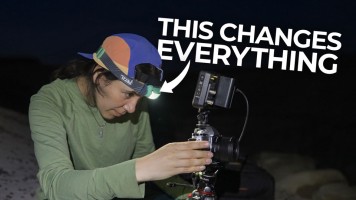
"It's better to have it and not need it, than to need it and not have it" is the motto for this video. Sam lists her astrophotography essentials to keep you safe and make sure you get the shot.
0:00 - Intro
0:18 - Tripod
1:29 - Headlamp
3:01 - Photo Planning App
5:13 - Accessories