Search results for: photography guides ultimate guide wildlife photography
About 14 filtered results
by Mathew Malwitz · Posted
Choosing a pair of binoculars can be as easy or as daunting as you want it to be. We’ve covered the technical aspects of binoculars, from magnification to glass quality, and how they affect your choice, but not everyone wants to get into all that. While yes, once we know the basics, we can better choose the pair that meets our particular needs, but that assumes we want to get into all that. If you do, check out our
by Mathew Malwitz · Posted
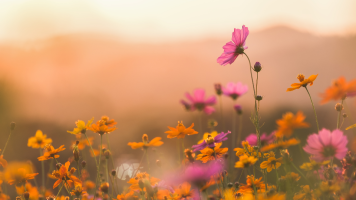
If there’s one question fledgling photographers often ask, it’s “How did you get such a nice background?” Backgrounds are an essential element of a photograph that are often neglected. In fact, it’s safe to say that a background is as important to a composition as the subject itself. After all, a distracting one will detract from an image.
In this guide, we’re going to cover the many methods used to capture clean, smooth backgrounds in our images. This will encompass the settings and gear involved as well as the in-the-field techniques you can
by Mathew Malwitz · Posted
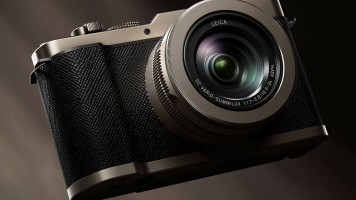
After the smartphone revolution, it appeared that the days of the compact camera were done. How wrong we were. It’s true that a few years back, point-and-shoot options were few and far between. There were just a handful of options on the market, and some industry titans even left the market entirely. Despite the long-rumored demise of the compact camera, it seems that photo enthusiasts still desire a dedicated device without the distractions that come with a smartphone.
What is a compact or “point-and-shoot” camera? Just because a camera is

by Mathew Malwitz · Posted
If renowned landscape photographer Ansel Adams were alive today, he would surely be astounded at the variety of cameras available. When compared to his hulking 8x10 view camera, today’s cameras look like child’s play. He would also be flabbergasted at the image quality these little devices produce.
This year, we have a bottomless well of cameras
by Mathew Malwitz · Posted
We’ve all tried to photograph something up close. This small-scale world fascinates us all, whether it be a stunning flower or a bumble bee crawling about, but our cameras can’t seem to focus as close as we want. So, what is a struggling photographer to do?
There are several ways to do close-up, or "macro" photography, but the

by Todd Vorenkamp · Posted
Choosing a lens is a highly personal choice, and that’s especially true for wildlife photography. This is in the realm of the telephoto lens after all. While almost any focal length lens works for landscapes and other types of photography, in general, when it comes to photographing animals in the wild, you'll want to have the longest reach you can. In this guide, we’re going to discuss the factors one should consider when purchasing a lens for wildlife photography.
Focal Length
The first and most straightforward factor to consider is focal

by Rachel Leathe · Posted
No matter what adventure you’re planning, finding the perfect pack is the first step. You don’t want to be ten miles deep in the backcountry, realizing that your bag lacks weather coating, or that the shoulder straps you thought were sufficiently padded now feel like a taut seatbelt. Before you run out and buy your first bag, you’ll need to think deeply about what kinds of pictures you will be taking. Are you more interested in trail hiking or ski touring? Will you be bringing telephoto lenses to photograph wildlife, or will you be taking

by Todd Vorenkamp · Posted
The ubiquitous shoulder-mounted camera bag is a fantastic camera carrying solution for almost any type of photography—except when it comes to wildlife and nature photography. If you are hiking far from civilization and deep into nature—be it a forest, tundra, mountains, desert, or jungle—you’ll likely bring a dedicated hiking backpack. Luckily for nature photographers, camera bag manufacturers and manufacturers of traditional hiking packs have created

by Todd Vorenkamp · Posted
If your dreams involve capturing stunning images of beautiful, wild animals in nature, there is no getting around it—you need the right gear. Although every camera can capture wildlife, not all cameras are created equally and some certainly have technological advantages that benefit wildlife photography. We have discussed buying considerations for the right lens in this article, and here we will take a deep dive into what to look for in a camera for dedicated wildlife photography.
What Makes a Camera Better for Wildlife?
For wildlife

by Todd Vorenkamp · Posted
When you head out into the wilderness armed with a pro camera and big telephoto lens to tackle some awesome wildlife, landscape, and bird photography, you had best be sure to have the right accessories for your adventures! Let’s take a look at the best accessories for wildlife photography because—trust me—you don’t want to be the only photographer out there without a cool camouflage lens cover!
Tripods
I’ve said it before and I am saying it again: the
by Shawn C. Steiner · Posted
This week was a busy one with a few lenses, a few firmware updates, and some other categories garnering newsworthiness. Of particular note is Nikon, with the release of an even more comprehensive all-in-one zoom for Z-mount: the NIKKOR Z 28-400mm f/4-8 VR Lens. Sigma went for speed with the 50mm f/1.2 DG DN Art Lens for

by Bjorn Petersen · Posted
Mirrorless camera technology continues to evolve in 2023. Though some people want to define a camera as "video-centric" or "built for stills," some of the best cameras manage to balance the two by taking the so-called "hybrid" path. Compared to, say, a cine camera, the inability to pin down what a mirrorless camera is or should do makes it a highly versatile platform capable of anything from everyday photo taking to high-budget Hollywood productions. To see manual focus, stills-only rangefinders sharing a space with the first mirrorless

by Jill Waterman · Posted
In his 1997 article “The Problem with Wildlife Photography,” author and environmental activist Bill McKibben wrote, “Without Kodak there’d be no Endangered Species Act.”
While viewed by some at the time as controversial, McKibben’s point has only gained traction in the intervening years. Recent news reports abound with stories of overenthusiastic shutterbugs who do harm to themselves—or worse yet, to their intended animal subjects—when attempting selfies in the wild or trying to capture a prize-winning close-up. Fueled by the power of

by Todd Vorenkamp · Posted
A few things happen when you look through a pair of binoculars, a spotting scope, or a telescope. The first thing that happens when you see awesomeness is you think, sometimes out loud, "Wow!" The next thing that happens is that you want to share what you are seeing with others—this