Search results for: photography learning
About 718 filtered results
Posted
Stephen Wilkes is an undisputed master at telling stories with images. In this week’s podcast, he pinpoints the exact moment he was given free rein to dream up an epic photo project for a major exhibition that would come to redefine photographic printing technology.
Above Photograph © Stephen Wilkes
In the year 2000, he was commissioned to capture the beauty and complexity of America at the turn of the Millennium on large format film, then transform his highly detailed film captures into immersive fine art prints using Epson’s

by Mathew Malwitz · Posted
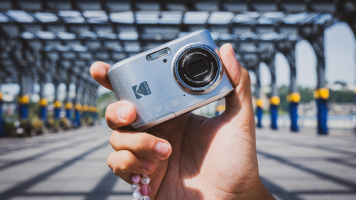
Are accessories essential to completing a look? As a camera store, we're not exactly fashion experts. That said, we can confidently say that certain photo accessories are essential to getting the most out of your compact cameras. In this guide, we're looking at the must-have accessories that every compact camera owner should own—from absolute necessities to the more stylish options. Let's get started.
Memory Cards
When unboxing a point-and-shoot camera, expect to find a camera, battery, wrist strap, and a charger. What's usually not included
by Luke Rollins · Posted
What is it about the 2000s look that is so compelling right now? One could chalk it up to the eternal recurrence of 20-year nostalgia cycles, of which the retro digicam revival would be yet another instance. But this kind of historicism elides the character of what is missed, and why its retrieval is attempted in the first place.
Smartphone bad; we know this. Rejecting the smartphone, however, does not immediately lead one to retro digicams. One could just as easily move toward the nostalgia of film as toward the competent excellence of today

by Luke Rollins · Posted
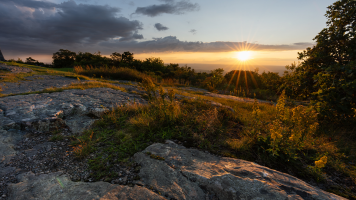
It’s 2026, and we no longer have to pretend that film is dead; film is very much alive, with a robust number of film stocks available to try out, ranging from the classics to new and creative films from up-and-coming, smaller brands.
Here’s an overview of the current black and white films available right now.
Kodak
It’s hard not to start with mother Kodak in an article like this, and with all the history—the ups and
by Mathew Malwitz · Posted
Taking photos has never been easier, whether you're using a smartphone, point-and-shoot, or mirrorless camera. It's a fact that no matter where we go, we almost always have some form of camera on hand, and while the opportunity for image making has changed, what hasn't changed is what makes a photo good.
The simple answer is photography composition, or the arrangement of elements in your frame. This concept can be confusing as all art subjective. That said, think of movies and music and how certain combinations of sounds and storytelling

by Mathew Malwitz · Posted
The days of the large, dedicated photography studio being the norm are numbered, with many professionals preferring alternatives or using smaller spaces within their homes. This opens a Pandora’s box of tripping hazards and cramped conditions as light and background stands sit sprawled across the floor. These stands aren’t designed for these spaces, nor are they advantageous for more permanent fixtures.
At B&H, we understand the struggles of making do with small spaces, and while we’ve expanded over the years, we know that’s not

by Mathew Malwitz · Posted
Following a relatively quiet summer, Nikon has just unveiled a new yet rather unexpected mirrorless camera. While the rumor mills have been spinning, none spun the news of a slimmed -down FX everyday camera. Introducing the Nikon Z5 IIC, a high-performance full-frame mirrorless camera that offers total creative freedom across any scene.
Nikon Z5 IIC Mirrorless Camera

by Mathew Malwitz · Posted
When it comes to choosing the best camera for sports and action photography, there are three factors to focus on. Speed, autofocus performance, and reliability are all essential to tracking, freezing, and nailing the shot time and time again. Speed and performance have become increasingly affordable with mid-tier cameras and even some entry-level ones can keep up with sporting events. In this guide, we’ve narrowed things down to the very best cameras in each class, from the pro-level flagships to everyday cameras that are right at home on your

by Mathew Malwitz · Posted
If renowned landscape photographer Ansel Adams were alive today, he would surely be astounded at the variety of cameras available. When compared to his hulking 8x10 view camera, today’s cameras look like child’s play. He would also be flabbergasted at the image quality these little devices produce.
This year, we have a bottomless well of cameras

by Mathew Malwitz · Posted
If you've ever gone camera shopping, you've likely run into the term "mirrorless" more than a couple of times. After all, mirrorless cameras account for up to 90% of new interchangeable-lens cameras (according to Canon executives anyhow). But what does "mirrorless" actually mean? In this guide, we're going to explore what a mirrorless camera is, what makes it different from other cameras (hint: it's in the name), and how it can benefit

by Mathew Malwitz · Posted
Wildlife photography is one of the most therapeutic and rewarding genres of photography and it’s also one of the most popular. There’s just something so special about being able to witness the magic, and with new camera tech, wildlife photography is easier than ever. That said, the thrill of the shot can overshadow good decision-making, leading to unethical practices. But what are ethical practices?
Take nothing but photographs, leave nothing but footprints—an adage well-known by nature enthusiasts of all levels, but not all that practical.

by Mathew Malwitz · Posted
When we head out into the great outdoors, there’s nothing more we need than our camera and lens. So long as you have a charged battery and an empty memory card, there’s little more you could ever need—that is, until that battery dies, it starts to rain, or a bird poops on your lens. How do we prepare for these inevitable conundrums? We bring the pertinent accessories, that’s how.
Smaller
Posted
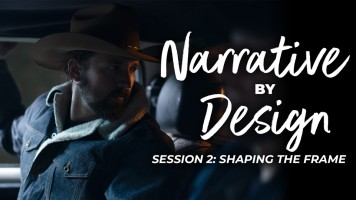
In session 2, photographer Aaron Anderson explores how lighting, color, composition, and contrast shape emotion and guide the viewer's eye. Learn how to light with intention, build a cinematic mood, and adapt on set while staying true to the original concept.
0:00 - Intro
0:55 - Setting up your camera for high sync
6:04 - Tethering
8:08 - What is cinematic lighting?
10:33 - Balance between ambient & strobe
12:50 - Gels
17:05 - Haze & fog
20:02 - Feathering
36:40 - Lighting with flare
48:00 - Using two lights to make it look like one
by Mathew Malwitz · Posted
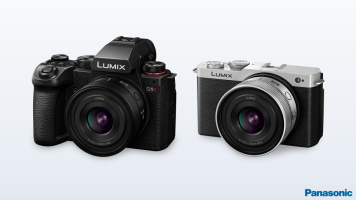
Panasonic just announced the LUMIX S 20mm f/2.5, a full-frame ultra-wide angle prime lens. Whether you're a traveling landscape photographer or someone who loves shooting dramatic street portraits, this lens might just be the perfect tool for the job. Let's see how it stacks up.
Panasonic LUMIX S 20mm f/2.5 Lens
The ultra-compact

by Mathew Malwitz · Posted
In a world where mirrorless cameras seem to keep getting bigger, Canon chooses to remember why the tech was so popular in the first place. Geared toward aspiring photographers and those looking to shoot with a smaller footprint, the EOS R8 Mark II stands out among the crowd, delivering full-frame results in a compact, lightweight body. Though this time, it’s received a bit of a facelift.