Search results for: photography lighting daylight
About 152 filtered results
by Luke Rollins · Posted
It’s 2026, and we no longer have to pretend that film is dead; film is very much alive, with a robust number of film stocks available to try out, ranging from the classics to new and creative films from up-and-coming, smaller brands.
Here’s an overview of the current black and white films available right now.
Kodak
It’s hard not to start with mother Kodak in an article like this, and with all the history—the ups and

by Luke Rollins · Posted
By now, the film resurgence has eclipsed its charming underdog status to become a full-blown front in what has become an all-out, open revolt against the smartphone and its visual aesthetics. What distinguishes the “film look” from the digital—texture, material imperfections, color magic, and the analog halo of yesteryear—comes at a price tag as resurgent as the medium itself.
Despite the contradiction (or perhaps because of it), the pursuit of the film look in a digital format has become something of a cottage industry, with manufacturers,

by Luke Rollins · Posted
Canon has announced the second generation of its entry-level full frame mirrorless camera, the R8 Mark II. Having spent some time with the camera, we can speak to some of its most apt use cases: portraits, landscapes, street photography, and video.
Canon R8 Mark II

Posted
In this final live studio demo, Tony Gale combines part one and two. You'll learn to push your creativity further by combining constant light and flash.
0:00 - Intro
4:15 - Adjusting the model
5:51 - Different mixed lighting
7:16 - Mixing daylight & strobes
23:35 - Using gels
34:44 - Shooting in JEPG vs. RAW
37:42 - Correcting the background
40:56 - Using a bigger light source
48:15 - Combining LED & strobe lights
1:06:55 - Changing to diffuser
1:16:35 - Q&A
Sponsored by
by Mathew Malwitz · Posted
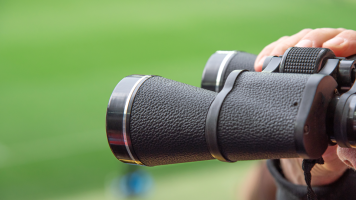
When choosing binoculars or scopes, a term that should be heavily considered is "exit pupil." What is exit pupil, and what does it do? In optics, we're often focused on magnification and light-gathering capabilities, and these are essential for understanding how optics works, but overall viewing experience shouldn't be discounted.
If you look at any optic at arm's length, you'll see the small pinpoint sized window of

by Mathew Malwitz · Posted
Ever find yourself still struggling to make out a bird, even when your binoculars are trained directly on it? No matter how steady you hold yourself, you simply just don’t have the reach. You could get a stronger pair of binoculars, but these come with inherent drawbacks, such as stability issues and, of course, a heftier build. What’s our solution?
It’s only natural that after using a pair of binoculars, some birders will find that they yearn for more, and the only way to practically get more reach is to use a spotting scope. These are

by Luke Rollins · Posted
Achieving a standard of production value is an essential component of establishing a brand and growing a following. For part-time, burgeoning, and mid-level creators, it can feel like bridging that gap is less a matter of learned skill and more about the equipment you can afford.
In most cases, the problem isn’t budget at all. Acquiring the specific know-how can give your content professional sheen with little to no financial outlay.
Lighting design is arguably the most immediately visible production component—and the one most capable of

by Luke Rollins · Posted
Whether you’re the designated photographer at a friend’s night out or a professional working an event, a compact, point-and-shoot camera can be a strategic choice for creating a distinctive look for your images. Depending on where you’re starting, the move to a compact camera can be either a step up from the smartphone or an embrace of a more limited feature set. In either case, the best event and party photography with a compact camera says one thing: you had to be there.
The number one advantage to using a compact camera is social. The

by Mathew Malwitz · Posted
Content creation can be as simple as we make it, but if you truly want to make your content stand out, you’ll need the right tools to do it. Visually pleasing lighting and quality audio can go a long way to legitimizing your work and giving it a pro level feel. In this guide, we’ve put together a few kits ranging from budget friendly to higher end and everything in between.
Best Budget Kit
It’s said that the best camera is the one you have available. Odds are, you likely have a smartphone, so that’s our budget camera. Most modern smartphones
by Mathew Malwitz · Posted
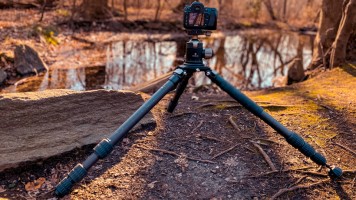
Love them or hate them, tripods are an essential piece of the photography puzzle. They allow us to capture images that would otherwise be impossible to create, whether it be due to low light or long exposures where keeping our camera motionless is essential. Even in bright daylight, tripods aid us in producing sharper images, all while freeing our hands to do other tasks.
Choosing a tripod is a highly personal choice, and there are many considerations we should take

by John Harris · Posted
It would be foolish to claim that there is only one way to take a portrait, but there are some accepted norms and basic camera settings that you should understand if portraiture is to become your area of photographic interest. Remember though, as you walk down your creative path, that a portrait is more than a headshot, more than a beautiful photo of your subject; it is an opportunity to get to know someone, to have a visual conversation with a person, and to use your photographic skills to pass that understanding of the person on to the

by Mathew Malwitz · Posted
First, a disclaimer: Like composition, lighting portraits is a subjective exercise. A setup that works for one situation may not work for the next, and lighting that one photographer adores might repulse another. Cultivating a personal lighting style involves an awareness of conventional approaches and willingness to go beyond what everyone else is doing. Study portraits

by Mathew Malwitz · Posted
The wait is finally over, and Sony has unveiled not one, but two new game changing imaging tools to their arsenal. Introducing the a7R VI mirrorless camera and the FE 100-400mm f/4.5 G Master lens. The perfect marriage of speed and resolution.

by Mathew Malwitz · Posted
Despite what you might have seen on the internet, you don’t need all the money and time in the world to photograph wildlife. Sure, an African safari would be nice, but it is by no means the only way to capture stunning images of wild animals. In fact, regardless of where you live, odds are there’s a vast ecosystem that likely goes unnoticed. If you have trees in your neighborhood, you’re off to a great start.
What You Need to Photograph Wildlife
While gear plays a crucial role in our ability to photograph wildlife, it isn’t everything. In this

by Mathew Malwitz · Posted
When you first head out to take photos of wildlife, what’s the first thing you think of? If it’s not lighting, we’ve got news for you. Photography is, by definition, the capture of light on a light-sensitive surface. The word “photograph” is derived from Greek roots that translate to “drawing with light.”
We can have the most expensive camera and lens combo, but without good light, we’ll never get the most out of it. Understanding our primary light source and its many qualities is essential to improving as a wildlife photographer, and in this