Search results for: photography lighting diffusion
About 128 filtered results
Posted
In this final live studio demo, Tony Gale combines part one and two. You'll learn to push your creativity further by combining constant light and flash.
0:00 - Intro
4:15 - Adjusting the model
5:51 - Different mixed lighting
7:16 - Mixing daylight & strobes
23:35 - Using gels
34:44 - Shooting in JEPG vs. RAW
37:42 - Correcting the background
40:56 - Using a bigger light source
48:15 - Combining LED & strobe lights
1:06:55 - Changing to diffuser
1:16:35 - Q&A
Sponsored by

by Mathew Malwitz · Posted
Godox is no stranger to versatile, close-up photography lighting solutions, and we have another one to share. Introducing the GODOX MA2 Flexible Macro Twin Light, a hot shoe macro light with flexible arms, coaxial modeling light and flash fill, adjustable color temperature, and quick USB-C charging. What more could a macro photographer need?
by Luke Rollins · Posted
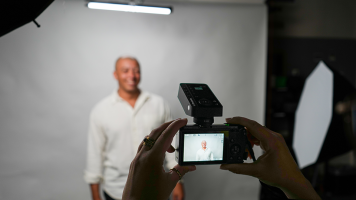
At first glance, studio photography and the compact camera may seem strange bedfellows. The type of work associated with the studio—still life, product photography, portraiture, macro photography—usually wants cameras with larger sensors and interchangeable lenses, especially in professional applications. Compact, point-and-shoot cameras, for their part, have their natural home in everyday, travel, nightlife, and street applications, where their discretion and size become virtues.
It might seem almost cruel to introduce the compact to the

by Luke Rollins · Posted
Achieving a standard of production value is an essential component of establishing a brand and growing a following. For part-time, burgeoning, and mid-level creators, it can feel like bridging that gap is less a matter of learned skill and more about the equipment you can afford.
In most cases, the problem isn’t budget at all. Acquiring the specific know-how can give your content professional sheen with little to no financial outlay.
Lighting design is arguably the most immediately visible production component—and the one most capable of
by Mathew Malwitz · Posted
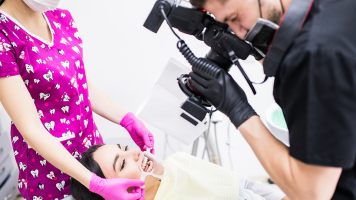
Dental photography is a unique genre of photography that requires a specialized set of tools to deliver the clarity, brightness, and color accuracy dentists rely upon to accurately record their patients’ progress.
In this guide, we’re going to cover the essential tools dental professionals need to capture the best quality images of their work, from the camera itself to the lighting tools required to accurately capture the color and detail of those pearly whites.
The Camera
Of course, one could use almost any camera, so long as it produces

by Mathew Malwitz · Posted
Content creation can be as simple as we make it, but if you truly want to make your content stand out, you’ll need the right tools to do it. Visually pleasing lighting and quality audio can go a long way to legitimizing your work and giving it a pro level feel. In this guide, we’ve put together a few kits ranging from budget friendly to higher end and everything in between.
Best Budget Kit
It’s said that the best camera is the one you have available. Odds are, you likely have a smartphone, so that’s our budget camera. Most modern smartphones
by Mathew Malwitz · Posted
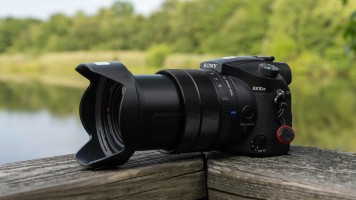
Let's face it: throwing a heavy camera over your shoulder can seem like a hassle, especially if photography isn't the main purpose of your trip. Those big mirrorless and DSLR cameras might stun with their incredible clarity, but not every outing calls for a "serious" camera. Still, there's a desire to capture fun photos, either for your own enjoyment, or to share with friends and family when you return.
Enter the bridge camera. Bridge cameras are an excellent, all-in-one solution for wildlife enthusiasts looking to capture images of their

by Mathew Malwitz · Posted
Building upon their established arsenal of impressive lighting tools, Profoto has expanded their softbox range with new XL sizes built with working pros in mind. These modifiers are designed for fast and easy deployment regardless of the environment and feature a reinforced construction to accommodate larger components.
Why do we need XL sizes? Larger modifiers deliver soft, even illuminations across bigger sets, allowing photographers to stretch their creative legs and shape
by Mathew Malwitz · Posted
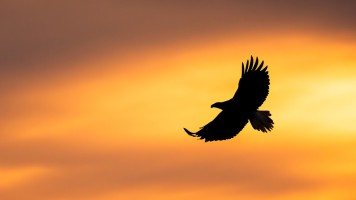
Through the cacophony of forest sounds, your ears home in on a buzzy, almost garbled ascending song. Perhaps you recognize it immediately, or maybe you need to confer with one of the trusty internet databases or apps. You train your eyes on the canopy, scanning for movement of any kind, when you see it: the cerulean warbler, a small rowdy songbird with wings slightly splayed from the body. Quickly, you lower your binoculars and train your camera on the little blue passerine before snapping a few frames.
The resulting photos clearly show the
by Zack Young · Posted
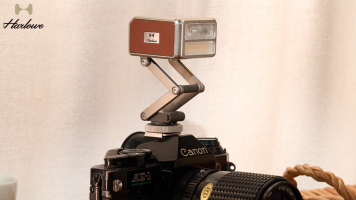
Harlowe is bringing some fresh ideas to classic on-camera lighting with the new Pocket Flash, combining a standard hot-shoe flash with a bi-color continuous LED and an integrated Z-axis stand that raises and tilts the flash head for unique angles. Weighing just 125g, the Pocket Flash is a truly pocketable accessory that might just change your photography and videography work.

by Mathew Malwitz · Posted
First, a disclaimer: Like composition, lighting portraits is a subjective exercise. A setup that works for one situation may not work for the next, and lighting that one photographer adores might repulse another. Cultivating a personal lighting style involves an awareness of conventional approaches and willingness to go beyond what everyone else is doing. Study portraits

by Luke Rollins · Posted
The wealth of B&H is not measured in sales, but in the accumulated knowledge of its people. The breadth of such experience is impossible to quantify, let alone price, which is why we’re offering this batch of wedding photography advice completely free of charge.
Andrea Buritica, Sales Associate – Chat & Email
Burikitak Photography
One of the best parts about working at B&H is that I get to talk about gear all day. However, it’s doing wedding

by Mathew Malwitz · Posted
Who doesn’t want to capture fun and creative portraits of our four-legged friends? We know we love it. In fact, pet photography may just be the most popular form of photography there is. Think of all the smartphone snaps of yawns, big stretches, and funny moments we all take of our cats, dogs, chinchillas, and beyond.
Quick snaps aside, you know what really ups the quality of our pet portraits? Lighting. Just as with any form of portrait, lighting unlocks possibilities that can be impossible without it. But what lighting system should we use?

by Mathew Malwitz · Posted
There’s an old adage that claims in order to be a wildlife photographer, you need a lot of time and a lot of money. This is only partly true. Many great wildlife photo opportunities can occur in urban parks and even in your own backyard, as long as we know what we’re doing. In this article, we’re going to cover a number of essential tips that will help you become a better wildlife photographer.
If you’ve read our introduction

by Mathew Malwitz · Posted
When photographing a wedding, we face a wide array of lighting conditions, ranging from bright sunlight to dimly lit interiors. Photographing in any of these scenarios is a challenging endeavor, with our exposures pushed to their limits and our post-processing routines shaken with heavy edits.
Many photographers opt to shoot with ambient lighting, and clients may prefer this style as well. Natural light has an organic look to it that flash seldom