Search results for: photography tips solutions how to choose landscape photography gear
About 16 filtered results
by Mathew Malwitz · Posted
Are you interested in the wide and wonderful world of photography? Well, you’ve certainly come to the right place! Check out this short checklist of a dozen items, designed to get you started in digital or film photography and headed in the right direction.
1. Interest
The first thing you need is an interest in photography. If you are reading these words, you likely already checked that box. If you are debating whether to take the dive into photography, you might want to give it some careful thought, or cater your purchases toward your level

by Emily Mandagie · Posted
"Alright, your time in flight will be approximately twelve minutes." Berty and I swallowed that weighted sentence and nervously nodded in response. Smiles were on the outside, but deep inside we were wondering how in the world we were going to make the most of those fleeting seconds in that helicopter and capture exactly what we wanted from the sky!
Aerial photography can be exciting and exhilarating. But it can also come with a lot of added challenges, such as time limits, weather conditions, and—let's be real—a large expense! (Flights aren't

by John Harris · Posted
There is no wildlife or bird photography without a camera and lens, but I am here to tell you not to buy another piece of gear. It is not the camera or lens that will make you a better photographer; rather, the three things that will improve your wildlife photography are: to know your subject better, to know your gear better, and to know yourself better.
Subject
Of these three, I think the first to address is to know your subject better. And that means research—reading, tutorials, conversations—and time in the field, with or without your

by Jess Santos · Posted
Thinking back to my first time photographing the stars, let’s be real: I had no idea what I was doing. I spent the afternoon watching video after video, and after several hours felt confident enough to attempt it. Now keep in mind I had done the research on settings, but completely skipped over the planning phase. I didn’t run into one video that talked about things like the moon phase or dark skies, some pretty important information to know when getting into astrophotography. Nonetheless, a couple friends and I headed out at eleven o’

by Jill Waterman · Posted
Jean Fruth is a diehard baseball fan. “Growing up in New York, with two great hometown teams, how could you not connect with the sport?” she asks. As a teen, she worked in a restaurant owned by serious Mets fans who had season tickets, “And they would take me to games,” she reminisces. “And my grandfather was a Mets fan, listening to games on the radio.”
Such formative influences foreshadow her ultimate path to becoming one of baseball’s preeminent photographers, yet it took many years of exploration for Fruth to put a plan into action. “My

by Bjorn Petersen · Posted
One of the genres of photography in which nearly everyone participates to some degree, landscape photography is one of the most classic and traditional categories of our medium. It is representative for so many reasons, whether being used for conservation purposes, documentary, backgrounds, events, or as a symbol—landscapes, as mundane or as grand as they might be, are the settings in which we exist. So how do we photograph these spaces? Or, more pointedly, how do we successfully photograph the land? It’s a rich topic, but on a practical level

by Kendra Wiebke · Posted
When you’re traveling and want to go minimal—particularly if you’ll be backpacking and every ounce counts—you want to take careful consideration of what gear you’re going to bring. I was going to be backpacking in Switzerland for 10 days, and the less gear the better. This led me to bring one camera, a Sony a7R II, and one, yes one, lens. What lens did I choose? The

by Shawn C. Steiner · Posted
If you are here I’m guessing you’ve done a time lapse or two, maybe read our introductory article or Stan Moniz’s night-specific piece, and want to see how you can make your time lapses even better. I’ll admit it, time lapses are tough. There is a ton of information you need to know about photo and video to make

by John-Paul Pale… · Posted
First created in the early 1940s, the Kodak Medalist is a medium-format rangefinder that captures eight 6 x 9 cm exposures using 620 film. Weighing slightly more than 3 pounds, its rugged and durable tank-like build made it an attractive option for the US and British armed forces, and it saw extensive use during World War II. This version was the Medalist I and, in 1947, an improved version, the Medalist II, was released and aimed at the home market. Both versions were highly regarded upon release, and while the Medalist II was discontinued in

by Todd Vorenkamp · Posted
At some point, in the photographic journeys of many of us, we suffer from a chronic (or acute) case of Gear Acquisition Syndrome (GAS) and we keep buying stuff (thank YOU for shopping at B&H Photo!) that ends up in our camera bags. We launch into a holiday or family vacation wanting to be prepared for any photographic challenge, regardless of our destination. Super-telephoto action? Check. Wide-angle landscapes? Check. Moody street scenes?
by Allan Weitz · Posted
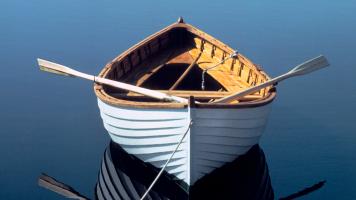
Many photographers have niche specialties for which they are known, intentionally or otherwise. My niche (one of them anyway) is… boat photography, a specialty I innocently and unintentionally stumbled into many years ago.
Photographs © Allan Weitz
The following 12 elements are worth considering when setting out to photograph boats, large or small. Some aspects over which you have control include


by Todd Vorenkamp · Posted
Panoramic photography has never been easier than it is today, thanks to digital technology. In the days of film, your options for panoramic photos were the purchase of expensive, but very capable, panoramic cameras, stitching images together in a darkroom, or physically cutting and pasting prints together. Panoramic cameras, like the Linhof Technorama-series, Hasselblad XPan, Fujifilm GX617, or Horseman SW-series cameras, are beautiful machines and still incredibly viable tools of the trade if you want to take exquisite panoramic images with

by Joseph Albanese · Posted
Take only pictures, leave only footprints.” Over time, the origins of that quote have become muddy. Some attribute it to the Baltimore Grotto, a caving club whose members feared their activities would mar the landscapes they so enjoyed. Whatever the origins, it has come to stand for an ethos encouraged by many outdoor organizations that promote responsible recreational uses of our outdoor spaces. One activity that does not alter the scenery is photography. All you are doing is capturing the essence of an area—the blues, greens, reds, and

by John Harris · Posted
And I’m not a pioneer of any style: I am just taking the kind of photos I like to take, using the principles of composition embraced by Cartier-Bresson and the street photography style forwarded by Klein and Winogrand, and applying them to a wedding.”
Some may beg to differ—after all, the “Ascough style” is a phrase often thrown around, referring to his black-and-white documentary wedding photography, and he is often mentioned as being one of the best wedding photographers in world. He is one of the

by Mike Mezeul · Posted
The weather is something we all have to adjust to accordingly with each passing day. Sometimes it’s the heat, sometimes snow, sometimes the threat of beastly supercell thunderstorms and tornadoes, especially here in the Central Plains. It’s on these days in particular that I grab my camera, hop in my car, and drive hundreds of miles to document these monstrously beautiful yet destructive wonders of nature.
For the past 14 years I have spent my springtime traversing the country, from the Texas/Mexico border to Canada, documenting severe