Search results for: photography tips solutions night photography tips
About 190 filtered results
Posted
When the sun goes down and the moon comes up. Landscape photographer Chris Nicholson talks about using the soft and cool tones of moonlight to fill the landscape and create images that are more difficult, or even impossible, without the moon overhead.
0:00 - Intro
3:01 - About Chris
4:06 - Photographing the moon
8:00 - Angle and intensity of moon light
14:49 - Exposure
20:00 - Moon in frame
25:11 - Flare
28:57 - Shutter speed
33:14 - Moon as a backlight
35:44 - Light painting
43:25 - Moon bursts
45:07 - Clouds
51:38 - Polarizers
54:38 – Star

by Luke Rollins · Posted
Whether you’re the designated photographer at a friend’s night out or a professional working an event, a compact, point-and-shoot camera can be a strategic choice for creating a distinctive look for your images. Depending on where you’re starting, the move to a compact camera can be either a step up from the smartphone or an embrace of a more limited feature set. In either case, the best event and party photography with a compact camera says one thing: you had to be there.
The number one advantage to using a compact camera is social. The

by Mathew Malwitz · Posted
For a beginner, few things seem more intimidating than photographing a wedding. A sense of anxiety is perfectly normal if you haven't yet spent much time in this field. It's important to remember that we all begin somewhere, and even the most experienced pros were also novices at one point. With practice and education, nerves begin to morph into confidence.
No two weddings are the same, but whether traditional or unconventional, the goal is to be properly equipped to document the key moments of the day. A
by Mathew Malwitz · Posted
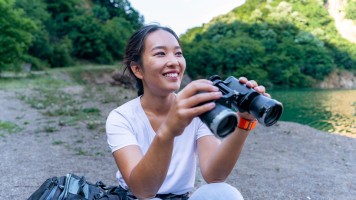
Optic size is measured by what it can do, but when you’re new to the hobby, this can be confusing. Pick up a spotting scope or any pair of binoculars and you’ll see them adorned with a set of numbers like 8x42, 7x32, or 20-60x80. What exactly do those numbers mean and what do they tell us about an optic?
At the most

by Todd Vorenkamp · Posted
Do you want to preserve the memory of that awesome neighborhood fireworks show? Let's discuss the best ways to try to make a memorable photograph commemorating the event.
Before we get started, let me say that there are many ways to accomplish fireworks photography and no technique is usually worse or better than others. The only thing that really matters as you head home after the show is:
You enjoyed the photographic process.
You are left with a photograph or photographs that you personally enjoy.
You enjoyed the fireworks show!

by Mathew Malwitz · Posted
Birding is, by definition, the recreational hobby of observing and identifying wild birds in their natural habitat. Finding birds is the easy part. Just go outside and stop, look, and listen, and you’ll notice our feathery friends like you’ve never seen before. But how do we identify them? We need to consider a few physical attributes of the birds, from their overall shape to the length of their tail and more.
Birds come in all sorts of elaborate shapes, sizes, and color patterns that make them stand out, or in some cases, remain hidden from

by Luke Rollins · Posted
The wealth of B&H is not measured in sales, but in the accumulated knowledge of its people. The breadth of such experience is impossible to quantify, let alone price, which is why we’re offering this batch of wedding photography advice completely free of charge.
Andrea Buritica, Sales Associate – Chat & Email
Burikitak Photography
One of the best parts about working at B&H is that I get to talk about gear all day. However, it’s doing wedding

by Todd Vorenkamp · Posted
Taking a look at any modern mirrorless or DSLR camera, you’ll notice a slew of controls, buttons, and dials. Atop nearly all cameras sits a large dial labeled with many letters and icons. This is our mode dial. It is how we control the level of power we give to our camera or take for ourselves.
One of the wonderful things that modern electronic digital and film cameras give you is many high-tech options for your image making. One of the horrible things that modern electronic digital and film cameras give you is many high-tech options for your

by Todd Vorenkamp · Posted
One of the magical aspects of modern photography is the ability to review an image instantly within our EVF (electronic viewfinder) or right on the back of the camera.
Frequently, one possible mistake that digital photographers make is when reviewing an image on their camera—they evaluate exposure based on the reproduced image. Why might this be a mistake? Well, both your camera’s LCD and EVF likely have adjustable brightness. Also, you might be viewing your images in bright sunlight or in the pitch black of night. Just as viewing a computer

by Mathew Malwitz · Posted
Any place in the world can be a photo destination in the winter, but the general idea is to explore a few locations that offer wonderful photographic possibilities in winter that they might not offer in summer. We want to make use of all that snow and everything else the cold temperatures have to offer. After all, we can enjoy the warmer weather come spring. We can always blend in a bit of that warm escapism we all crave after a few months of short days, snow, and cold.
Lake Reschen and South Tyrol, Italy
The Tyrol region of northern Italy and

by Mathew Malwitz · Posted
Despite what you might have seen on the internet, you don’t need all the money and time in the world to photograph wildlife. Sure, an African safari would be nice, but it is by no means the only way to capture stunning images of wild animals. In fact, regardless of where you live, odds are there’s a vast ecosystem that likely goes unnoticed. If you have trees in your neighborhood, you’re off to a great start.
What You Need to Photograph Wildlife
While gear plays a crucial role in our ability to photograph wildlife, it isn’t everything. In this

by Mathew Malwitz · Posted
You’re probably aware that film has been making a comeback in recent years, but let’s be honest with ourselves. Did it ever really go away? Sure, it may have seen a dip in popularity at the dawn of the digital age, but many serious enthusiasts never stopped using it. Just ask the experts here at B&H! In fact, we asked some long-time film shooting experts here, “What’s your favorite film/camera combination and why?” Below, you’ll find their answers

by Mathew Malwitz · Posted
Are you interested in the wide and wonderful world of photography? Well, you’ve certainly come to the right place! Check out this short checklist of a dozen items, designed to get you started in digital or film photography and headed in the right direction.
1. Interest
The first thing you need is an interest in photography. If you are reading these words, you likely already checked that box. If you are debating whether to take the dive into photography, you might want to give it some careful thought, or cater your purchases toward your level

Posted
In this class, Canon Product Educator Jeff Leimbach reviews more advanced techniques for Landscape Photography, including Composition, Filters, Long Exposure, Night Landscapes, Editing, and more.
0:00 - Intro
3:38 - Overview
5:06 - Weather
10:10 - Composition
22:27 - Filters
30:17 - Long exposure
39:38 - Light painting
43:35 - Reflection
45:27 - Editing
50:08 - Presentation
52:41 - Black & White
56:15 - Quick tips
1:01:18 - Final thoughts
1:02:39 - Q&A
Sponsored by

Posted
Sony Alpha Ambassador Autumn Schrock shares her tips and tricks on how to process and prepare night sky photos for print. Learn how to print on different surfaces and materials to make your astro shots truly stand out.
0:00 - Intro
3:06 - Camera gear tips for printing
6:10 - Printing labs
8:03 - Calibrate your monitor
9:56 - Setting up Photoshop color settings
11:42 - Adding a tad of brightness
14:30 - Soft/Color proofing
19:49 - Print ratio
21:46 - Exporting your image for printing
24:47 - Autumn's favorite printing materials
39:17 - Selling