Search results for: photography tips solutions sports photography tips
About 77 filtered results
by Mathew Malwitz · Posted
Smartphones have forever changed the world of photography, making the art form more accessible and connecting people from across the world through the instantaneous sharing of images. For all their benefits, there are plenty of criticisms to be had, especially on the creative front. Smartphone cameras are, for some, everything one could want from a camera. For others, they lack the control and creative freedom that makes photography so interesting.
Who can blame one for having hard feelings against smartphones. After all, they nearly wiped

by Steven Esposito · Posted
The FIFA World Cup 2026 is currently underway with billions of fans tuning in to see their favorite teams on the pitch. For this year, FIFA named Lenovo as their Official Technology Partner, providing fans with deeper insights into player statistics and match analytics, bringing people even closer to the action no matter where they are. With such an ambitious task at hand, we must ask the question: How does any of this work?

Posted
Jean Fruth sits with legendary sports photographer David Burnett, sharing their unique perspectives on photographing one of the sporting world’s most storied events, the Olympics.
0:00 - Intro
2:29 - David's early work
6:24 - Learning from past work
8:32 - Finding the moment
15:37 - Photographing the Olympics
19:00 - Locking in for the moment
25:42 - Prep for long-term projects
37:57 - Wanting to get the big moment shot
43:24 - Images that stand out
51:05 - Closing
Sponsored by

Posted
Sony Artisan of Imagery Jean Fruth photographed her first Olympic Games this year. In Part 2, she shares advice on covering your first major sporting event, including how to prepare, what gear to bring, and how to build an efficient workflow. She also discusses the difference between expectations and reality when shooting on one of the world's biggest stages.
0:00 - Intro
1:11 - From baseball to hockey
3:17 - How Jean prepared for this new opportunity
6:26 - Dealing with not knowing the outcome
11:03 - Knowing the sport
18:15 - Workflow
24:00
by Mathew Malwitz · Posted
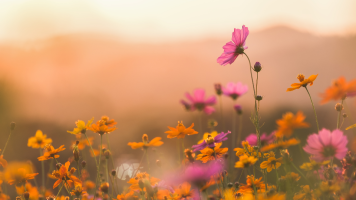
If there’s one question fledgling photographers often ask, it’s “How did you get such a nice background?” Backgrounds are an essential element of a photograph that are often neglected. In fact, it’s safe to say that a background is as important to a composition as the subject itself. After all, a distracting one will detract from an image.
In this guide, we’re going to cover the many methods used to capture clean, smooth backgrounds in our images. This will encompass the settings and gear involved as well as the in-the-field techniques you can

by Mathew Malwitz · Posted
Optic size is measured by what it can do, but when you’re new to the hobby, this can be confusing. Pick up a spotting scope or any pair of binoculars and you’ll see them adorned with a set of numbers like 8x42, 7x32, or 20-60x80. What exactly do those numbers mean and what do they tell us about an optic?
At the most

by Mathew Malwitz · Posted
Birding is, by definition, the recreational hobby of observing and identifying wild birds in their natural habitat. Finding birds is the easy part. Just go outside and stop, look, and listen, and you’ll notice our feathery friends like you’ve never seen before. But how do we identify them? We need to consider a few physical attributes of the birds, from their overall shape to the length of their tail and more.
Birds come in all sorts of elaborate shapes, sizes, and color patterns that make them stand out, or in some cases, remain hidden from

by Luke Rollins · Posted
Sports photographers are newcomers to the a7R party. Not because they're late to the series, but because until now the camera line simply wasn't well-suited for action, what with its processor-hungry file sizes slowing things down. Sony aims to change all that with the a7R VI Mirrorless Camera, the company's latest 66.8MP full-frame shooter offering unprecedented speed for the series.

by Mathew Malwitz · Posted
Who doesn’t want to capture fun and creative portraits of our four-legged friends? We know we love it. In fact, pet photography may just be the most popular form of photography there is. Think of all the smartphone snaps of yawns, big stretches, and funny moments we all take of our cats, dogs, chinchillas, and beyond.
Quick snaps aside, you know what really ups the quality of our pet portraits? Lighting. Just as with any form of portrait, lighting unlocks possibilities that can be impossible without it. But what lighting system should we use?

by Todd Vorenkamp · Posted
Taking a look at any modern mirrorless or DSLR camera, you’ll notice a slew of controls, buttons, and dials. Atop nearly all cameras sits a large dial labeled with many letters and icons. This is our mode dial. It is how we control the level of power we give to our camera or take for ourselves.
One of the wonderful things that modern electronic digital and film cameras give you is many high-tech options for your image making. One of the horrible things that modern electronic digital and film cameras give you is many high-tech options for your

by Mathew Malwitz · Posted
Do you plan your images? Really think about that question. Do you have an idea of an image before you head out for a shoot, or do you let the moment inspire you as the pieces fall into place? There's no wrong answer here. Planning or "pre-visualization" is a key piece of the photography puzzle that some put a lot of thought and effort into while others effortlessly come up with ideas on the fly.
No matter how you go about taking a picture, there is some level of planning that goes into a shot. With that said, there's a big difference between

by Mathew Malwitz · Posted
Back in the good old days, during the infancy of autofocus, you had two options when it came to autofocus: On or Off. Now, with advancements in technology, many cameras, even simple point-and-shoot cameras, have a dizzying array of high-tech autofocus modes to choose from. Honestly, they can be intimidating to even to the most experienced shooters.
Before we dive in, be forewarned: almost every manufacturer has proprietary autofocus technology, nomenclature, and features. Even more confusing, the interface to access these modes can often

by Mathew Malwitz · Posted
What better place to spend a Saturday morning than the zoo. You can enjoy some time outside, all while seeing a variety of both local and exotic animals you'd otherwise never dream of encountering. Zoos also are great place to try your hand at photographing wildlife! In this guide, we're talking about taking our camera to the zoo to capture natural looking images of animals in their element! We'll be covering what you need as well as tips and tricks that'll help you capture stunning, natural looking images of animals.
Above photograph © Mathew

by Mathew Malwitz · Posted
As you begin to research cameras, you’ll likely hear some technical jargon about sensors. While it’s easy to ignore some elements of any devices, there’s no way to work around sensors. But what is a sensor and what does it do? In this guide, we’re diving into the often confusing world of imaging sensors. By time we’re done, you’ll have a better understanding of the most significant component in our digital camera.
About Sensors
What Is an Imaging Sensor?
At the heart of our digital cameras sits an imaging sensor, which serves as the digital

by Mathew Malwitz · Posted
Winter brings with it some of the best photographic opportunities imaginable. As the temperatures begin to drop, our approach to photography changes a bit. Cooler weather brings with it snow, stunningly colorful evening skies, wintering birds, and an assortment of beautiful weather conditions. Some of the best photographic opportunities present themselves in these unfortunately cold times. That being said, if we prep ourselves and our gear appropriately, we can capture stunning images.
Before You Head Out
First, some safety precautions. Cold