Search results for: photography tips solutions understanding using autofocus
About 18 filtered results
by Mathew Malwitz · Posted
For macro photographers, having the right gear is essential. Magnification and lighting are key, but you don’t necessarily need the biggest, priciest macro lenses out there to get close-up shots. If you’re a macro photographer yourself or buying a gift for one, we have some excellent recommendations for every budget.
Gifts Under $50
1. Close-up macro filters (like this

by Luke Rollins · Posted
IN THIS ARTICLE
1. (Don’t Fear) the Gear2. Good Dental Photography Is Good Photography3. Macro Discipline, Portrait Mindset4. Embrace the Flash5. Clinical, but with an Eye for Marketing
For dentists, the evidentiary benefits of a photographic practice go beyond meeting industry standards. They can be the foundation for professional development and the growth of your business. That said,
by Luke Rollins · Posted
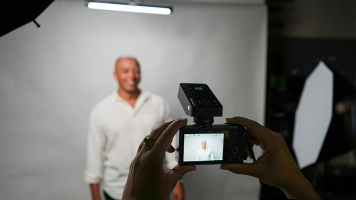
At first glance, studio photography and the compact camera may seem strange bedfellows. The type of work associated with the studio—still life, product photography, portraiture, macro photography—usually wants cameras with larger sensors and interchangeable lenses, especially in professional applications. Compact, point-and-shoot cameras, for their part, have their natural home in everyday, travel, nightlife, and street applications, where their discretion and size become virtues.
It might seem almost cruel to introduce the compact to the

by John Harris · Posted
It would be foolish to claim that there is only one way to take a portrait, but there are some accepted norms and basic camera settings that you should understand if portraiture is to become your area of photographic interest. Remember though, as you walk down your creative path, that a portrait is more than a headshot, more than a beautiful photo of your subject; it is an opportunity to get to know someone, to have a visual conversation with a person, and to use your photographic skills to pass that understanding of the person on to the

by Luke Rollins · Posted
The wealth of B&H is not measured in sales, but in the accumulated knowledge of its people. The breadth of such experience is impossible to quantify, let alone price, which is why we’re offering this batch of wedding photography advice completely free of charge.
Andrea Buritica, Sales Associate – Chat & Email
Burikitak Photography
One of the best parts about working at B&H is that I get to talk about gear all day. However, it’s doing wedding

by Todd Vorenkamp · Posted
Taking a look at any modern mirrorless or DSLR camera, you’ll notice a slew of controls, buttons, and dials. Atop nearly all cameras sits a large dial labeled with many letters and icons. This is our mode dial. It is how we control the level of power we give to our camera or take for ourselves.
One of the wonderful things that modern electronic digital and film cameras give you is many high-tech options for your image making. One of the horrible things that modern electronic digital and film cameras give you is many high-tech options for your

by Mathew Malwitz · Posted
If there’s one area of wildlife photography that challenges even some of the most consummate artists, it’s birds in flight. A dynamic flight shot shows action, and a bit of technical prowess. As you can imagine, capturing birds in flight is no easy feat.
To consistently capture these shots, one must be proficient with their gear and have a knowledge of animal behavior. We’d go as far as to say you need a bit of luck too, but what is luck if not preparedness meeting opportunity. In order to make the most of the opportunities that present

by Mathew Malwitz · Posted
The most engaging portraits seem to have direct eye contact between subject and viewer, as if the camera were simply a window through which we’re looking. But is it that simple? So much goes into making a good portrait, can success simply come down to eye contact between subject and camera and is it even necessary to concentrate on the eyes for a portrait? There are certainly wonderful portraits that do not focus exclusively on the eyes that illustrate character with other aspects of the body, from posture to hands, but as an introduction to

by Todd Vorenkamp · Posted
A lens’s hyperfocal distance—a mathematical combination of lens focal length, aperture or f-stop, and focus distance—is a tool that photographers can use to maximize their depth of field for capturing nearby foregrounds and distant backgrounds in acceptable sharpness.
While you can always dial up your lens’s sharpest aperture (sweet spot), many landscape photographers want as

by John Harris · Posted
What can you do with a high-end telephoto lens? Be a boss, is what you can do. I mean, c’mon! Strutting around the sidelines or cuttin’ through the bush with one of these beasts resting on your shoulder―not only do you look tough, but you’re also carrying a lens that you need to get the best photos in sports and wildlife photography. When I say best, let’s not underestimate the greatness of photographers who can create wonderful images with a wide-angle lens or even a telephoto of lesser quality, but to really excel in the disciplines of
by Jason T · Posted
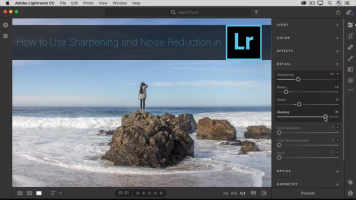
Photographers generally don’t agree on much. Sony, Nikon, or Canon? If you ask three different photographers, you’ll get three different answers. Color or black-and-white? Film or digital? The debates go on and on. But there’s one thing almost everyone can agree on, and that is that a good photo is a sharp photo. If there’s one immutable truth in the photography lexicon, that may be it. And, many of us will go through great lengths to get the sharpest photo, whether it was captured that way to begin with, or not.
The truth is, due to huge

by Jason T · Posted
One of the perks of working at B&H is that sometimes you get to play around with high-end gear that you would never be able to afford yourself. That’s been the case for me during the past six weeks, since Leica let me borrow the incredible Leica 10-P and Leica Summilux-M 35mm f/1.4 ASPH. lens while I worked on a

by John Harris · Posted
After our introductory lesson to creating narrative and telling personal stories with smartphone cameras, I asked my kids to advance their skill set by telling visual stories using a more advanced, more versatile camera. In this case, they’re using my Sony Alpha a6500 mirrorless

by Jennifer Hahn · Posted
ISO can be a sticky subject when it comes to video. It is used in photography when you have a great amount of control over your aperture, shutter, and exposure, and when you understand the lighting of your environment. But when used in video, if used too often, it can be more of an enemy than a friend to your footage. The most controversial setting is auto ISO, causing you to lose control over your ISO setting—and it can have mixed results. However, there are times when auto ISO can be your friend.
What ISO Is and What It Is Not
Technically,

by Allan Weitz · Posted
Sometimes, the phrases, acronyms and strings of numbers or number-letter combinations used to identify photographic hardware or techniques can be daunting to the uninitiated neophyte photographer.
We've prepared a list of the basic terms. Have we left any out that you think should be added? Please let us know!
0-9 | A | B | C | D | E | F | G | H | I |