Search results for: photography tips solutions what is crop factor
About 21 filtered results
by Mathew Malwitz · Posted
We’ve all tried to photograph something up close. This small-scale world fascinates us all, whether it be a stunning flower or a bumble bee crawling about, but our cameras can’t seem to focus as close as we want. So, what is a struggling photographer to do?
There are several ways to do close-up, or "macro" photography, but the

by Steven Gladstone · Posted
Whether you’re a student or a seasoned veteran, selecting the right camera can make your head spin with questions. Does sensor size matter? What’s the difference between 4:2:0 and 4:2:2? Do I really need a camera that can record 8K? What about raw? We’ll explain the key components that help a camera produce cinematic images, and in doing so, hopefully help you make that all-important decision.
Evaluate Your Needs and Your Budget
Before considering certain cameras, you must know your needs and your budget. And be realistic. If you are a student

by Mathew Malwitz · Posted
As you begin to research cameras, you’ll likely hear some technical jargon about sensors. While it’s easy to ignore some elements of any devices, there’s no way to work around sensors. But what is a sensor and what does it do? In this guide, we’re diving into the often confusing world of imaging sensors. By time we’re done, you’ll have a better understanding of the most significant component in our digital camera.
About Sensors
What Is an Imaging Sensor?
At the heart of our digital cameras sits an imaging sensor, which serves as the digital

by Allan Weitz · Posted
For the longest time, comparing image quality between point-and-shoot cameras and full-frame cameras, or even APS-C format cameras, was a conversation you could have start to finish during the course of an elevator ride. Point-and-shoot cameras were convenient, but the detail and dynamic range of their smaller sensors never measured up to the detail and dynamic range you get from larger sensors. And then one day Sony introduced a new 1" format CMOS sensor, and BOOM! People started having second thoughts about slinging heavy camera bags over

by Allan Weitz · Posted
If the longest telephoto lens you own never seems to get you in tight enough to your subject, you have three choices. The first is to get up and get physically closer to your subject. If you can’t, for whatever reason, do this, you can either take the picture as is and crop it to your liking post-capture, or you can use a teleconverter.
Photographs © Allan Weitz 2021
Either method will work, albeit at a cost. As for the price of cropping versus the price of

by Jess Santos · Posted
Thinking back to my first time photographing the stars, let’s be real: I had no idea what I was doing. I spent the afternoon watching video after video, and after several hours felt confident enough to attempt it. Now keep in mind I had done the research on settings, but completely skipped over the planning phase. I didn’t run into one video that talked about things like the moon phase or dark skies, some pretty important information to know when getting into astrophotography. Nonetheless, a couple friends and I headed out at eleven o’

by Stan Moniz · Posted
It's no secret that photographing the night sky and everything astrophotography related has been a big part of my life for many years now. Staring up at the sky on a dark night is so inspiring. It's a time where I can relax, but at the same time find that creative spark that keeps me moving forward in my career as an action/adventure photographer. It just never gets old.
Every year, I set a new goal. Moving forward and keeping things new and always learning has been my basic philosophy during this walk in the creative arts and recently, I’ve

by Todd Vorenkamp · Posted
A few things happen when you look through a pair of binoculars, a spotting scope, or a telescope. The first thing that happens when you see awesomeness is you think, sometimes out loud, "Wow!" The next thing that happens is that you want to share what you are seeing with others—this

by Todd Vorenkamp · Posted
We cannot be certain, but it is a fair bet that the folks who invented the modern digital cameras, be they DSLR or mirrorless, did not envision that they would be attached to large format view cameras. Can you do it? Yes. Does it work? Yes… I guess. Is it practical and easy? Nope. Should you do it? Maybe. Is it fun? Yes!
I will admit, I’ve never shot large format film. I have friends who shoot large format and it always looked super cool watching them adjust focus on a view camera and compose the scene from an inverted image on a beautiful

by Todd Vorenkamp · Posted
Congratulations on getting your first telephoto zoom lens. Telephoto zooming makes for fun photography! Whether you got your 55-200mm or 55-300mm “kit lens” with a new camera, or you’re adding it, or a similar lens, to your quiver, your photography is about to enter a new world of awesomeness. In this article, we will discuss some tips for how to get the most out of your new telephoto zoom lens.
Photographs © Todd Vorenkamp

Posted
In early July 2020, Canon announced a pair of EOS R-series cameras that should prove to be true game changers in the world of mirrorless cameras. The new cameras are the Canon EOS R5 and R6. Both are full-frame cameras—the R5 features a 45MP sensor, the R6 features a 20MP sensor—and have amazing stills and video. The following is everything else you need to know about these exciting new cameras.
Also, at the top of this page is a replay of our Live Q&A with Canon Technical Expert Rudy Winston. You'll find some questions have an

by Dawn Wayand · Posted
Your camera is an extension of you in your studio. What you shoot with can be just as important as how you shoot. Choosing the right gear to help you perform better during a photo shoot is worth careful consideration. In this article, I will discuss cameras, but go more into depth on lenses, light meters, and care kits for your gear to help give you a better understanding of each and what features to look for when purchasing each component.
Robert Olsen;Model: Kristin Rutty
Digital Cameras
There are a few different types of digital
by Allan Weitz · Posted
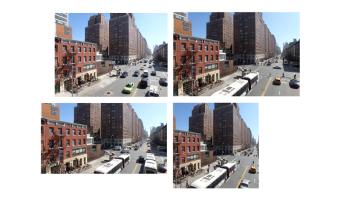
If you ask photographers what they consider important when choosing a camera, the aspect ratio of the sensor seldom enters the conversation. Megapixels? Yes. Sensor size? Yes. Burst rates? Yes. Aspect ratio? Seldom.
Aspect ratios are determined by the form factor of the camera’s imaging sensor, which among consumer cameras are typically 3:2 or 4:3 rectangles. And while photographers weigh the pluses and minuses of MFT, APS-C, and full-frame sensor formats, few photographers care about the actual shape of their camera sensors.
"Aspect ratios

by Allan Weitz · Posted
Sometimes, the phrases, acronyms and strings of numbers or number-letter combinations used to identify photographic hardware or techniques can be daunting to the uninitiated neophyte photographer.
We've prepared a list of the basic terms. Have we left any out that you think should be added? Please let us know!
0-9 | A | B | C | D | E | F | G | H | I |

by Todd Vorenkamp · Posted