Search results for: photography tips solution perfect light any location
About 14 filtered results
by Mathew Malwitz · Posted
Who doesn’t love a close-up shot of a flower or bumble bee? Some of the most beautiful aspects of nature are quite small and require special tools to capture them in a meaningful way. Whether it be of a cute little insect visiting our garden, or miniature figurines you paint and sell, we need a camera that can focus close and deliver good, quality results.
Before you panic, hear us out. We don’t need to get carried away with complicated lenses and accessories, and can just enjoy yourself with a simple compact,
by Mathew Malwitz · Posted
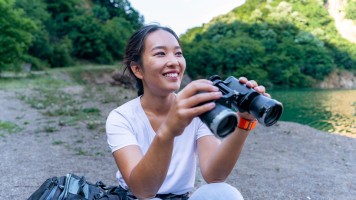
Optic size is measured by what it can do, but when you’re new to the hobby, this can be confusing. Pick up a spotting scope or any pair of binoculars and you’ll see them adorned with a set of numbers like 8x42, 7x32, or 20-60x80. What exactly do those numbers mean and what do they tell us about an optic?
At the most
by Mathew Malwitz · Posted
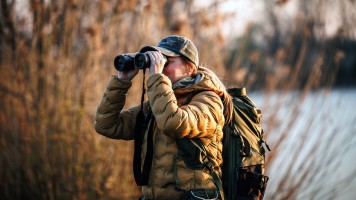
Birds, they’re all around us. If you haven’t paid much attention to them, you’re not alone. But, once you do, you’ll have a hard time stopping. If you haven’t yet dabbled in bird watching, known colloquially as birding, we have just one question. Why not? Birding is the perfect way of partially disconnecting from the digital world we find ourselves in and connecting with nature through observation, and one of the most relaxing pastimes imaginable.
If you’re fascinated by our feathery friends but don’t know where to start, we’ve got you covered

by Mathew Malwitz · Posted
Weddings are fast-paced events for photographers, and there’s so much to do. From portraits of the bride and groom to family formals, there’s much to cover, and we haven’t even scratched the surface yet. While all focus is on the bride, groom, and their families, there’s a lot of behind-the-scenes material to capture. As wedding photographers, you need to wear many hats, and that includes landscape, food, and product photography.
Proficiency in photographing product is a must, as there are many details and accoutrements to photograph

by Mathew Malwitz · Posted
If there’s one area of wildlife photography that challenges even some of the most consummate artists, it’s birds in flight. A dynamic flight shot shows action, and a bit of technical prowess. As you can imagine, capturing birds in flight is no easy feat.
To consistently capture these shots, one must be proficient with their gear and have a knowledge of animal behavior. We’d go as far as to say you need a bit of luck too, but what is luck if not preparedness meeting opportunity. In order to make the most of the opportunities that present

by Mathew Malwitz · Posted
Lighting is the key to all photography. While elaborate, multi-light setups may appear to be the standard, the creative photographer can produce a seemingly endless range of images using just one light source. This guide is designed to help those beginners out there build the perfect one-light kit for portrait photography.
Why One Light?
I completely understand why multi-light “studio in a box” kits are tempting to beginner and budget-conscience photographers. Why spend hundreds of dollars on one light when you can get three lights complete
by Shawn C. Steiner · Posted
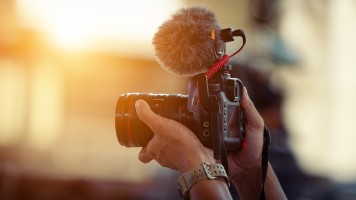
Audio is extremely important. Photographers haven’t really had to worry about this, but it is something that can make or break your videos. Watch some of your favorite movies and pay close attention to the sound—you will probably pick up some audio cues or effects that amplify the scene or action. If recorded poorly, audio can make something completely unwatchable. Have you ever opened a video online to crackling and noise and decided that it just wasn’t worth enduring? Clarity in audio is one of the most important things for keeping your

by Bjorn Petersen · Posted
It’s true that keeping your equipment clean and in tip-top shape can be a chore, but it’s unfortunately a chore that everyone needs to take on at some point. Right now might just be the perfect time to take on the arduous tasks of giving your lenses a good cleaning, as well as maybe stepping up to the intimidating process of cleaning your sensor. Keeping both of these tools clean helps to ensure the highest image quality when you get back to shooting, and will also make your post-production life a bit more efficient. It’s also a good thing to

by Todd Vorenkamp · Posted
Welcome to the world of Intentional Camera Movement (ICM) photography—a fascinating and beautiful world where the camera and the photographer’s movements combine to become a mechanical paintbrush—transforming photographic capture into something completely unique and otherwise invisible to the naked eye. In a photographic world generally obsessed with image sharpness, there are photographic artists amongst us who give little thought to everything we’ve ever been taught about photography to create spectacular images by intentionally moving their

by Jill Waterman · Posted
Instead of an apron, food photographer Joanie Simon wears many hats—commercial and editorial imagemaker, recipe developer, photo educator, Blogger, YouTube Influencer, Livestreamer, and content creator extraordinaire. For more than a dozen years, Simon has built her brand into a powerhouse of creative content and learning, to whet the appetites of both foodies and photographers alike. Her straightforward approach to this specialized field is of value to shutterbugs at all levels of experience, from beginners on cell phones to experienced pros

by Bjorn Petersen · Posted
Photography is a great way to get out of the house, explore the world around you, and can be a reason to visit new places. Sometimes, though, your own home and time spent indoors can also be a key source of inspiration and a tool to work through any creative droughts in which you might find yourself. Whether you’re confined to home because of weather, a global pandemic, or just because you feel like staying in, don’t let staying at home be a limitation to your photography practice; let the challenge of being indoors ignite new ways to approach

by Todd Vorenkamp · Posted
For a working professional photographer like renowned maritime photographer and Canon Explorer of Light Onne van der Wal, the most valuable part of his business is not the tens of thousands of dollars’ worth of cameras and lenses he carries, it is that which cannot be covered by insurance or easily replaced: data. Clients don’t care if your Canon camera was lost to Davy Jones’s Locker in the middle of the shoot or if a lens was ruined by a rogue saltwater wave—they just want the images. Van der Wal, based in Newport, Rhode Island, has compiled
by Tim Cooper · Posted
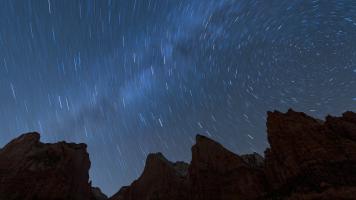
Noise is the addition of unwanted grain or splotches of color in digital photographs. It can occur by using a high ISO, such as 6400, or using very long shutter speeds that last into the minutes. In some cases, noise is a necessary evil that we need to accept, while in others, we should do everything possible to avoid it. As night photographers, we need to understand the limits of our cameras and the effects of pushing them too far.
Above

by John Harris · Posted
Traveling and photography go hand in hand; the desire to record the places you’ve visited and share your memories with others is an endless fascination that never gets old. The main problem with travel photography is that it’s impractical, if not impossible, to bring all your gear with you, especially if air travel is involved. Most airlines now charge extra to check bags and they typically allow only one carry-on bag. It makes sense to pack as lightly as possible when traveling, but be sure you have just what you can’t do without. Take all