Search results for: video tips ideas
About 113 filtered results
by Steven Esposito · Posted
Keyboards, the tool you absolutely need when it comes to navigating a computer. There are so many different types of keyboards that feature a slew of elements that make some keyboards good for one thing, but not so good for another. How do we know what is best for you? By educating you on the features, how they work, and why you would get one for any specific reason. So, if you are shopping around for your next keyboard, this is the place to be!
Types of Keyboards
There are a bunch of different types of keyboards, but what makes them specific
by Luke Rollins · Posted
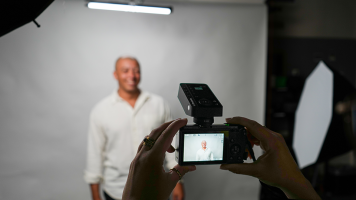
At first glance, studio photography and the compact camera may seem strange bedfellows. The type of work associated with the studio—still life, product photography, portraiture, macro photography—usually wants cameras with larger sensors and interchangeable lenses, especially in professional applications. Compact, point-and-shoot cameras, for their part, have their natural home in everyday, travel, nightlife, and street applications, where their discretion and size become virtues.
It might seem almost cruel to introduce the compact to the

by Freddy Gerngross · Posted
In the postmodern era of music production, most musicians, producers, and engineers rely on a computer running a robust Digital Audio Workstation (DAW) like Pro Tools or Ableton to be the studio centerpiece. But despite their power and convenience, sometimes creating in this environment can turn into a series of mouse clicks that eat away at the joy and magic of music production. There are times when ditching the DAW and going old school with a physical piece of hardware can unlock new potential, forcing you to develop alternative techniques

by Mathew Malwitz · Posted
Have you ever taken a photo that looked so good on the back of your camera, only to get home and see that it’s just not sharp? We’ve all been there, and even the experts miss more shots than they keep. That said, there are many tricks and techniques we can learn to improve the odds. In today’s guide, we’re looking at five techniques to aid us in confidently capturing tack-sharp photographs.
Sharpness is critical in most genres of photography, especially nature and wildlife. Sure, we can intentionally blur elements to showcase motion. We

by Luke Rollins · Posted
Achieving a standard of production value is an essential component of establishing a brand and growing a following. For part-time, burgeoning, and mid-level creators, it can feel like bridging that gap is less a matter of learned skill and more about the equipment you can afford.
In most cases, the problem isn’t budget at all. Acquiring the specific know-how can give your content professional sheen with little to no financial outlay.
Lighting design is arguably the most immediately visible production component—and the one most capable of

by Jennifer Hahn · Posted
Many moons ago, when the economy was unstable and layoffs were rampant, this author decided to switch careers to pursue filmmaking. With a new perspective and energy, but without any guidance, knowledge, or tools, going back to school for digital filmmaking was a no-brainer. The aim was to tell real stories in documentary form, and it became a challenging but ultimately rewarding adventure.
Tips for Starting Out
If you’re just starting out at the dawn of your student career, or find yourself older and wiser looking for a change, and you want

by Steven Esposito · Posted
Building a PC can be difficult for those who are new to the hobby. Seasoned builders like me picked up on a lot of tips and tricks when it comes to assembling PCs, so today I am going to share a full step-by-step guide on how to assemble your PC with a few extra pieces of information to help you along the way. We are going to answer questions and do our best to ensure that your installation process goes smoothly.
I am going to assume that you, reader, are a fellow gaming enthusiast. I am also going to speak about the most common types of PCs

by Mathew Malwitz · Posted
Smartphones have forever changed the world of photography, making the art form more accessible and connecting people from across the world through the instantaneous sharing of images. For all their benefits, there are plenty of criticisms to be had, especially on the creative front. Smartphone cameras are, for some, everything one could want from a camera. For others, they lack the control and creative freedom that makes photography so interesting.
Who can blame one for having hard feelings against smartphones. After all, they nearly wiped

by Steven Esposito · Posted
The FIFA World Cup 2026 is currently underway with billions of fans tuning in to see their favorite teams on the pitch. For this year, FIFA named Lenovo as their Official Technology Partner, providing fans with deeper insights into player statistics and match analytics, bringing people even closer to the action no matter where they are. With such an ambitious task at hand, we must ask the question: How does any of this work?

by Steven Gladstone · Posted
Learning to speak and use the language of lighting can go a long way to creating images that move the audience, immersing them even further. It will also make working on set much more efficient, helping you create more powerful images in less time with your crew.
This article will cover basic lighting types, so you can become familiar with what is available.

by Steven Gladstone · Posted
When creating images for a film, you try to balance your shots so that you draw the audience into the movie, while at the same time they forget that they are watching a movie. Usually, the last thing you want is to break the illusion and have the audience snap out of their reverie.
As you read this article, you may want to pause and rewatch some classic films, or films that had a powerful effect on you. Examining the new and different techniques, lighting, and compositions used to create impact, mood, and feeling will help you grow as a

Posted
Film photographer and member of our social media video team, Lotta Milde, shares the tools and techniques that inspire fresh ideas and new perspectives. Discover how to unlock a different way of seeing and challenge yourself to quickly expand your creative skills.
0:00 - Intro
4:03 - Your vision and the tools you're using
6:31 - Lotta's tools
18:34 - Film camera & strobes
22:01 - Avoiding the clinical look
26:06 - Filters
32:28 - Trying a new film stock
34:51 - Postproduction gear
38:42 - Taking creative risks
41:13 - Closing

by Mathew Malwitz · Posted
Through the cacophony of forest sounds, your ears home in on a buzzy, almost garbled ascending song. Perhaps you recognize it immediately, or maybe you need to confer with one of the trusty internet databases or apps. You train your eyes on the canopy, scanning for movement of any kind, when you see it: the cerulean warbler, a small rowdy songbird with wings slightly splayed from the body. Quickly, you lower your binoculars and train your camera on the little blue passerine before snapping a few frames.
The resulting photos clearly show the
by Mathew Malwitz · Posted
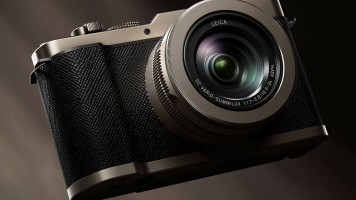
After the smartphone revolution, it appeared that the days of the compact camera were done. How wrong we were. It’s true that a few years back, point-and-shoot options were few and far between. There were just a handful of options on the market, and some industry titans even left the market entirely. Despite the long-rumored demise of the compact camera, it seems that photo enthusiasts still desire a dedicated device without the distractions that come with a smartphone.
What is a compact or “point-and-shoot” camera? Just because a camera is

Posted
Natural light is a more affordable and accessible way to light your portraits, but it can be tough to master. Join Juan in this one-take video, as he shares his top 10 tips for mastering natural light and creating more compelling portrait photographs.
0:00 - Directional Lighting
1:13 - Hand Method
1:50 - Building Bounce
2:55 - Background Ideas
3:55 - Harsh Light
4:44 - Stop Posing Your Models
5:34 - Shoot in the Shade
6:20 - Catch Light
6:59 - The Last Tip