Search results for: video tips solutions lighting techniques video production
About 17 filtered results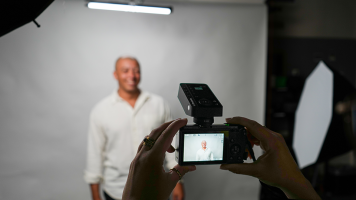
by Luke Rollins · Posted
At first glance, studio photography and the compact camera may seem strange bedfellows. The type of work associated with the studio—still life, product photography, portraiture, macro photography—usually wants cameras with larger sensors and interchangeable lenses, especially in professional applications. Compact, point-and-shoot cameras, for their part, have their natural home in everyday, travel, nightlife, and street applications, where their discretion and size become virtues.
It might seem almost cruel to introduce the compact to the

by Luke Rollins · Posted
Achieving a standard of production value is an essential component of establishing a brand and growing a following. For part-time, burgeoning, and mid-level creators, it can feel like bridging that gap is less a matter of learned skill and more about the equipment you can afford.
In most cases, the problem isn’t budget at all. Acquiring the specific know-how can give your content professional sheen with little to no financial outlay.
Lighting design is arguably the most immediately visible production component—and the one most capable of

by Zack Young · Posted
Virtual production (VP) is a professional video technique that combines live-action footage with computer-generated imagery (CGI) in real time. Virtual production typically happens on “volume” stages where seamless interlocked LED panels display rendered photo-real backdrops that change and adapt as the camera moves. This creates impressive in-camera virtual effects (ICVFX) that require little to no post-production work. Let’s jump into the exciting capabilities of

by Zack Young · Posted
While it may be easy to prop your phone against a stack of books and hit record, the resulting video podcast might not be quite what you had in mind. So what exactly separates a smartphone camera from a standalone professional camera, and what are the most important factors to weigh if you’re considering an upgrade?
Visual Aesthetics and Control
The most important factor limiting your smartphone camera is its sensor size. The actual sensor chip behind the lens of your phone camera is likely only a fraction of an inch, meaning it can’t capture

by Atane Ofiaja · Posted
The proliferation of PTZ (pan-tilt-zoom) cameras being used for sports coverage and broadcasting should not come as a surprise. They offer seamless operation and flexible installation options thanks to their relatively small size and remote-control capabilities from a central location. The benefit of using a PTZ camera over a standard fixed camera for sports coverage (and live events in general) is

by Gabby Bloch · Posted
Here at B&H, we’ve written countless articles on podcasting, including guides on editing, mixing, and mastering your podcast. But if you’re still having trouble getting the sound you want, we recommend simplifying your production process. Let’s discuss how to separate and streamline your production tasks to get a better final product with hopefully less effort.
Separate the Recording and Mixing Processes
Many people feel the

Posted
Tyler Edwards shares five tips on how to film an interview. You'll learn his interview lighting techniques, his camera placement, and audio tips too.
0:00 Intro
0:11 Key Light
0:44 Background Light
1:44 Camera Position
2:41 Clean & Clear Audio
3:29 Timecode
4:16 More from Tyler

by Zack Young · Posted
While camera gear continues to shed weight, a similar shift has taken place amongst camera crews as well. Mid-range and lower-budget shoots that used to require at least four to eight people now frequently include a crew of just one to three, each with more responsibilities than ever before. The cinematographer often acts as their own grip, gaffer, DIT, loader, and assistant camera, while the director is also an interviewer, producer, hair and makeup, the art department, the audio mixer, and sometimes even the caterer.
While you might feel

by Zack Young · Posted
So you just signed up for another corporate documentary shoot for another tech company at another local high-rise. They don’t want you filming in their super-secret proprietary lab and they’re definitely not flying you to China to see where the products are made, so you’re stuck in a cube farm trying to scrounge up useable b-roll for your interviews. Fear not. With some thoughtful planning and a little bit of ingenuity, you can get enough clips to make your piece shine.
Have I done my prep?
Fortune favors the prepared mind, which is why the

by Steven Gladstone · Posted
Day for night for color cinematography is an old shooting methodology that relies on a number of techniques regarding human perception, socially accepted convention, and technical qualities of film/sensors. There are a variety of reasons for shooting day for night, and understanding the whys and wherefores can help you create believable images.
Moonlight Is Blue
It isn’t really, any more than sunlight is blue. The reality is that moonlight is reflected sunlight, so why do people think moonlight is blue? Sunlight has a color temperature of

by Mary Latvis · Posted
Looking to display an impressive background while streaming from home with Skype, Zoom, or similar interfaces? Whether you want to use a simulated starship deck, a tropical beachscape, or simply a photo of your true work office, read on to see how a basic green screen can up your streaming game (not that your home office/corner of the sofa is at all cluttered or less than picturesque, of course).
Green screen use is also known as “chroma-keying,” a technique where two layers of video are composited or “keyed” together so that your chosen

by Steven Gladstone · Posted
Green screen compositing today is ridiculously easy compared to days gone by. Years ago, when shooting and finishing on motion picture film, one had to shoot the subject against a green screen, then create film mattes, and combine it all using an optical printer. Generation loss, contrast shifts, and registration problems were the bane of the filmmaker. This doesn’t even begin to encompass all the other problems, such as matte lines, elements that drift out of alignment, transparency issues, and garbage mattes. The introduction of high

394 Views· Posted
In this video, Jake Estes, from B&H, shares seven tips on making an effective horror film. From costumes and makeup to location and lighting, watch the video to learn some useful techniques for pulling off a successful horror production. We hope you enjoy the video, and invite you to view the wide selection of other instructional and informative videos at BandH.com.

by BH Event Space… · Posted
In this B&H Event Space video, sponsored by Canon, commercial photographer Pete Wright takes you full circle from shoot to output, demonstrating how to create visually stunning portraits. Emphasizing the right tools for all aspects of the process, he discusses the various types of light sources—from speedlights to strobes to continuous light—and lighting accessories such as barndoors, snoots, fresnels, softboxes, and umbrellas. Next, Wright offers some tips on posing techniques, before delving into topics such as monitor calibration, post
by BH Event Space… · Posted
In this B&H Event Space video, filmmaker Brandon Li shares his favorite techniques for creating a story out of purely improvised material. His strategy for creating a film is heavily dependent on the unexpected, and for using those unexpected elements to fuel creativity. Working without scripts or storyboards, it is part of his plan to have events go not according to plan. Li guides you through his filmmaking process, using clips from his many improvised films to underscore talking points. Topics discussed include: planning your shoot to